
York Medical Society Events
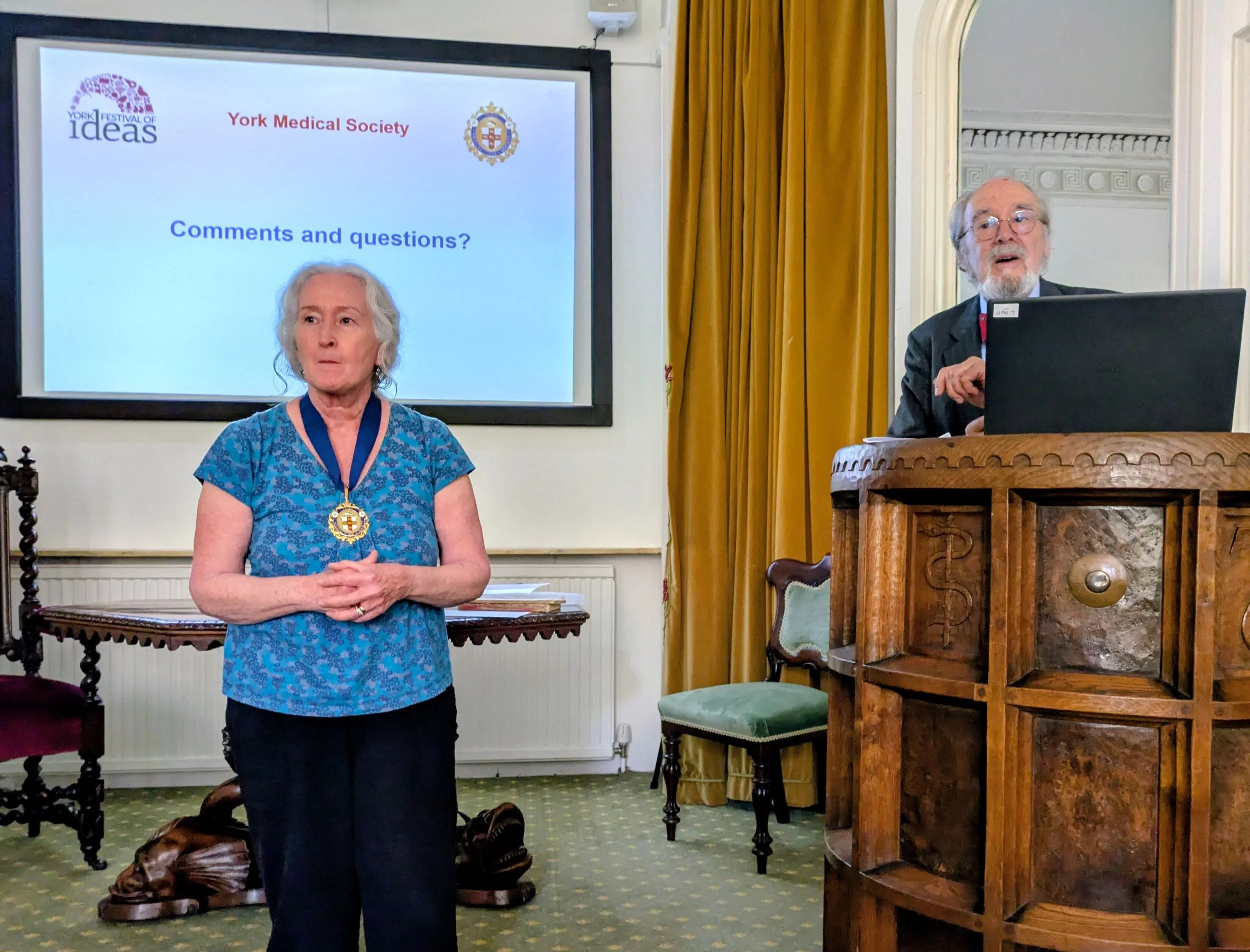
Britain's Maternity Services: What Went Wrong?
Professor James Drife - Emeritus Professor of Obstetrics & Gynaecology, Leeds
Britain's Maternity Services: What Went Wrong?
Whixley Hospital - The Life and Times of a Rural Psychiatric Institution
Dr David Fraser - Archaeologist & Former Chief Executive, York Civic Trust. Retired Regional Director, English Heritage
Whixley Hospital - The Life and Times of a Rural Psychiatric Institution
Christmas Wine Tasting
York Medical Society Wine Club Christmas Tasting - Saturday 14 November 2026
This is our very popular walk round tasting and a great opportunity to choose your wines for Christmas.
Please note that we’ve moved the tasting forward by one day from the date originally publicised, to Saturday 14 November
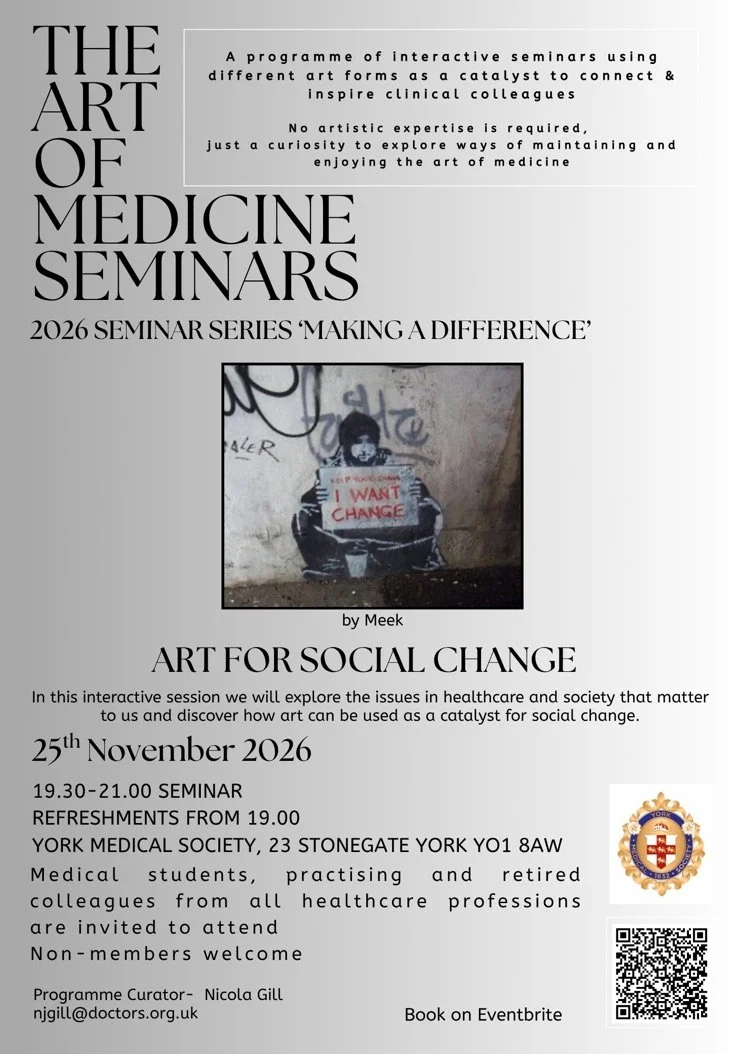
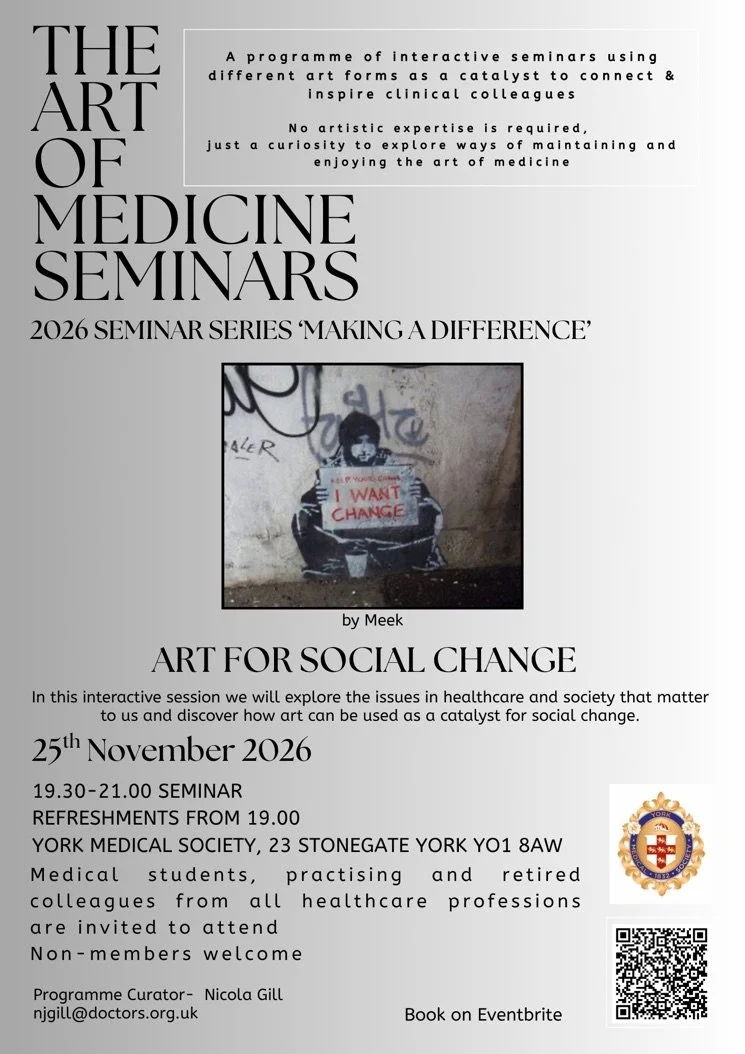
The Art of Medicine Seminars - Making a Difference - Art for Social Change
The Art of Medicine Seminars- Making a Difference - Art for Social Change
Tea and Coffee are available before the seminar from 19.00
"My understanding of things is always changing. We are like leaves in a river, and the river is flowing, so when your angle changes, you'll see things totally differently." Ai Wei Wei
Art, in all its forms plays a key role in shaping our idea of the world. It is often created for political effect to highlight injustices in our world. Some artists are described as activists, but Ai Wei Wei says he would call this action humanism, standing up for what makes us human.
Maybe you watched the drama Adolescence on Netflix last year, or you have seen the Ken Loach film, I, Daniel Blake at the cinema, or viewed the art of Ai Wei Wei in a gallery? You've probably heard of Pussy Riot and the Killers, maybe even listened to the words of their songs. Have you read a book that made you feel differently about the suffering caused by inequity in our world?
Join Michael White from the History of Art Department (University of York), Griselda Goldsbrough from the Hospital Arts Department, Sawsan Saeid a clinician with Torture ID, and Nicola Gill at this interactive session where we will explore what matters to us most in healthcare and society and discover how art can be used as a catalyst for social change.
Eventbrite link to book

Electronic Medical Records Save Lives: From a Rural Clinic to a Global Mission
Dr Peter Smith - Chair and Trustee Outreach EMR, retired GP
Electronic Medical Records Save Lives: From A Rural Clinic To A Global Mission

Christmas Wreath Making Workshop
Come and get into the festive spirit at 23 Stonegate and make your own Christmas Wreath.
Hosted by York School of Floristry, a special, creative festive workshop where you’ll learn how to use seasonal foliage and natural materials to make your own original wreath to take home.
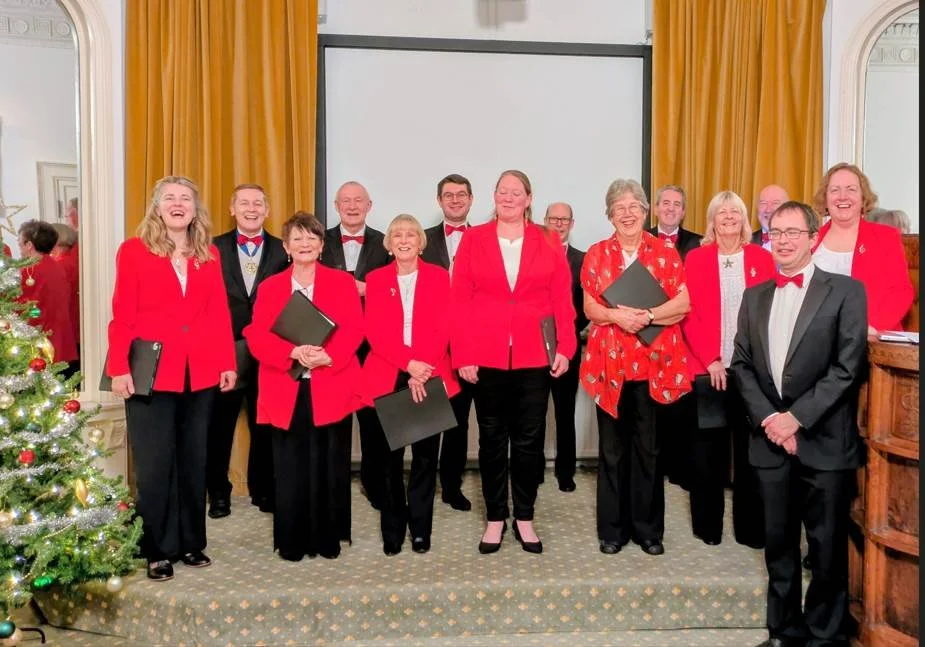
Curtain Up For Christmas
Charity Social Event with festive music, readings and humour
Main Street Sound, Noteworthy & YMS members

Walking Tour: The Historical Features of York
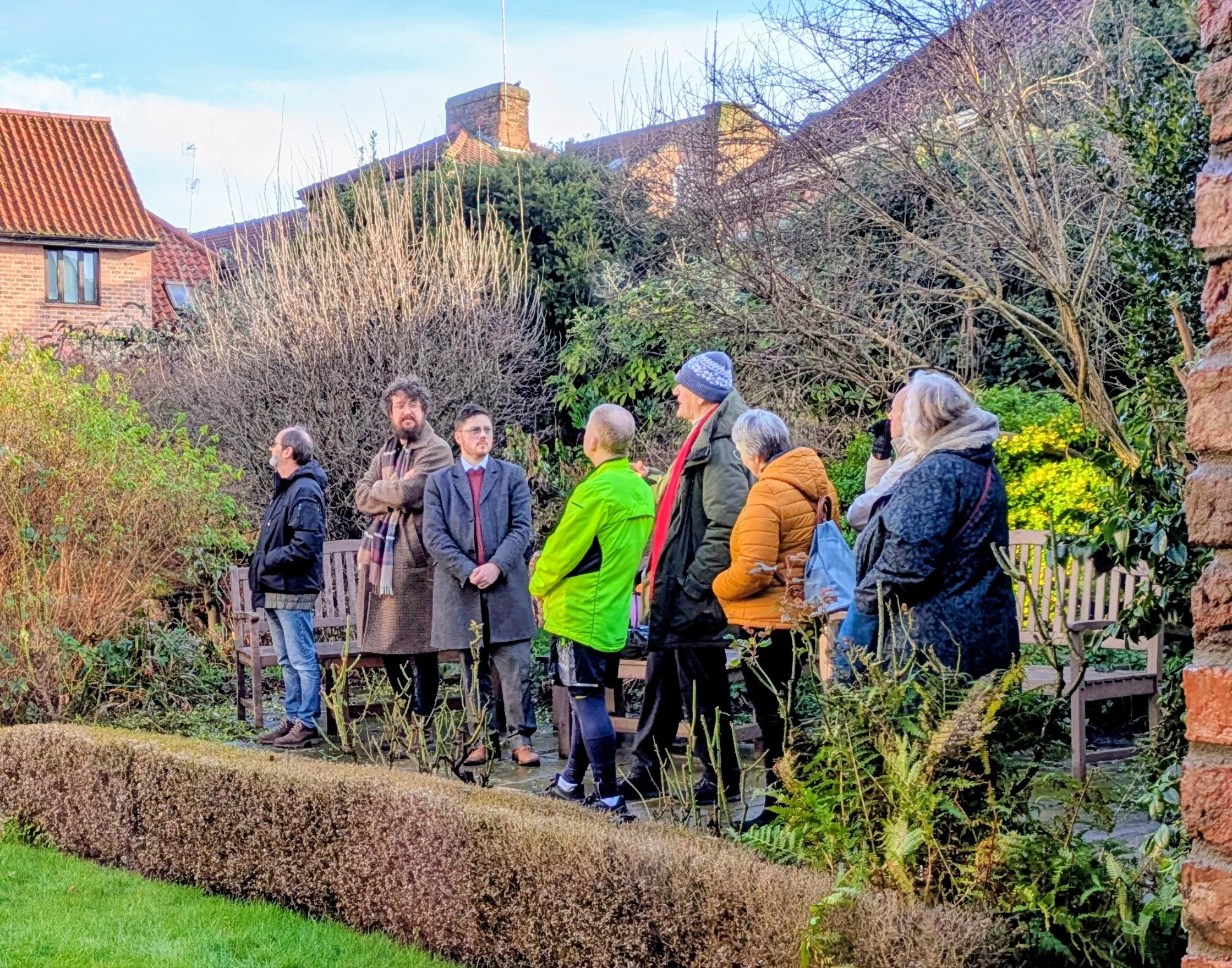
Join us for a walking tour discovering the historical features of York led by Dr David Hartley - York Voluntary Guide.
Tea/Coffee and Cakes will be served afterward.
You are then invited to join us for Evensong Celebration of St Luke at York Minster at 4pm.
Please see membership mailing to book or email yorkmedicalsociety@gmail.com
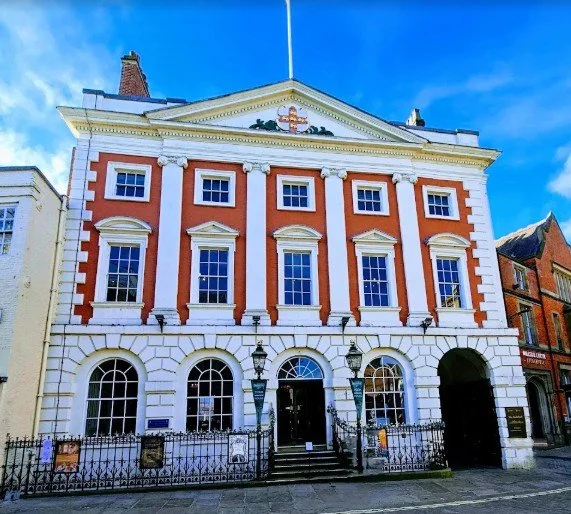
York Medical Society Annual Dinner
York Medical Society Annual Dinner - Saturday 10 October 2026
This year’s dinner is in the lovely setting of York’s Mansion House and will be accompanied by wines that have been specially imported for a three course dinner from The Pickled Fork, caterers with an excellent pedigree
7:30 for 8pm, carriages at 11pm
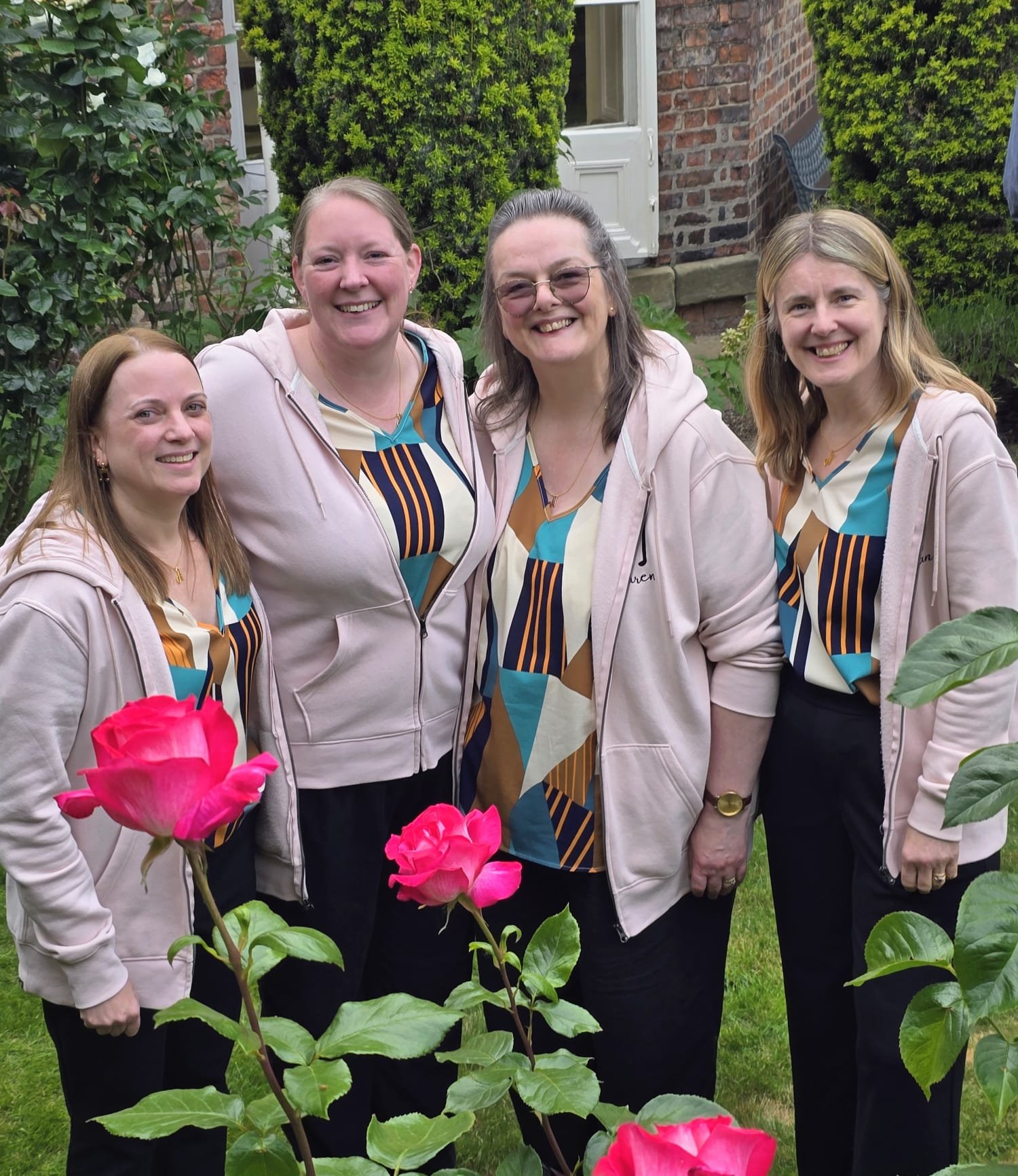
Music by The Blenkiron Sisters
£84 per person
Black Tie - Three Course Meal by The Pickled Fork Click here to view menu
Paired wines and port from York Medical Society Wine Club, Soft Drinks, Tea & Coffee
Open to Society Members and their Guests
Deadline for bookings and menu choices: Tuesday 15 September
Book via member mailing or email yorkmedicalsociety@gmail.com
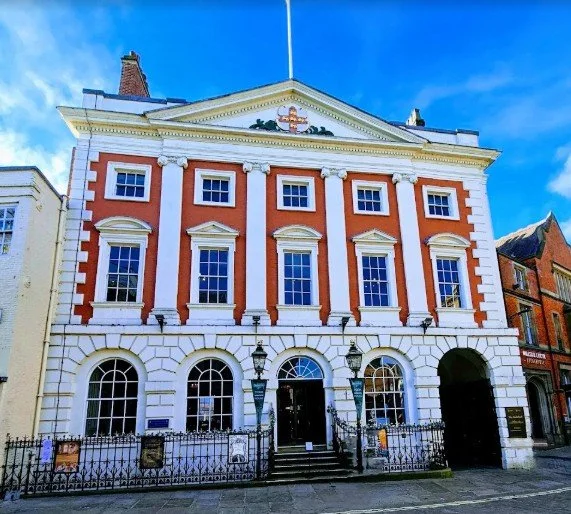
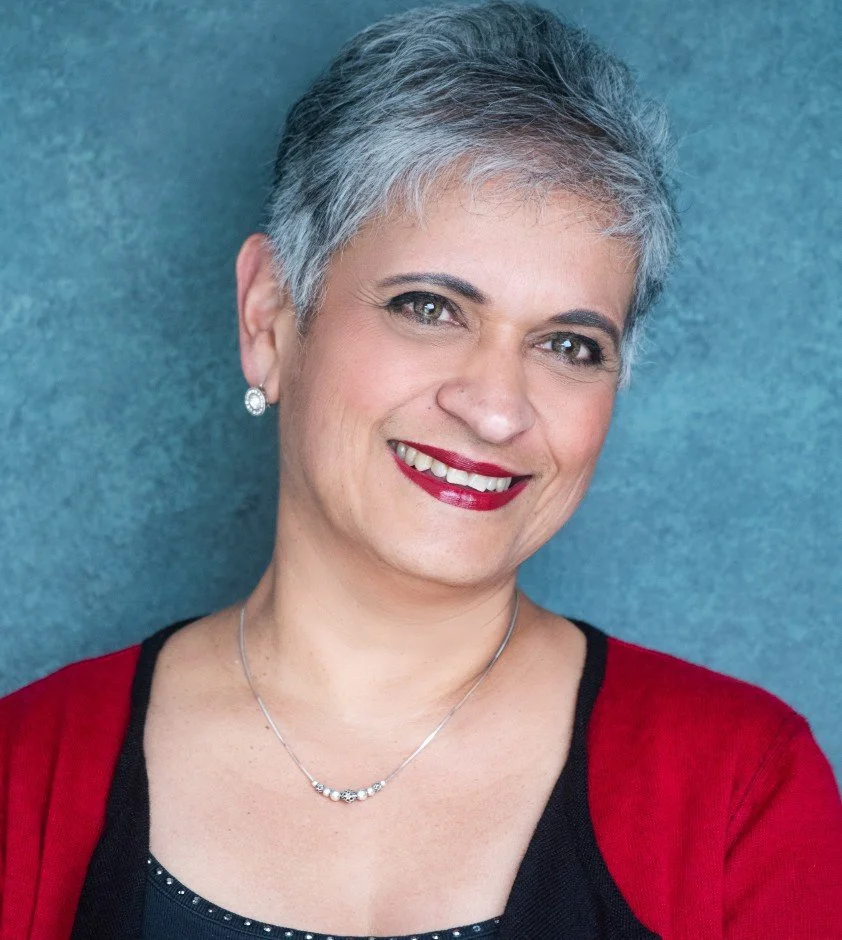
York Medical Society Annual Public Oration
President Barbara Adams invites you to join us for this year’s York Medical Society Annual Public Oration at The Society Rooms, 23 Stonegate, York YO1 8AW
2pm to 4pm
“Transformation and Change in The National Health Service”
Professor Kamila Hawthorne MBE MD FRCGP FRCP FAcadMed (Hon) FLSW FFPH (Hon) DRCOG DCH(Lond) DFFP PG Cert Med Ed
Kamila has been a GP in South Wales for 31 years, and a GP for 37 years, having qualified from Somerville College, Oxford in 1984, and completed her GP training in Nottingham in 1988. She grew up in Dar-Es-Salaam, Tanzania. Prior to arriving in South Wales, she was a GP partner in practices in Nottingham and Manchester. She is the immediate past Chair of the Royal College of GPs, having demitted office at the end of November 2025. She is on the Trustee Boards of the Kings Fund, and Moondance Cancer Initiative, the Chair of Trustee Board for two charities, the National Academy of Social Prescribing, and Pathway (health inclusion for homeless people). She is the patron of Health Literacy UK. She is also a Bevan Commissioner and a Fellow of the Learned Society of Wales.
Her research and clinical working interests have been in health inequalities and access to health services, (her MD was based on link-worker-led culturally appropriate health education for BAME patient groups with Type 2 diabetes in Nottingham, Manchester and Cardiff). With wide experience of general practice and running community projects in diabetes and heart disease, she has been named ‘GP of the Year’ twice, Woman of the Year 2024 at the GG2 Leadership and Diversity Awards and was awarded an MBE in 2017 for services to General Practice. She has been an MRCGP Examiner for 26 years. More recently, she has been Head of the Graduate Entry Medicine programme at Swansea University (2019-2022).
Kamila is now retired from clinical general practice, but is keeping very busy with her charitable activities, gardening and spending time with her grandson.
The meeting will conclude at approximately 3.15pm, when tea and cakes will be served
Attend in person or via Zoom
We look forward to welcoming you for a fascinating afternoon
Please note this is a free public event. For non YMS members please email yorkmedicalsociety@gmail.com to book.
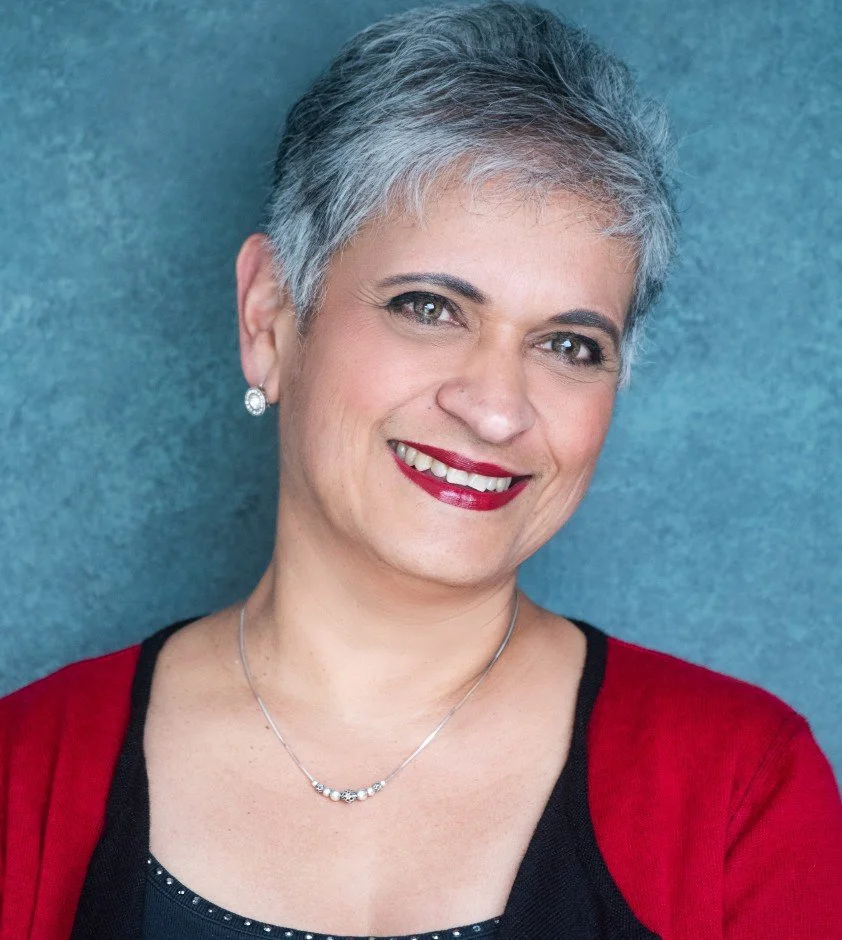
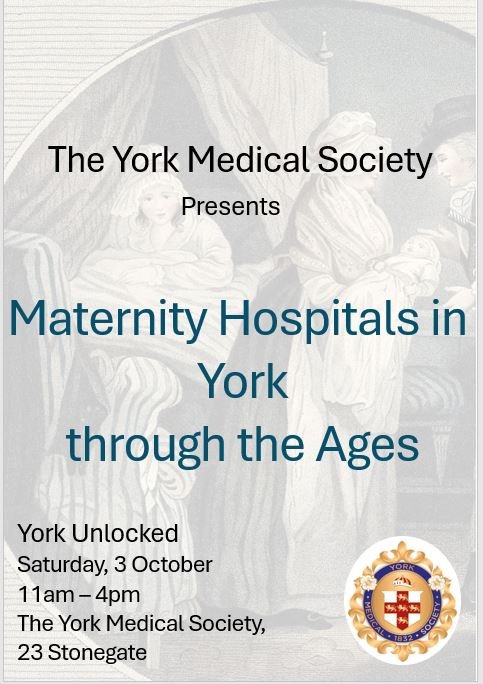
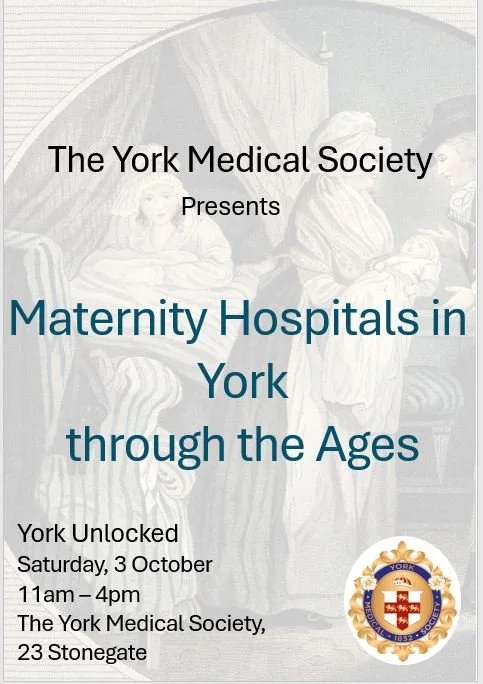
Maternity Hospitals in York through the Ages - part of York Unlocked Festival
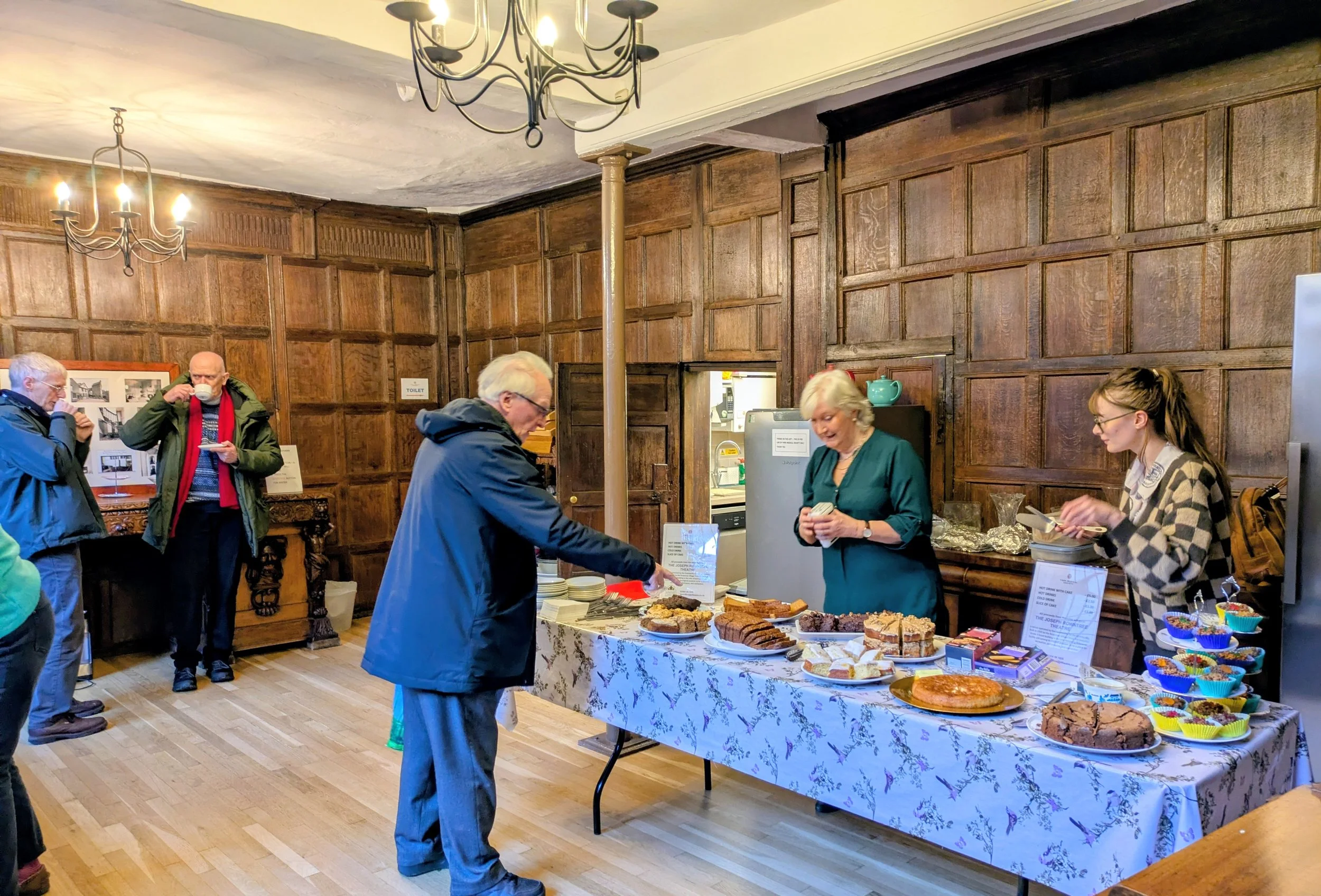
On Saturday 3rd October, the Society opened its doors for York Unlocked and displayed “Maternity Hospitals in York through the Ages”. The exhibition has brought together material on the history of maternity care in York, including photographs relating to Fulford and Acomb maternity hospitals.
Thank you to everyone who donated cakes, helped welcome visitors, and worked tirelessly all day to serve the vast number of teas, coffees and cakes. We had so many cakes on the day and amazingly we sold most of them as we had an incredible number of visitors through the door- 628!
£624 was raised from the sales. This will go to the President’s local charity, ‘The Millie Wright Children’s Charity’.
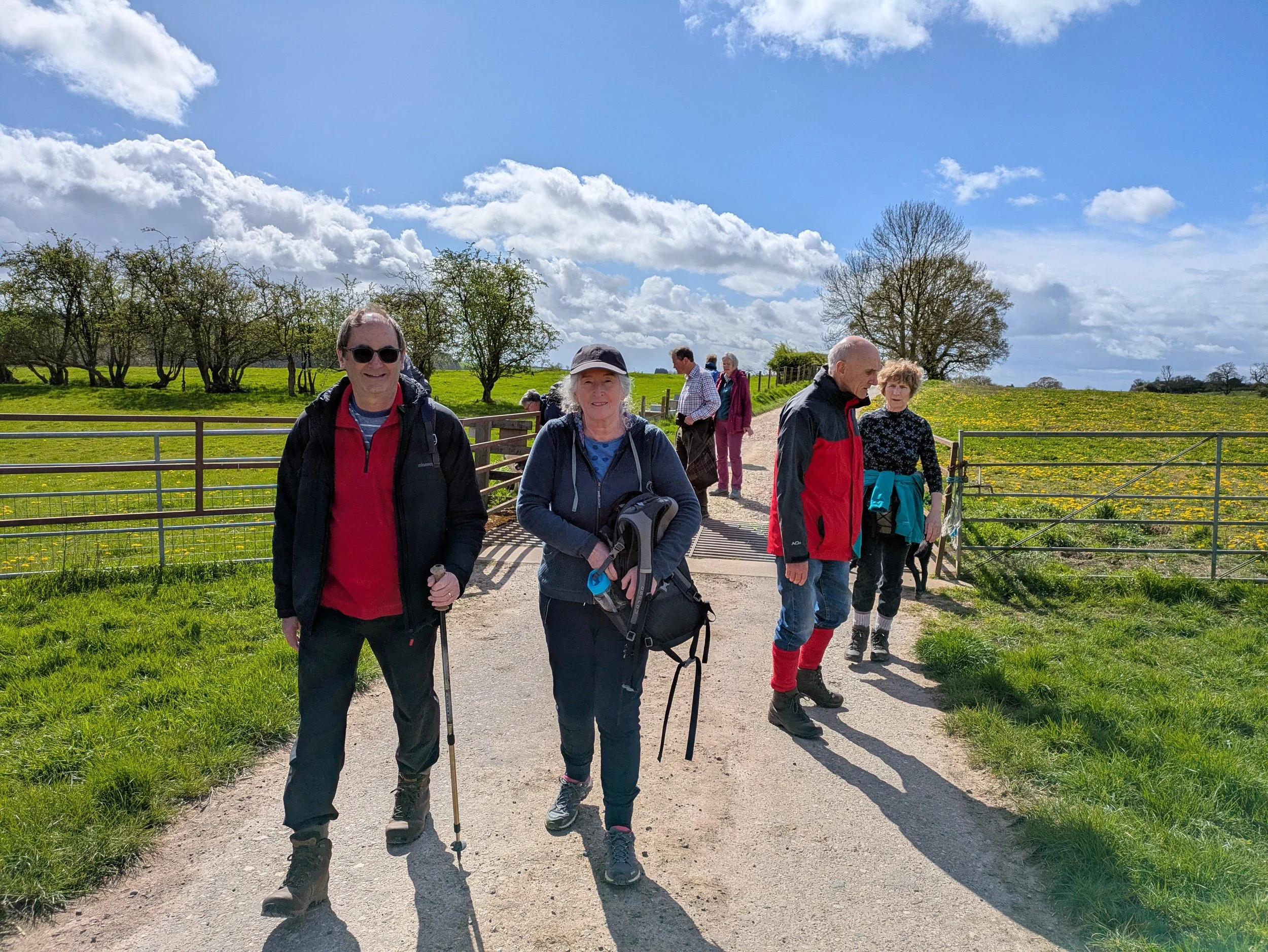
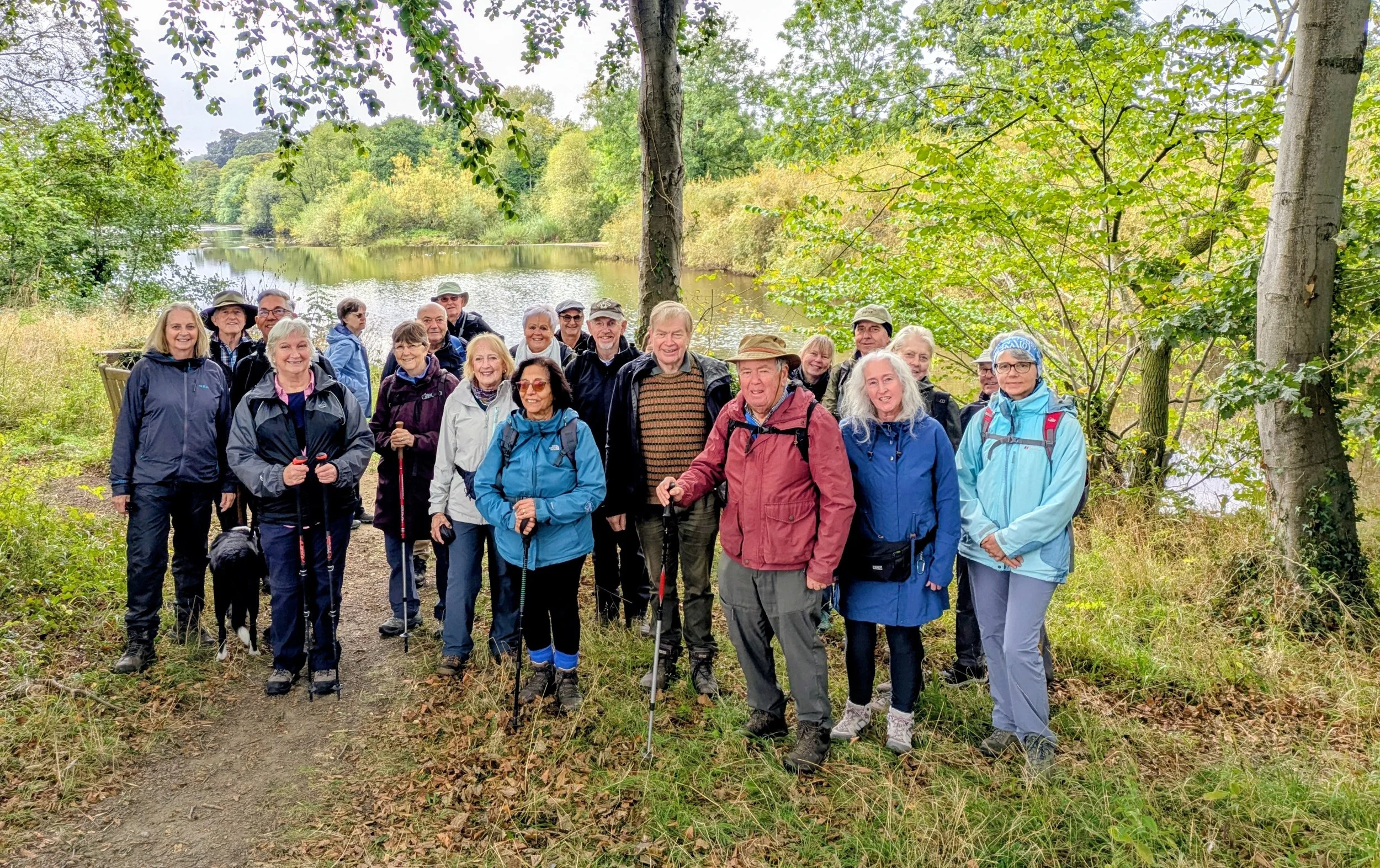
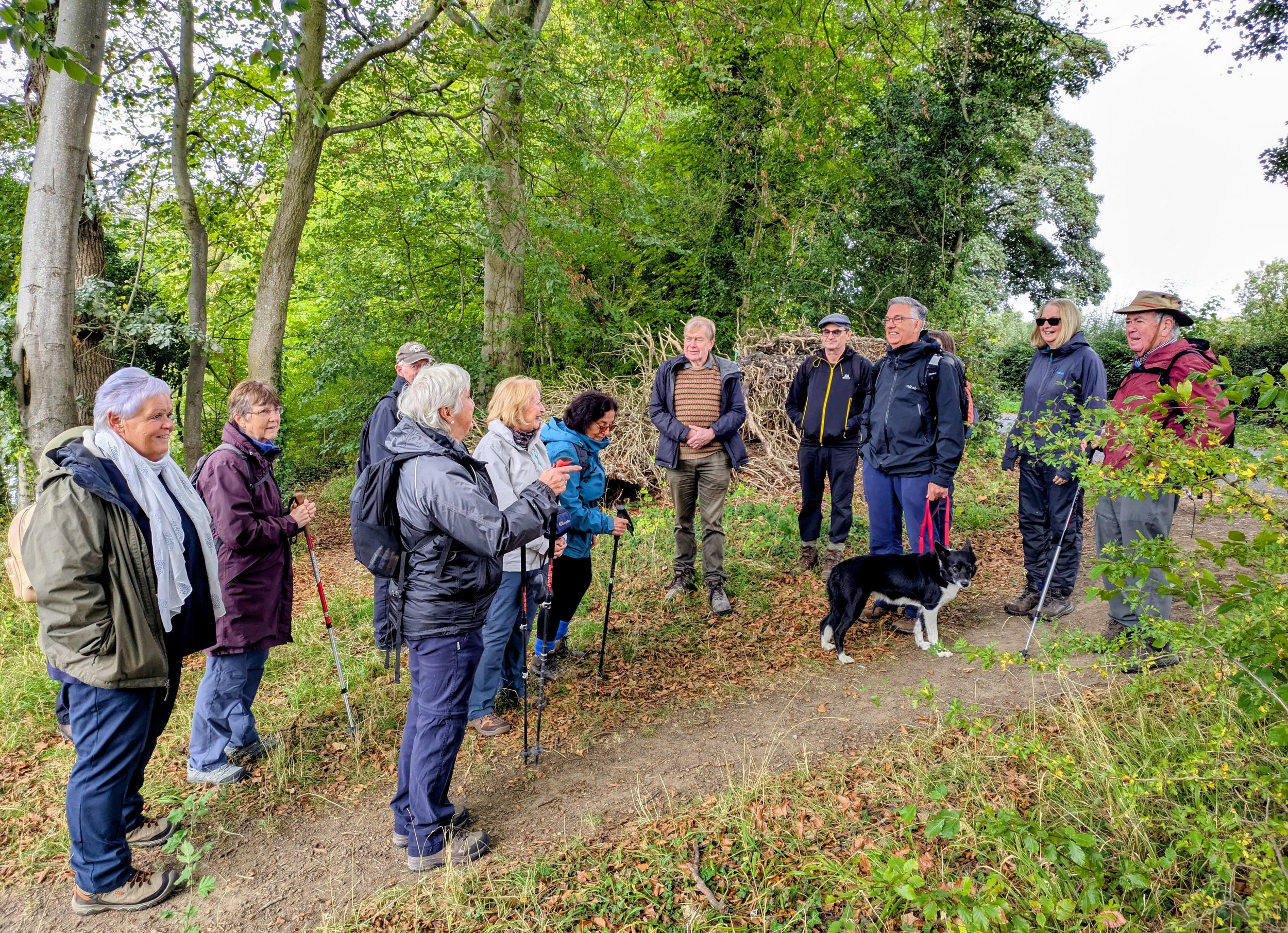
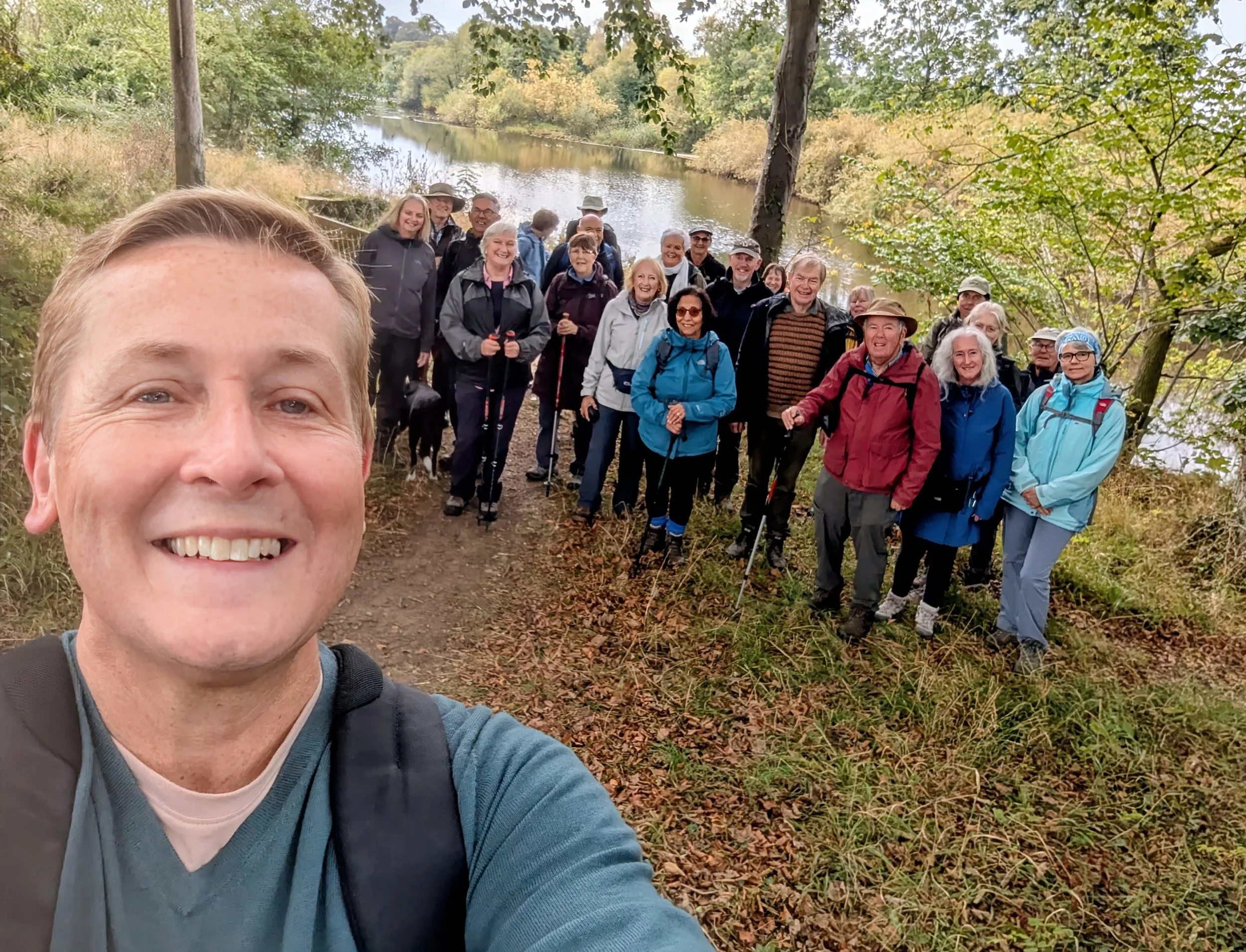
Autumn Walk
The Thornborough Henges - Sunday 27 September
Greg Richardson led a 4 mile walk around the ‘Stone Henge of the North’.
The Thornborough Henges are an ancient monument complex that includes the three aligned henges that give the site its name. They are located on a raised plateau above the River Ure near the village of Thornborough in North Yorkshire.
Afterwards we enjoyed Sunday lunch at The Bull Inn.
Thanks to all who joined us.
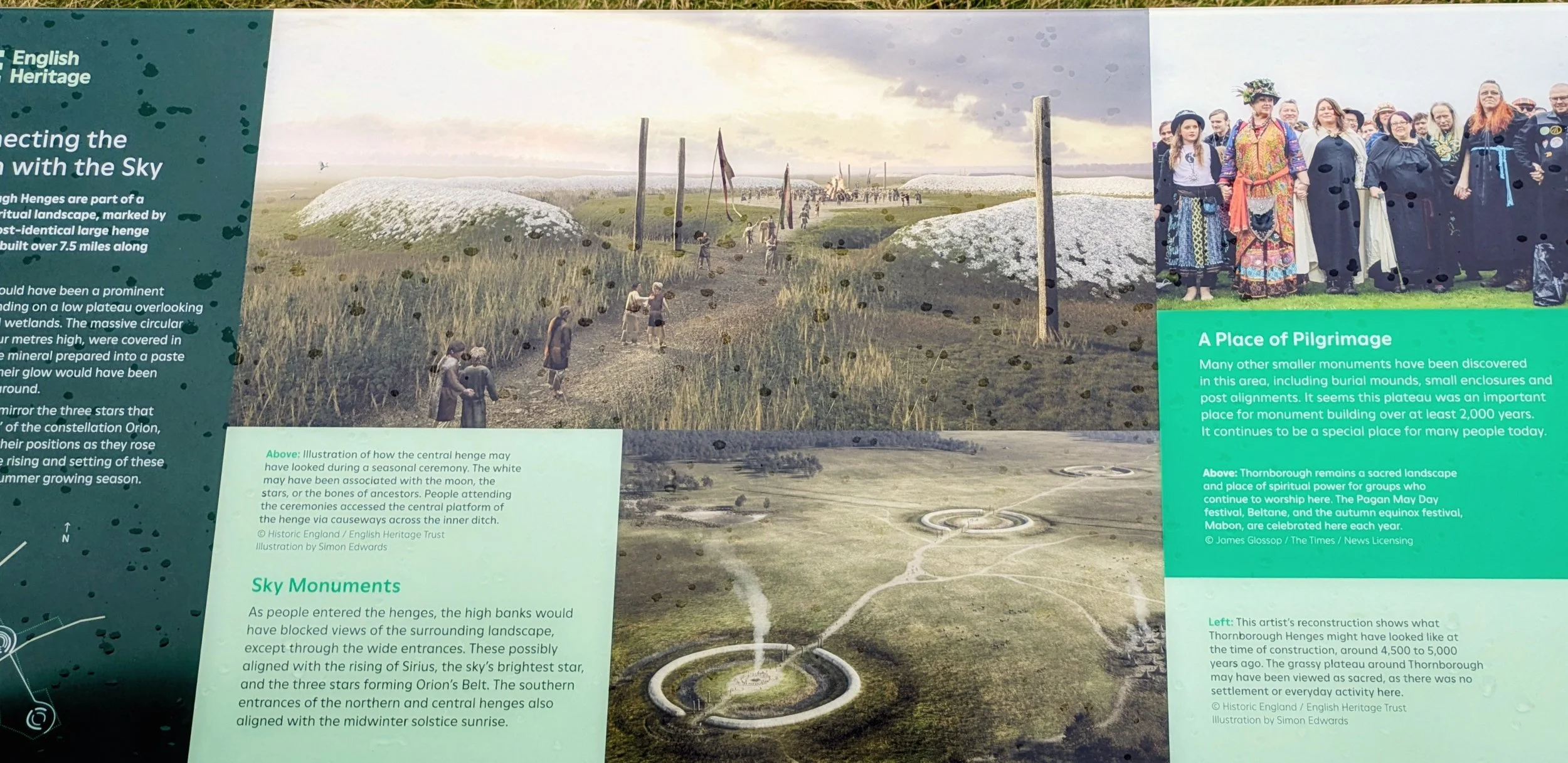
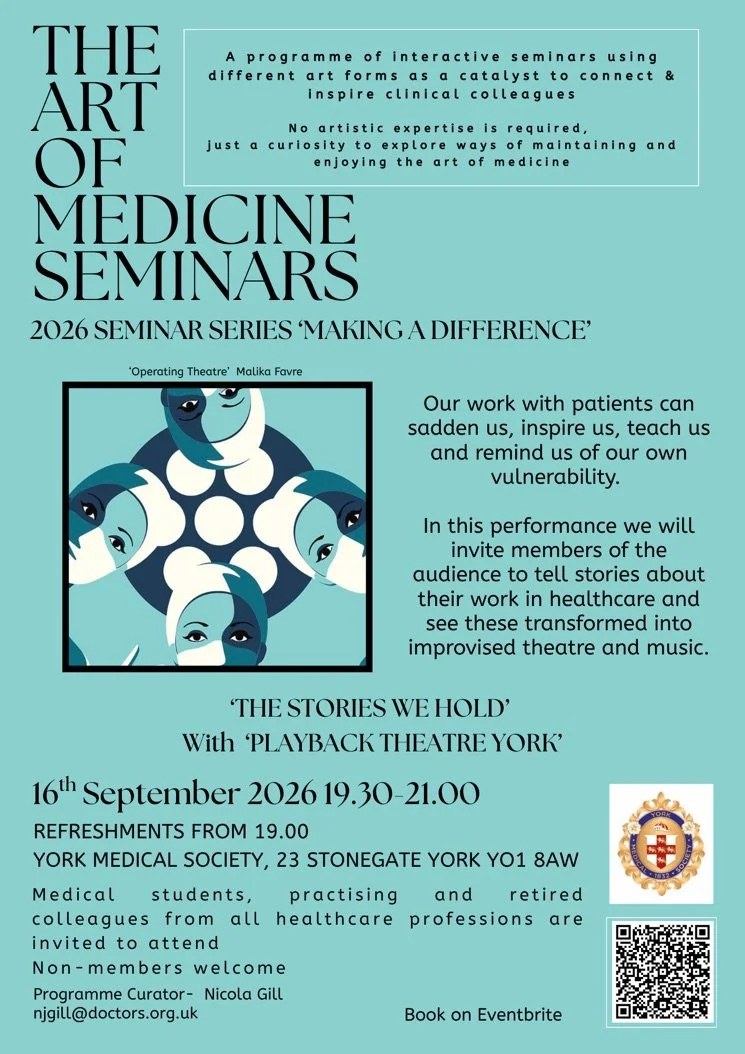
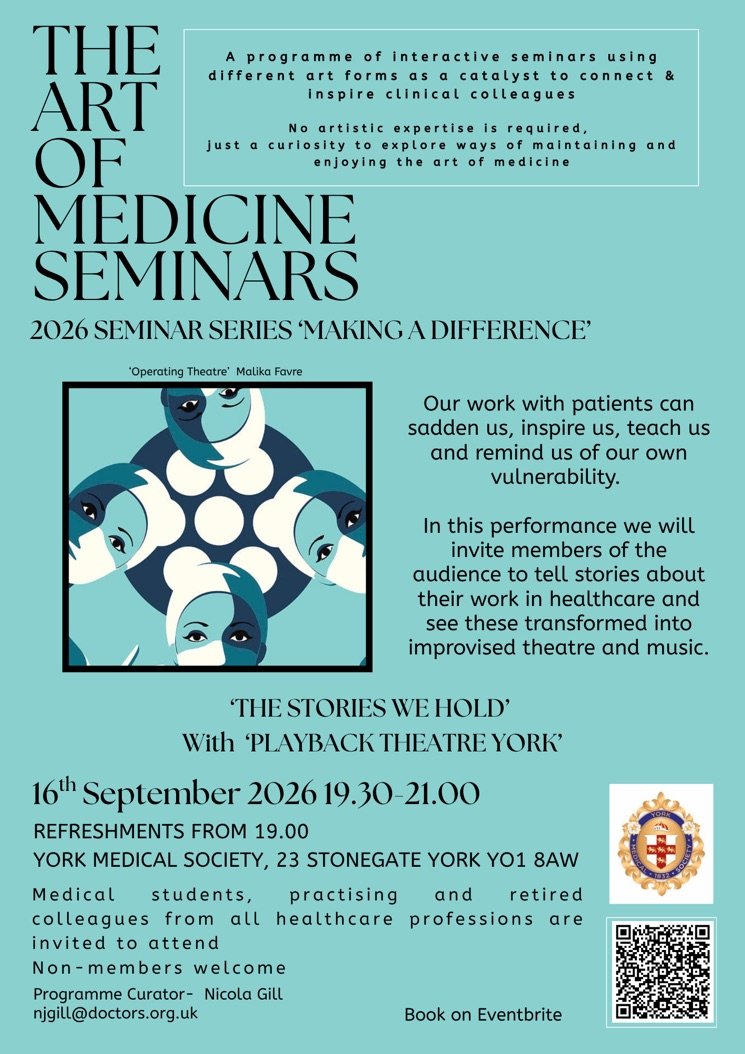
The Art of Medicine Seminars - Making a Difference - The Stories We Hold
The Art of Medicine Seminars- Making a Difference- The Stories We Hold
Tea and Coffee is available before the seminar from 19.00
Playback Theatre York are back for another seminar.
Our work with patients can sadden us, inspire us, teach us and remind us of our own vulnerability.
In this performance we will invite members of the audience to tell stories of their work in healthcare and see these transformed into improvised theatre and music by the wonderful Playback Theatre York.
https://www.theartofmedicine.co.uk/events/york-medical-society
https://www.eventbrite.com/e/1984554421698?aff=oddtdtcreator
Playback performed at our first seminar in 2025.
Participants said they felt: Amazed, joyful, invigorated, and enthused.
What a wonderful event! Thanks to the audience for being open and to Playback for an astonishing experience. I think differently now about what theatre is about now.
I came to the seminar with unrealised expectations, yet I was still blown away. Having never experienced improvised drama, I was not prepared for the laughs and relief from the monotony of day to day life it brought me. I felt privileged to have spent my evening in such an intimate atmosphere with those so talented.
The Art of Medicine Seminars - Making a Difference - Healing Spaces
The Art of Medicine Seminars- Making a Difference- Healing Spaces
Tea and Coffee available before the seminar from 19.00
In this interactive seminar we will be joined by colleagues from the University of York and the Hospital Arts Team.
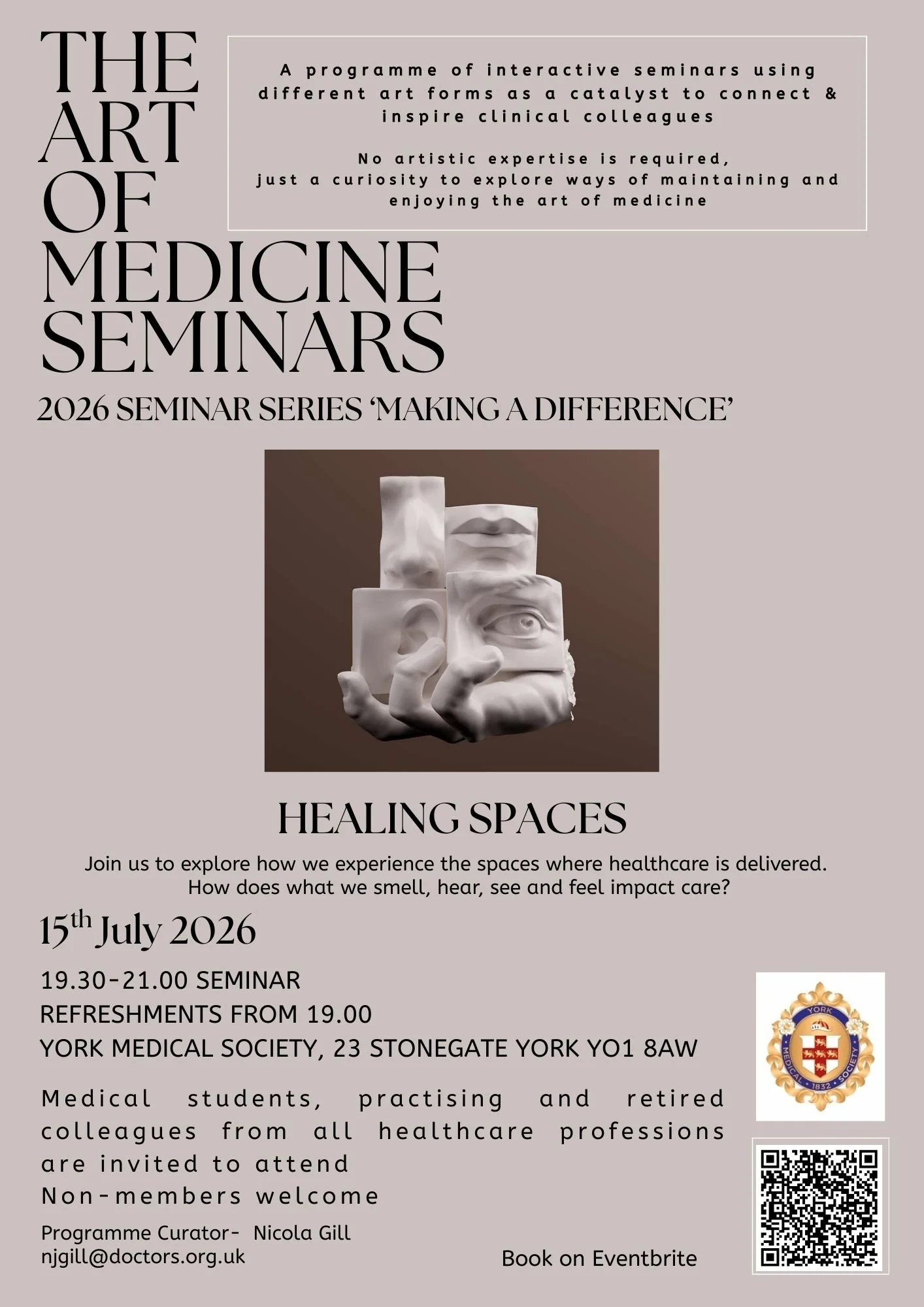
How do we experience the spaces where healthcare is delivered?
How does what we smell, hear, see and feel impact care?
We invite you to join us to connect with colleagues and to enjoy a little bit of creative activity to tap into your own experiences of healthcare environments.
Eventbrite Link to Book
https://www.eventbrite.co.uk/e/1984552649397?aff=oddtdtcreator
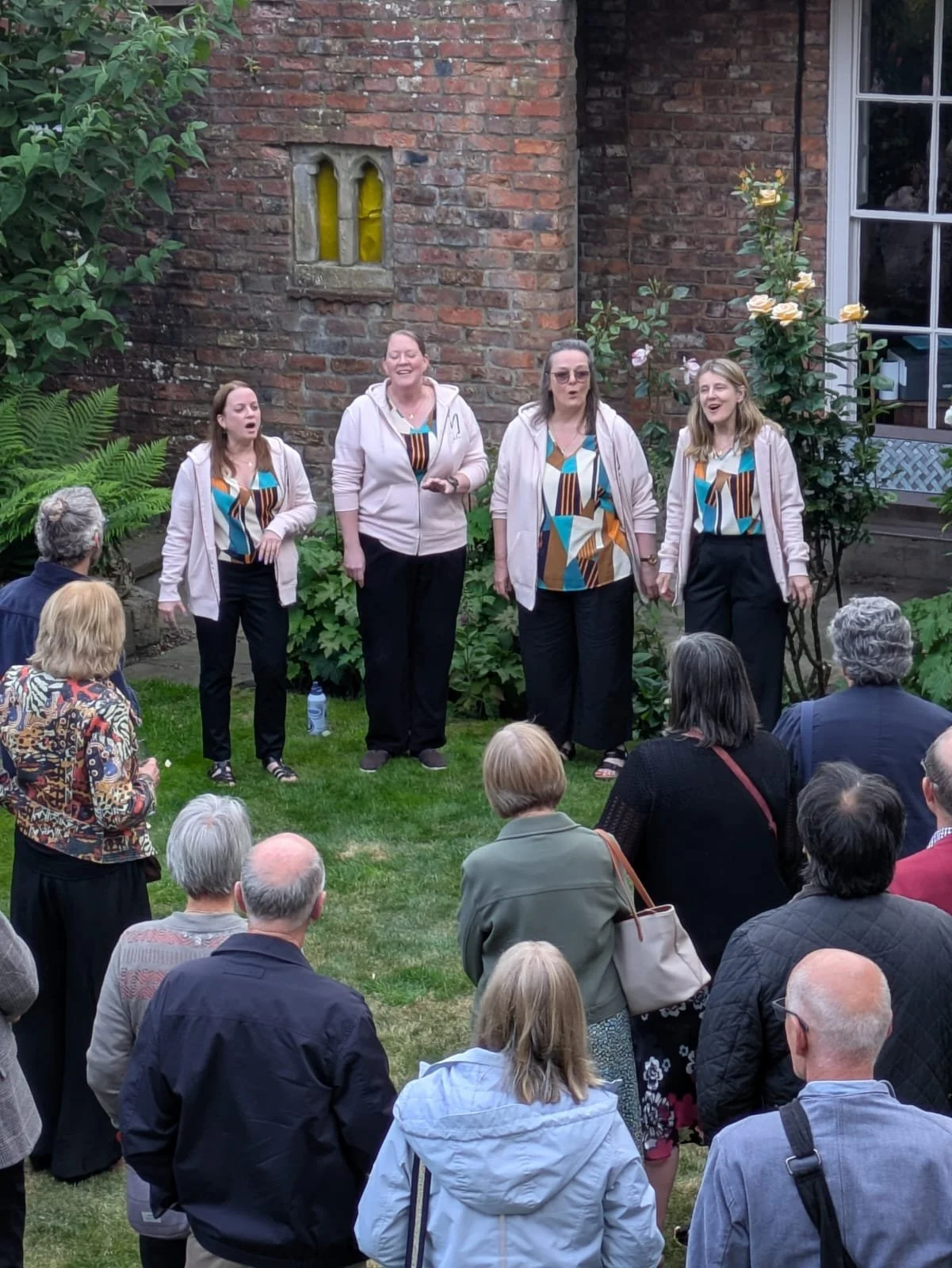
An Evening of Summer Delights with Noteworthy
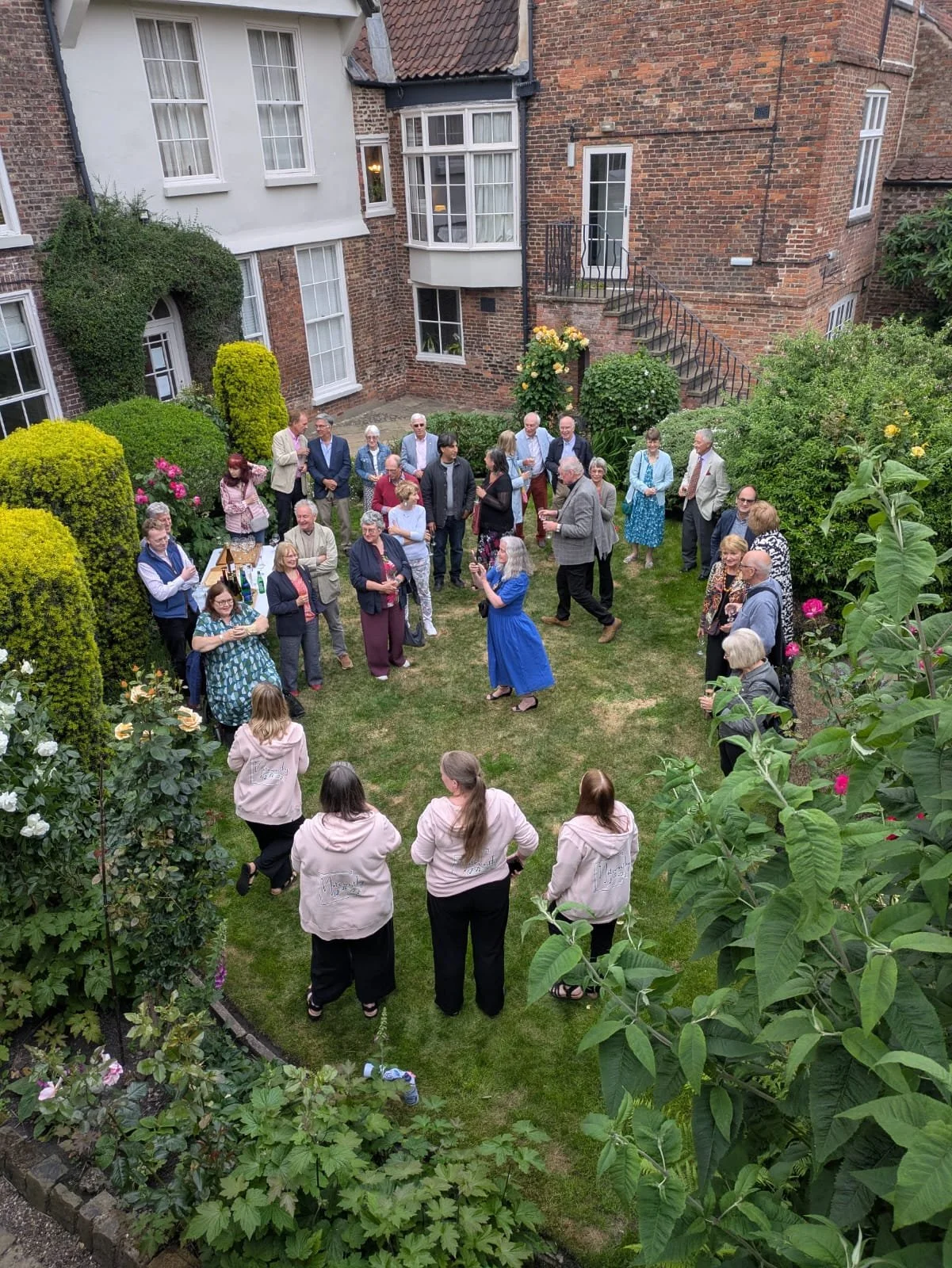
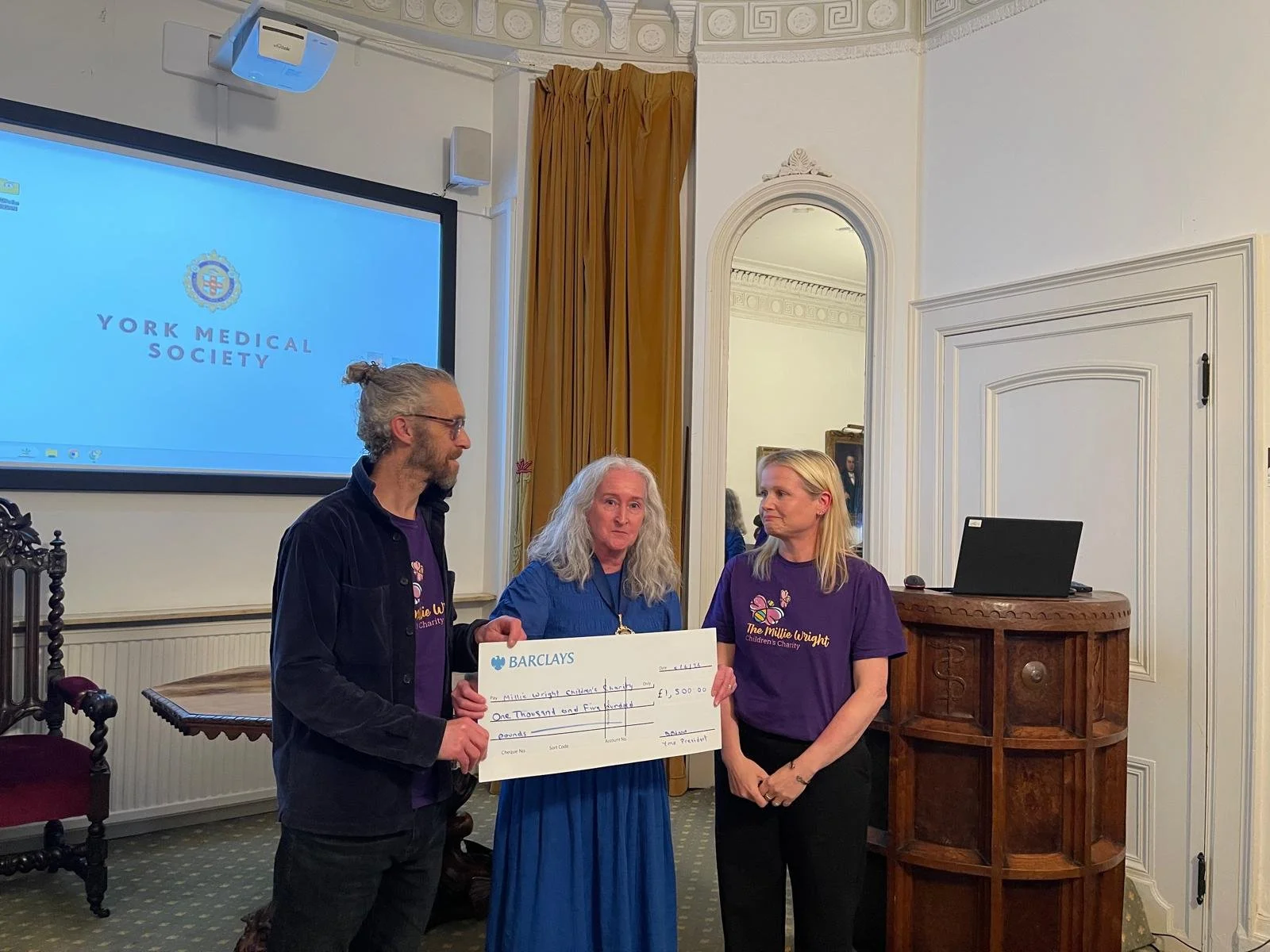
YMS Charity Social Event raising funds for The Mille Wright Children’s Charity
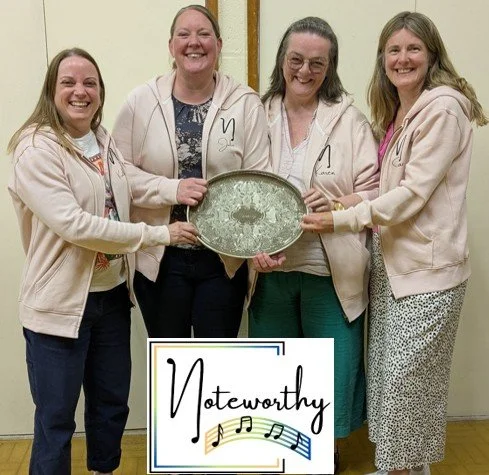
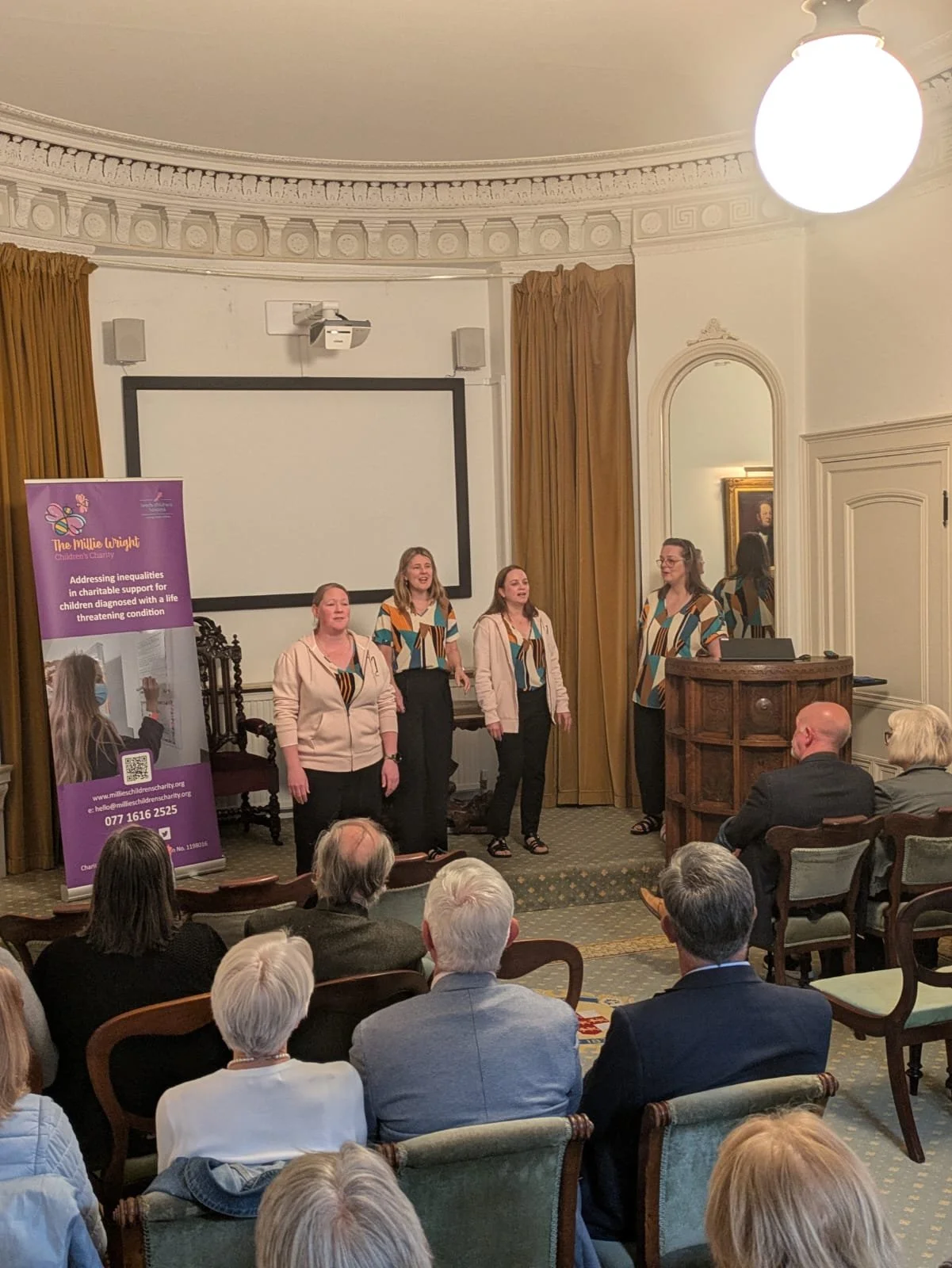
Noteworthy - Award Winning Ladies Barbershop Quartet
Ceri & Nigel Wright - The Millie Wright Children’s Charity
Noteworthy will perform a selection of pieces ranging from Bruce Springsteen's Dancing in the Dark, to the more relaxing Eva Cassidy's Songbird before premiering their contest pieces for this year. They will sing in the YMS gardens (weather permitting) whilst you enjoy a glass of Prosecco.
Moving through to the Lecture theatre, Ceri and Nigel Wright will do a short presentation introducing The Millie Wright Children's Charity. This charity provides family support to parents and family members caring for children with life-threatening conditions. This support can be a combination of practical, financial and emotional. The charity funds a Family Support Worker at Leeds Children's Hospital and leads a 'feed the parents' initiative, enabling the parents of long-stay patients access to food at the hospital. Also featured as a family support 'hardship' grant and the provision of essentials such as toiletries, clothing or other items that help parents going through extremely difficult times."
"From our lived-experience we seek to address inequalities in charitable support where some medical conditions are better-supported than others
The evening will finish with a second performance from Noteworthy.
An enjoyable evening was had by all and c£600 raised for The Millie Wright Children’s Charity. Thank you to all attendees for their kind donations.

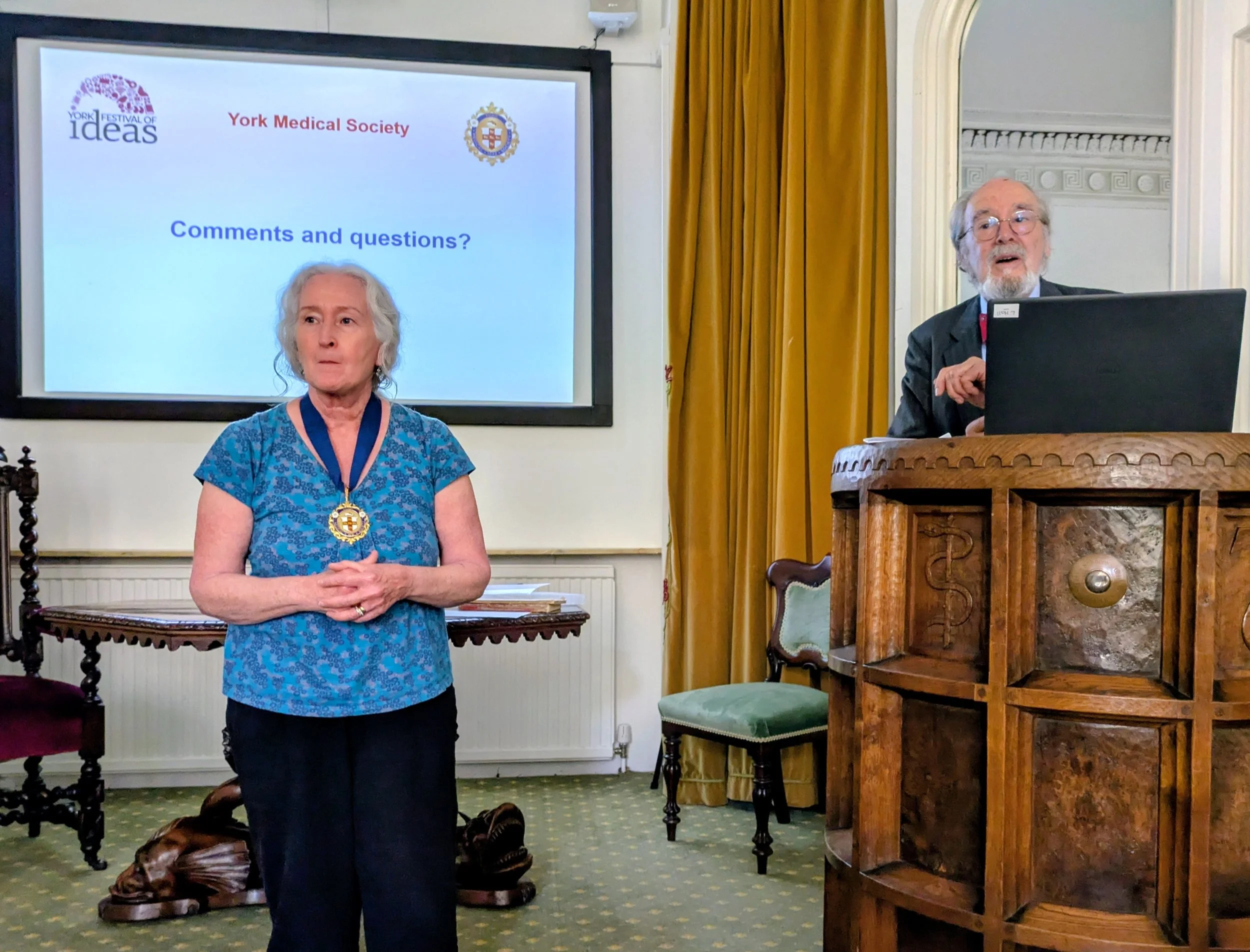
York Festival of Ideas: The Evolution of Maternity Care in York
Professor James Drife FRCOG gave a public lecture on the Evolution of Maternity Care in York.
This is event was part of the York Festival of Ideas.
James Drife traces childbirth from perilous home births and untrained care to safer, modern maternity services and national provision.
The Evolution of Maternity Care in York
In the 19th century, childbirth was perilous for both mother and baby, with prolonged labours taking place at home. Pain relief and caesarean section were unavailable, and GPs had no training in the use of forceps. Obstetrician James Drife explores the evolution of maternity care, from the era of untrained midwives to the development of national maternity services and beyond. After the talk, as part of the ticket, there will be an opportunity to see an exhibition of some of the objects from the York Medical Society collection related to the talk until 4.30pm.
Disclaimer: There was no involvement from the York Maternity Unit.


Spring Wine Tasting
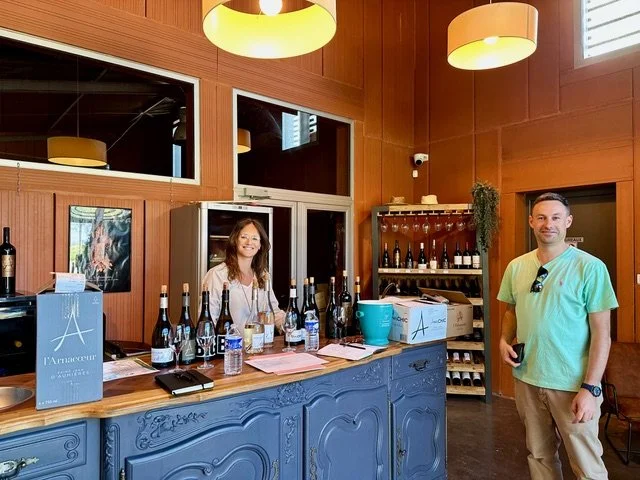
A Tutored Tasting of Wines from the Languedoc
Time flies and the Spring Tasting approaches!
We’ve got some treats for you to enjoy in this tutored Spring tasting. Come and enjoy some great wines and hear about the growers involved.
Join us at 23 Stonegate on Friday 22 May at 7.00pm
Please click here for the details.
It’ll be a great evening and with a bit of luck we’ll enjoy a glass in the YMS gardens before the tasting starts…
Tickets are £12 per person. Up to 2 guests per member are welcome and places will be given on a first-come-first-served basis.
We look forward to seeing you all.
Stuart and Pennie
York Medical Society Wine Club
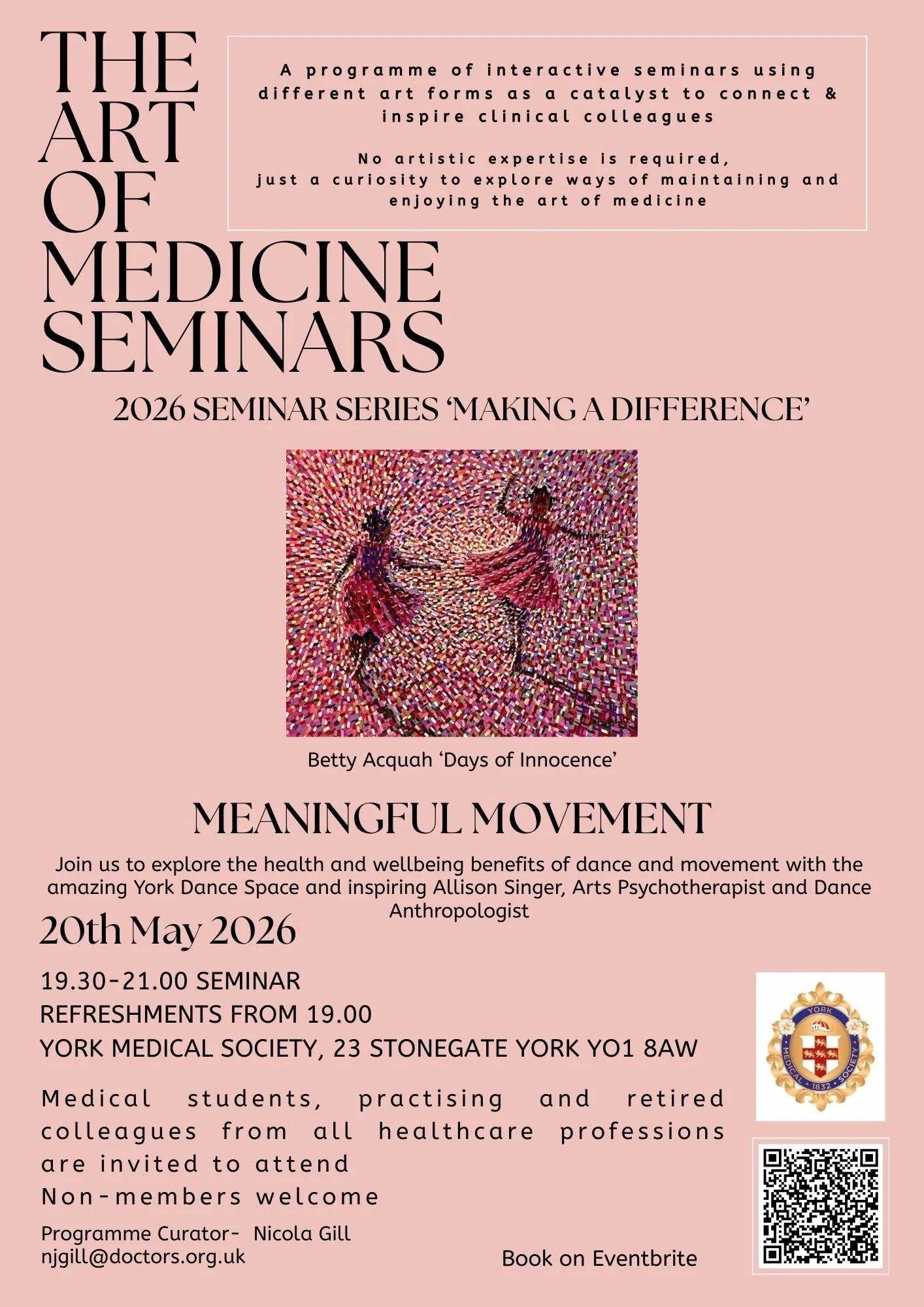
The Art of Medicine Seminars - Making a Difference - Meaningful Movement
The Art of Medicine Seminars - Making a Difference - Meaningful Movement
Tea and Coffee available before the seminar from 19.00
Join us to explore the health and wellbeing benefits of dance and movement with the amazing York Dance Space and inspiring Allison Singer, Arts Psychotherapist and Dance Anthropologist.
Eventbrite Link to Book
https://www.eventbrite.co.uk/e/1984549172999?aff=oddtdtcreator
More information about our seminar facilitators:
York Dance Space was created in 2016 by Dance Artists Hannah and Drew Wintie-Hawkins. After graduating from London Contemporary Dance School they had extensive performing careers before moving back to Hannah's home town, York to create their own independent dance organisation. They are dedicated to promoting the arts and fostering creativity in the community. They mission is to provide accessible cultural experiences that enrich and inspire. They aim to create a kind and inclusive space to dance.
Take a look at their website to see how they are using dance in schools and our community.
Dr Allison Singer is a Senior Humanistic and Integrative Arts Psychotherapist and Clinical Supervisor with over 25 years clinical experience. She is also a Dance Anthropologist and Ethnomusicologist; and has a background in Dance Movement Psychotherapy, Dramatherapy, and Yoga teaching. Allison's clinical experience includes work with people with complex trauma; depression and anxiety; and with refugee and internally displaced people in a post-conflict zone (De Montfort University, PhD 2007); people with dementia and their carers; and working with life transitions. She focuses mainly on work with women. Allison is the founder and director of The Centre for Movement and Creative Arts in Psychotherapy (MAPTHY); co-founder of the North East Arts Therapies group (NEAT); and a former Chair of the Association for Dance Movement Psychotherapy. She has also led and been a Senior Lecturer and Consultant on MA Professional Arts Therapies and Arts in Health professional training programmes in the UK.
Read more about MAPTHY on their website.
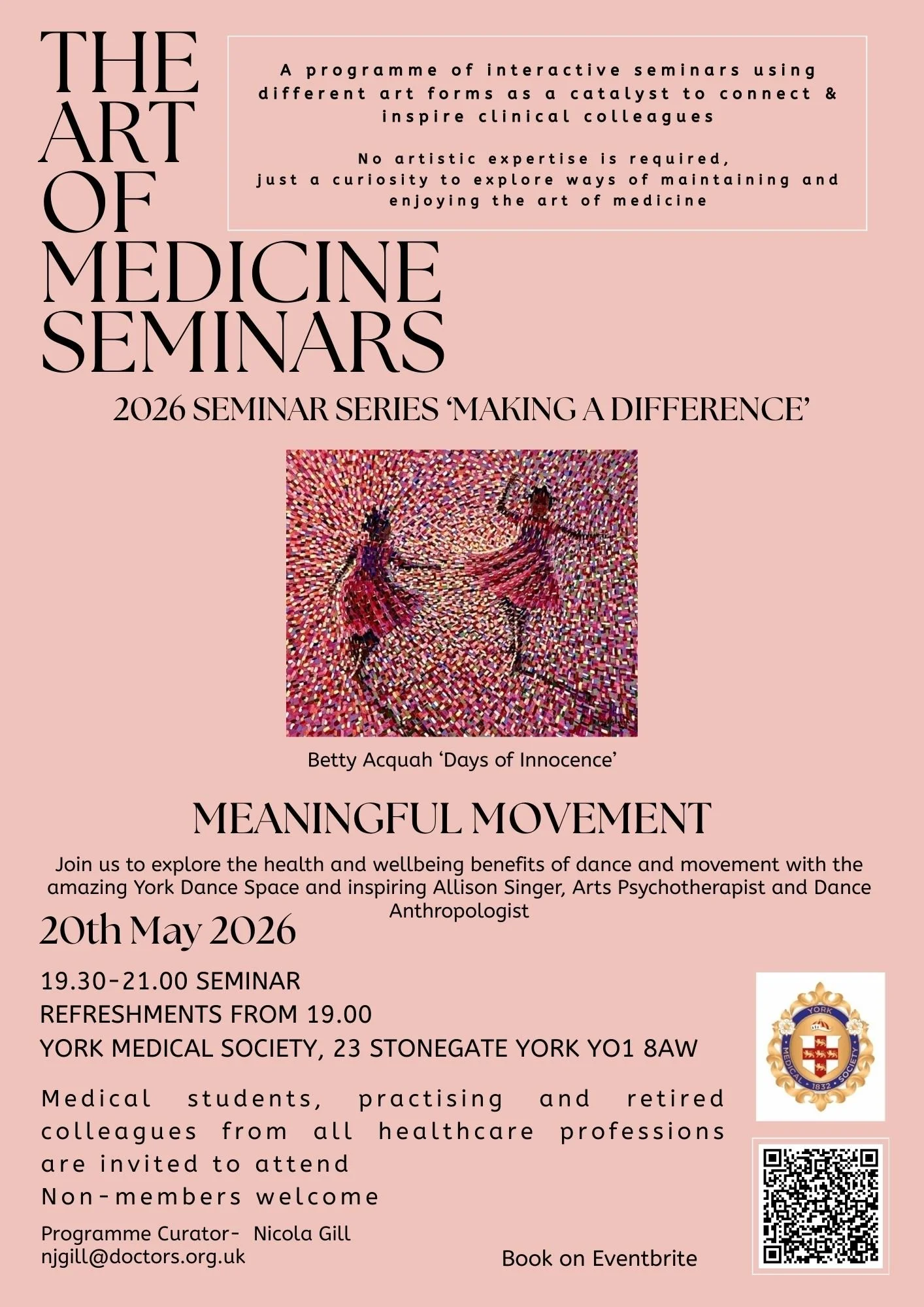

AGM followed by President's Valedictory Address
The AGM will be held in person at 23 Stonegate and also with the option to join in by Zoom.
The AGM is to be held on Friday 15th May 2026 at 7.30pm. Formal notice of the meeting and reports can be found on your mailing.
Professor Paul Blenkiron will give his valedictory address 'Happiness: What It Is and How To Get More Of It'
A copy of Paul’s presentation: Happiness, What It Is and How To Get More Of It
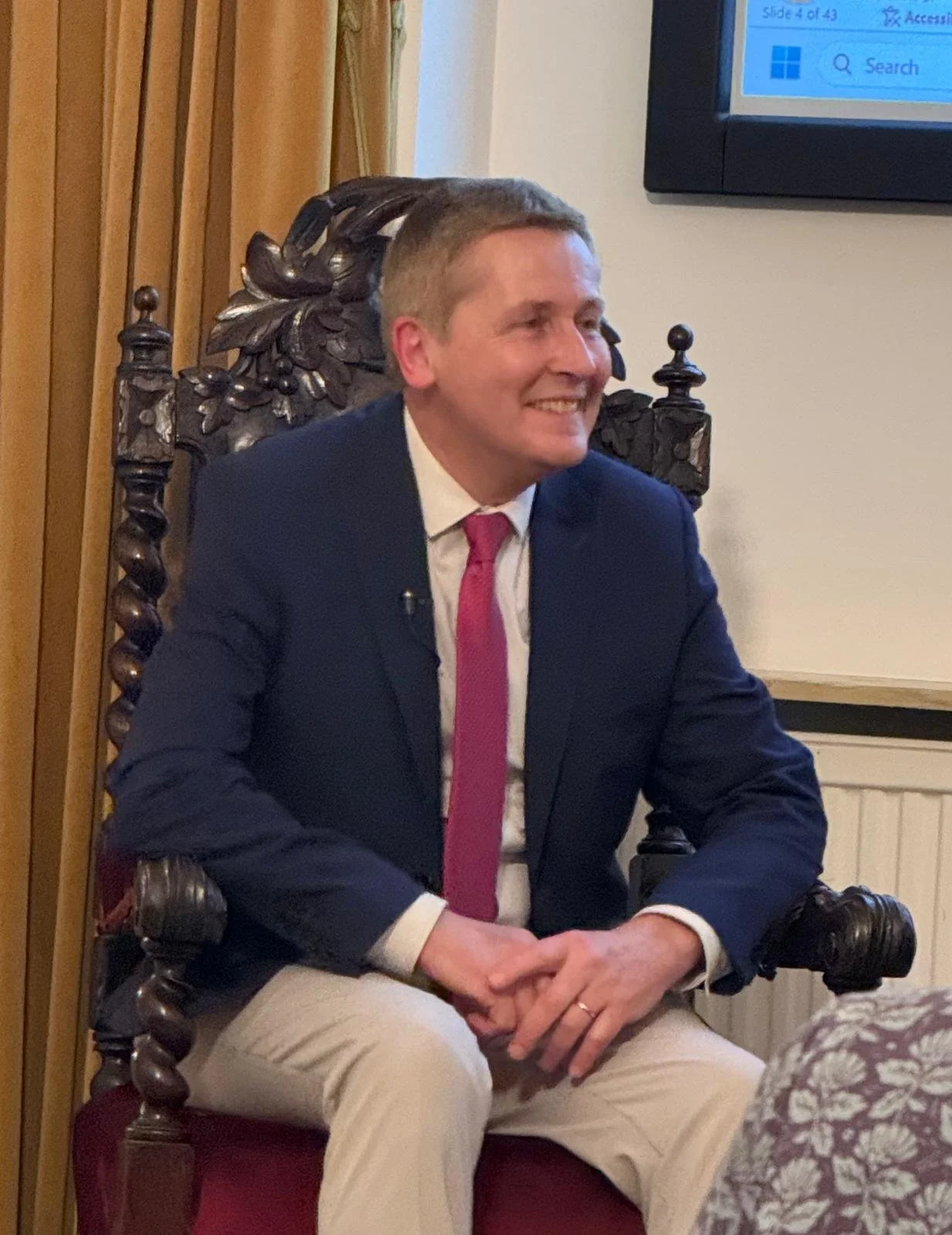
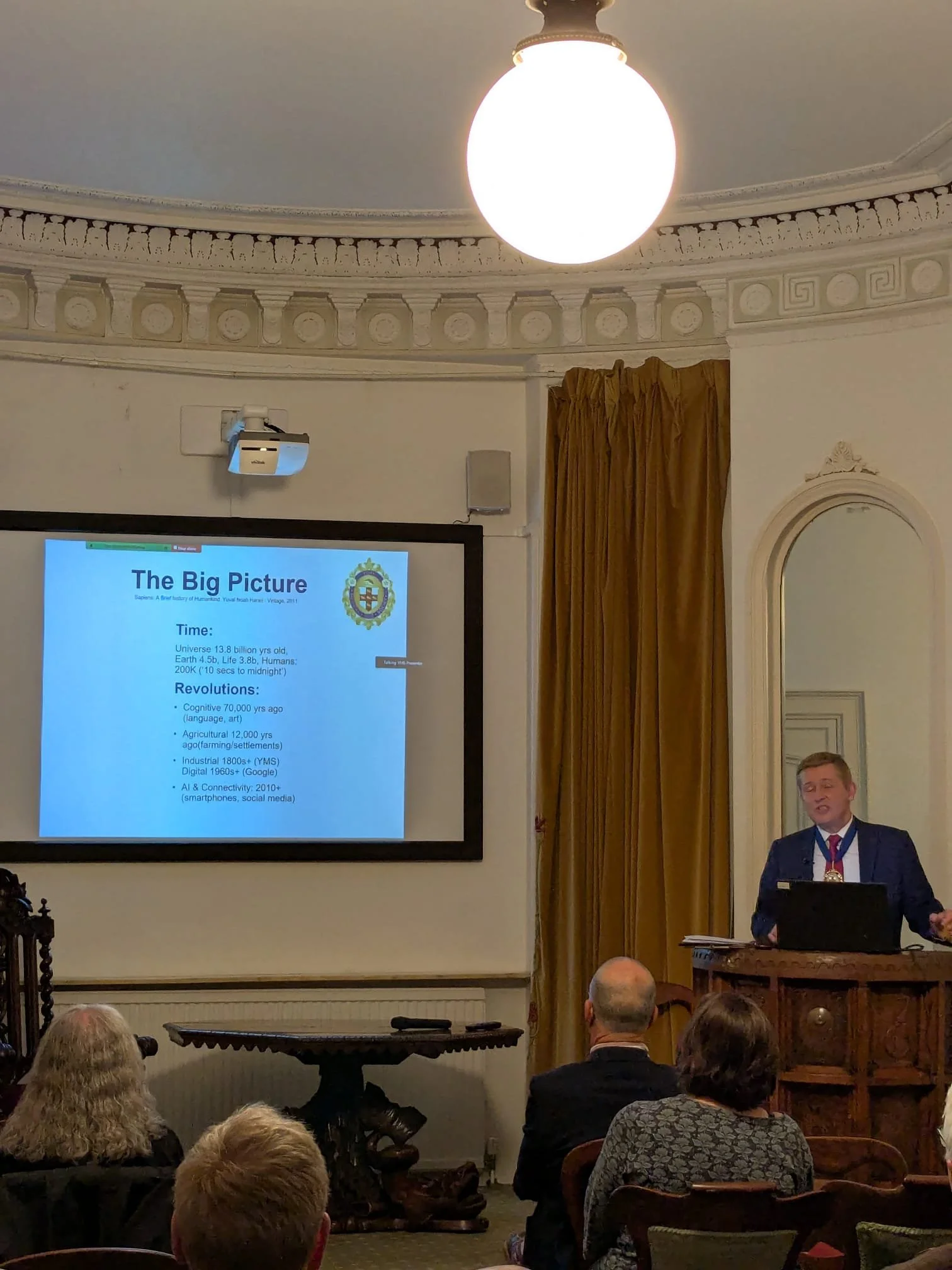
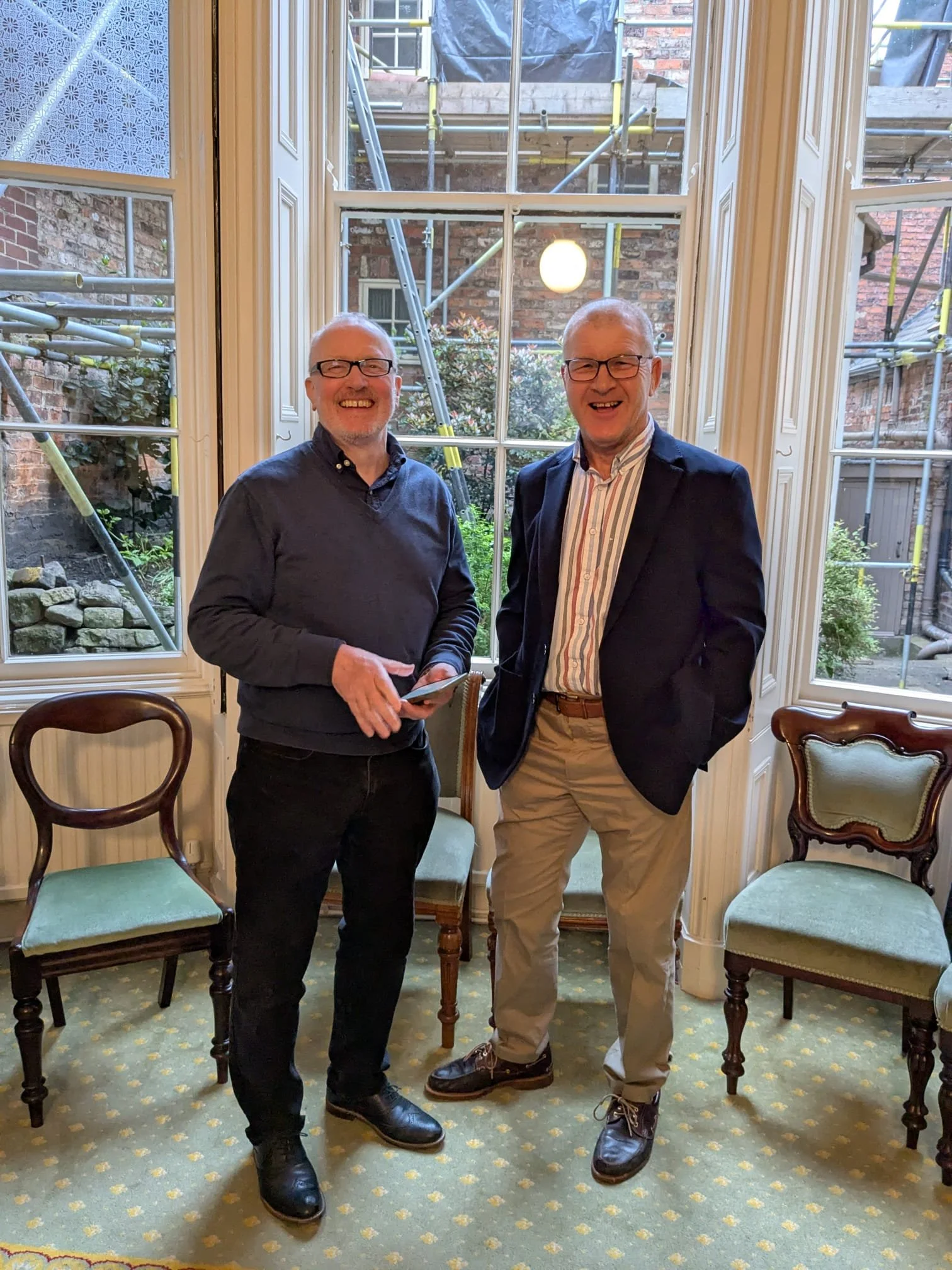
Introducing memories of the past year

Smart Hospitals know where stuff is
Roy Want PhD: Award-Winning Computer Scientist, Google, California
Smart Hospitals Know Where Stuff Is
In a critical healthcare environment, seconds save lives. Yet, hospitals often struggle with a surprisingly basic question: Where exactly are our staff, our patients, and our life-saving equipment? While GPS revolutionized outdoor navigation, the indoor environment has remained a blind spot. Until now…
In this cutting edge talk from one of the world’s great innovators, Roy takes us on a personal journey from Cambridge University to Silicon Valley. He describes his progression from senior research engineer at Olivetti, Intel, and Xerox PARC, to Principal Scientist for the Android group at Google.
Focussing on health settings, Roy reveals how we are overcoming the challenges of indoor positioning. He explains his breakthrough work - using Ultra-wideband (UWB) technology plus Next-Gen WiFi - and how they can be combined with pinpoint precision to create a truly "smart" hospital.
Dr Want holds over 100 patents in mobile computing (Wikipedia). He received the ACM SIGMOBILE Outstanding Contributions Award in 2019, and continues to set global standards for the future of Wi-Fi.
Click here to see Roy’s presentation. A copy of the meeting recording can be found below.
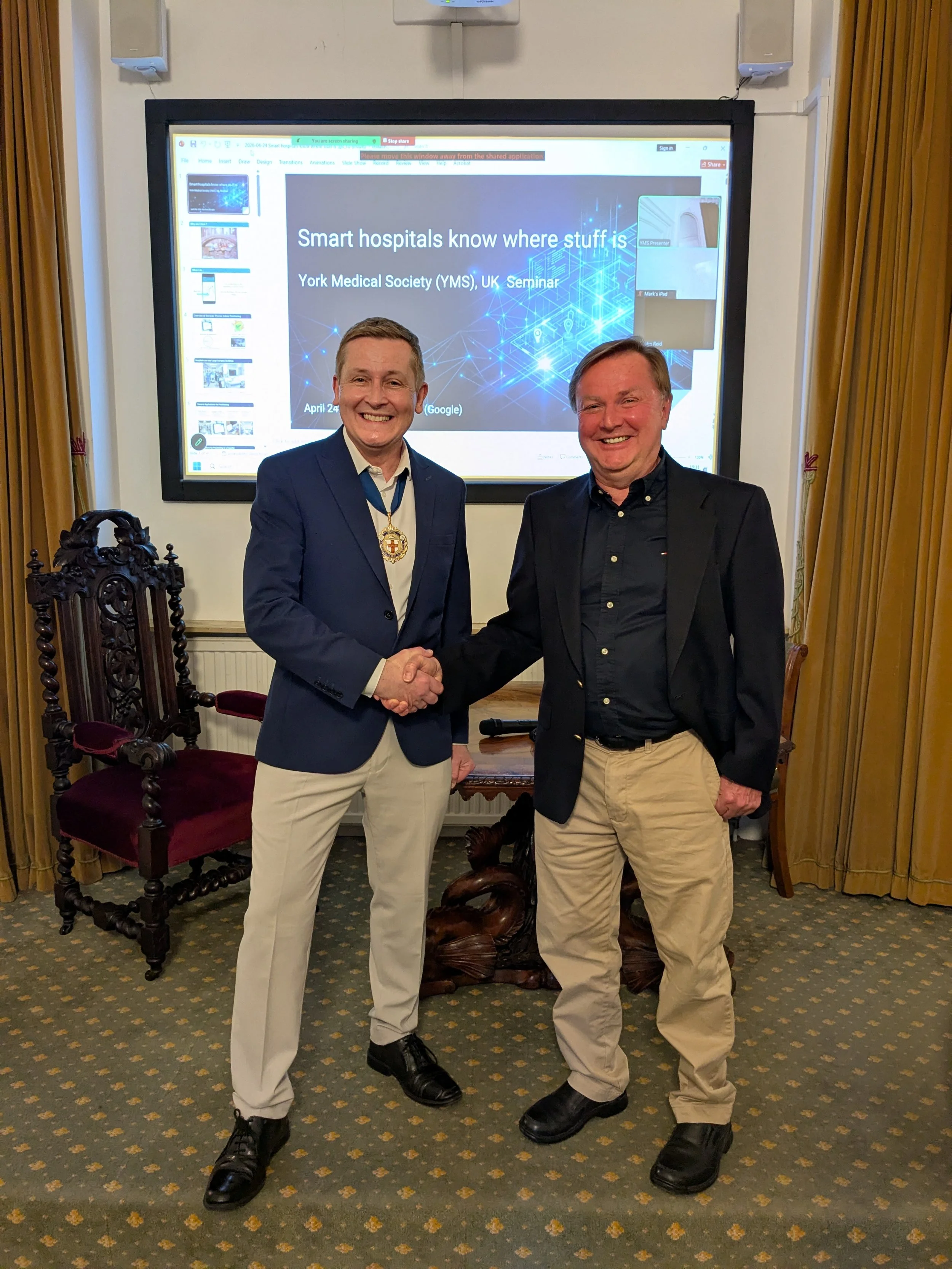
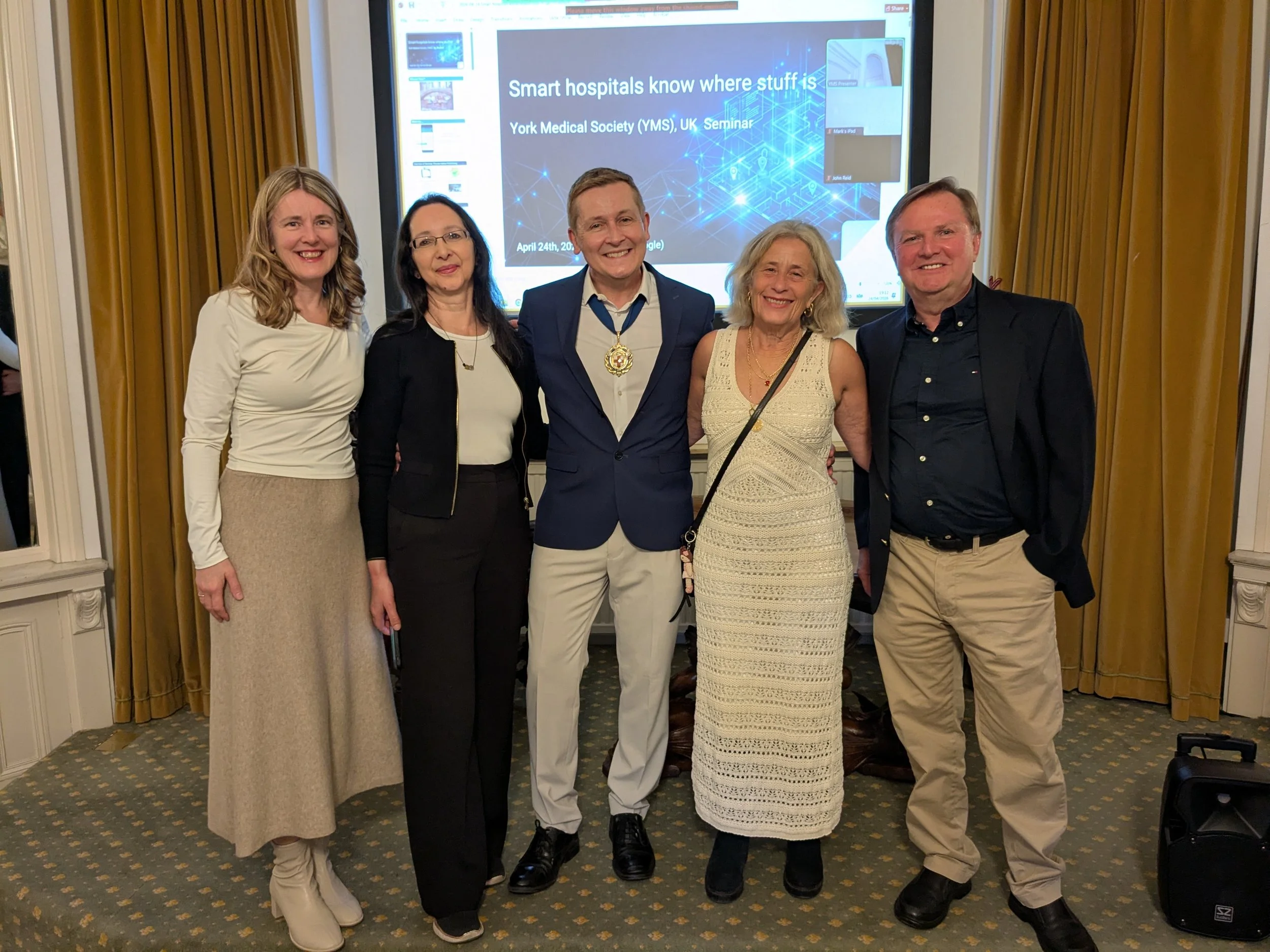
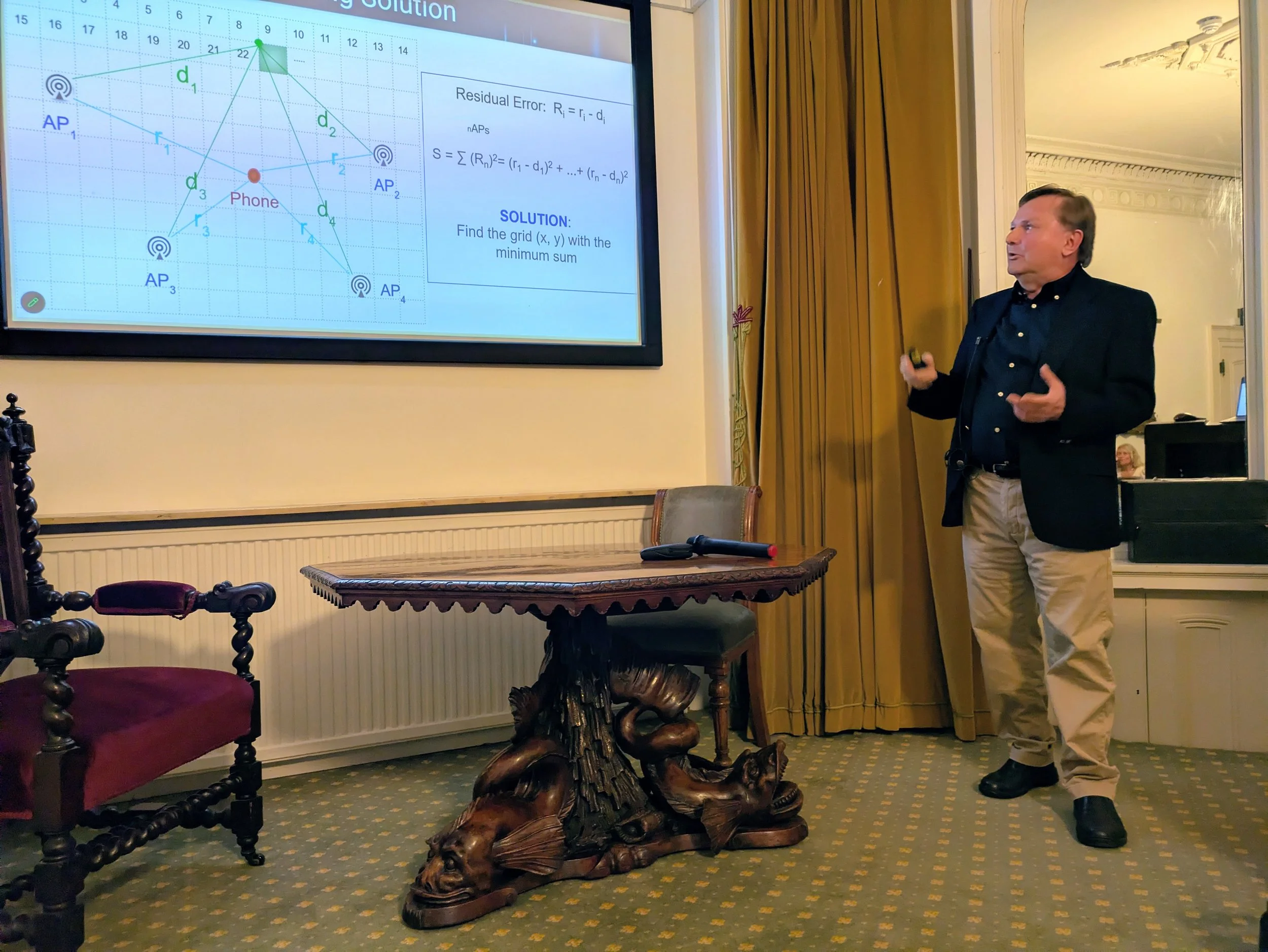
YMS. Description of talk by Dr Roy Want on 24.4.26 - Smart Hospitals Know Where Stuff Is
by Dr Bob Adams
This enthusiastic and expert presentation by Dr Roy Want (Post Grad Cambridge 1988) kept our attention and I for one learnt a lot. Roy, a longstanding friend of our current president, flew all the way from Silicon Valley in California with his wife, just to talk to us in Stonegate. Roy is an expert in developing computer systems, the things that dominate our lives now, and it was valuable to get an insight into what goes on beyond the scenes.
Roy currently works for Google, not an alien invader from Bladerunner, but the multibillion-dollar company that provides the majority of mobile phone systems to the world. He was involved in the creation of the ‘blue dot’ that we see on our phone maps. Roy concentrated his talk on new developments that will be hitting our ‘cell phones’ soon, the ability to find our way inside complex buildings that include hospitals. He explained to us how difficult it is to develop indoor positioning systems (to locate people and hospital equipment eg Zimmer frames) when satellite navigation (GPS) is not available. He outlined how different systems are developed and I understood most of it, apart from the equations. The latter reminded me that to get into medical school it was once necessary to get an ‘A’ level in maths or physics.
We learned about ‘Ping-Pong Protocols’, ‘Radio Time of Flight’ and ‘Time Advance Attacks’. Even calculus was mentioned, first described by Newton and Gauss over 200 years ago to help find the position of planets in space. We were pleased to hear that standards are shared and even Android and Apple speak to each other occasionally. But with new inventions there will always be the bad guys who try to circumvent them. Roy showed us a UK video of thieves trying to steal an expensive car by intercepting remote control systems and then outlined ways of counteracting this. It is a cat and mouse game.
It was especially valuable to learn what life was like in another world, that of Silicon Valley. Whether we like it or not, our life will further be changed by these new developments, and we need to stay ahead of the game. Indoor positioning systems will enable others to track where we are, so it may be necessary to turn off our phones occasionally, especially when we want to escape from a future nursing home! A brave new world indeed. Many thanks to Dr Roy Want for his valuable insights.
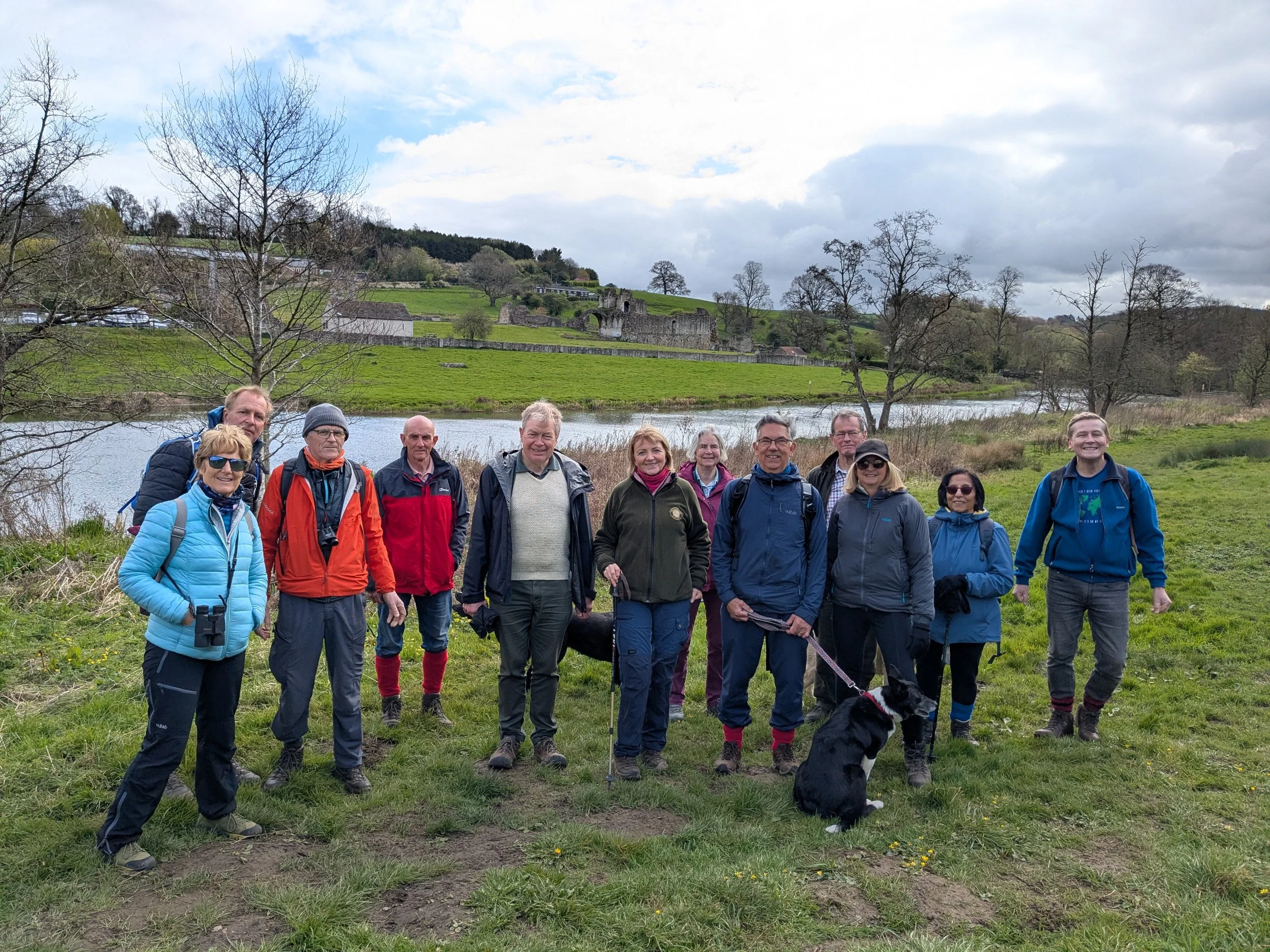
Spring Walk and Pub Lunch
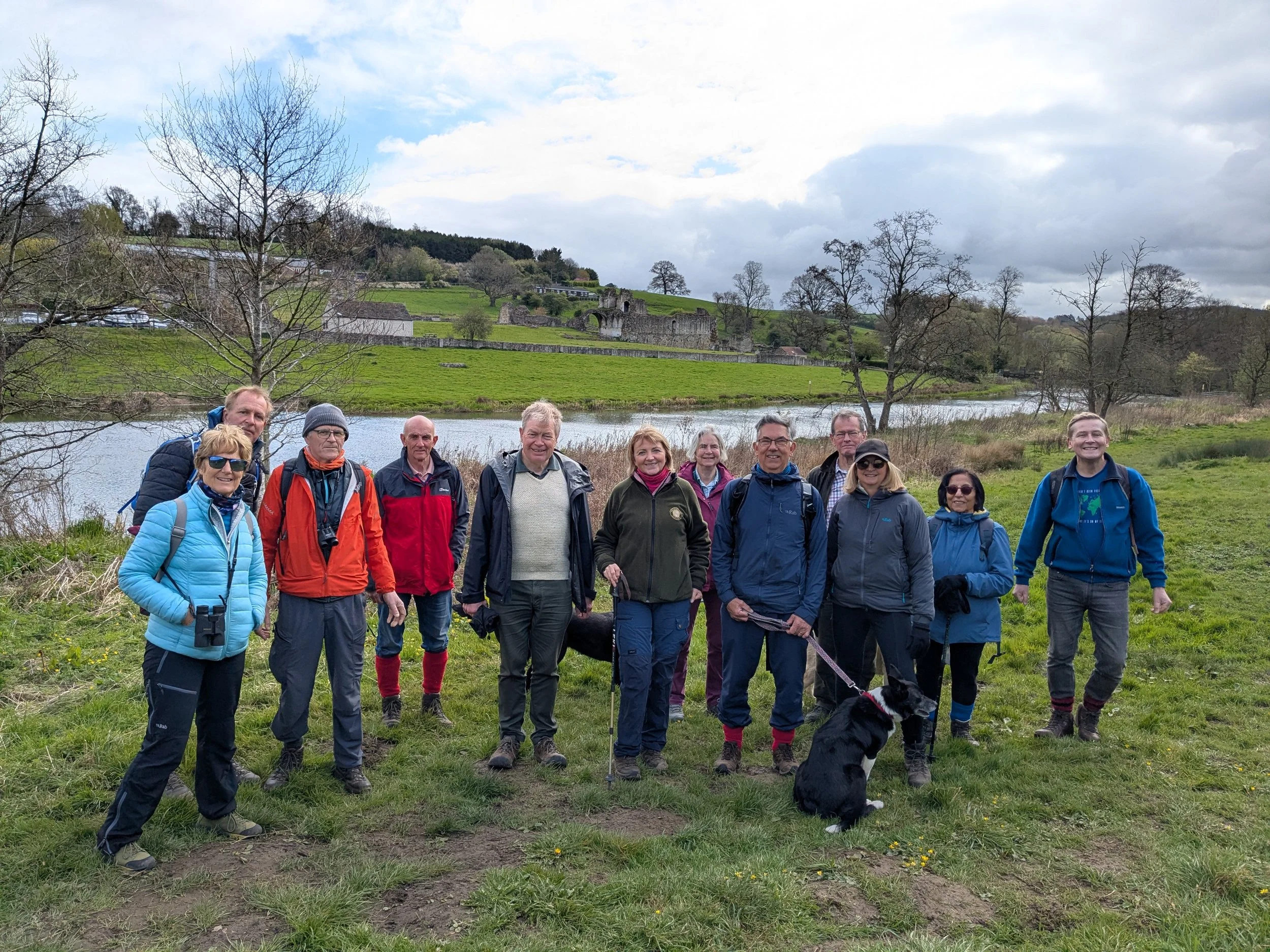
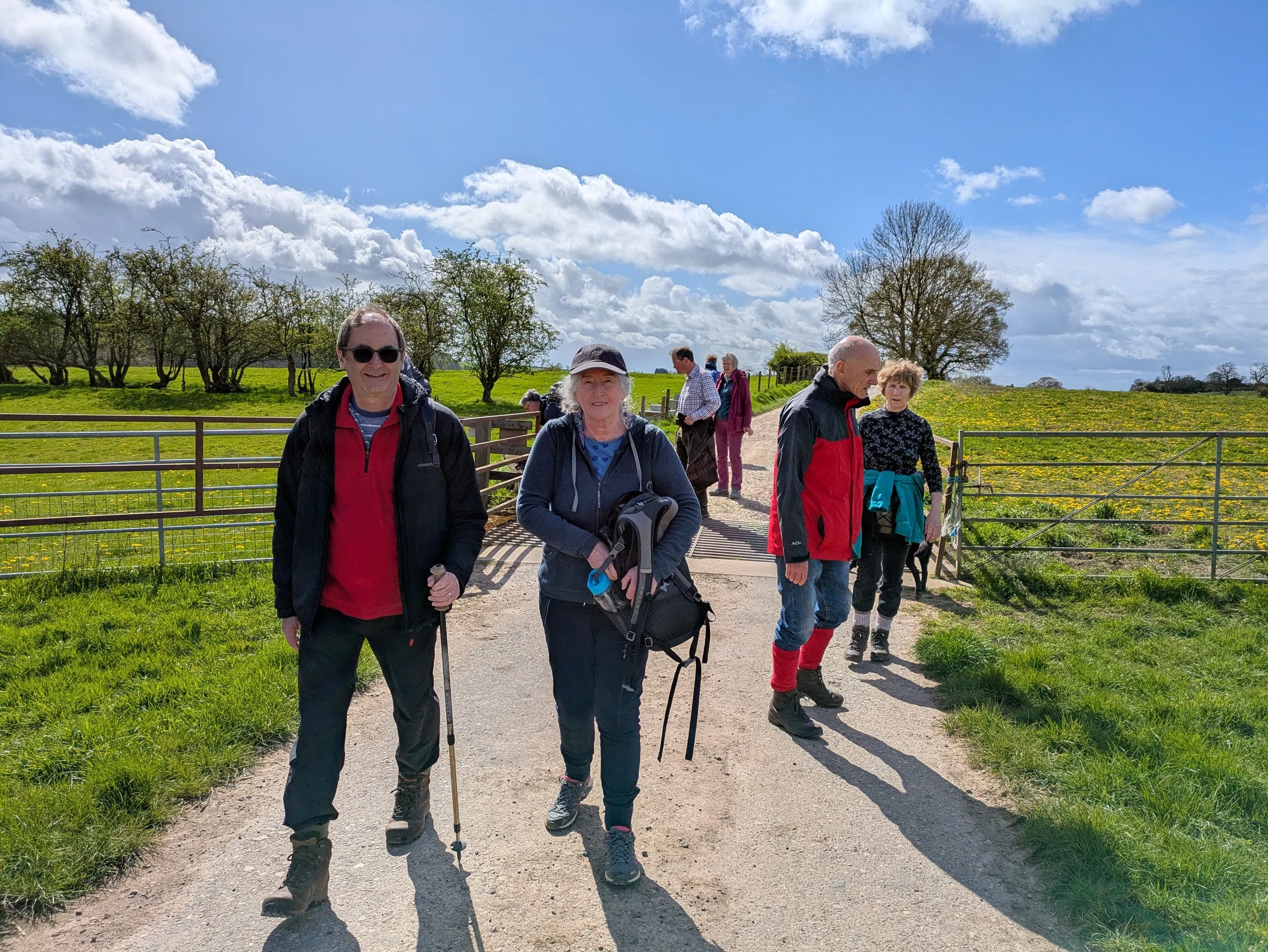
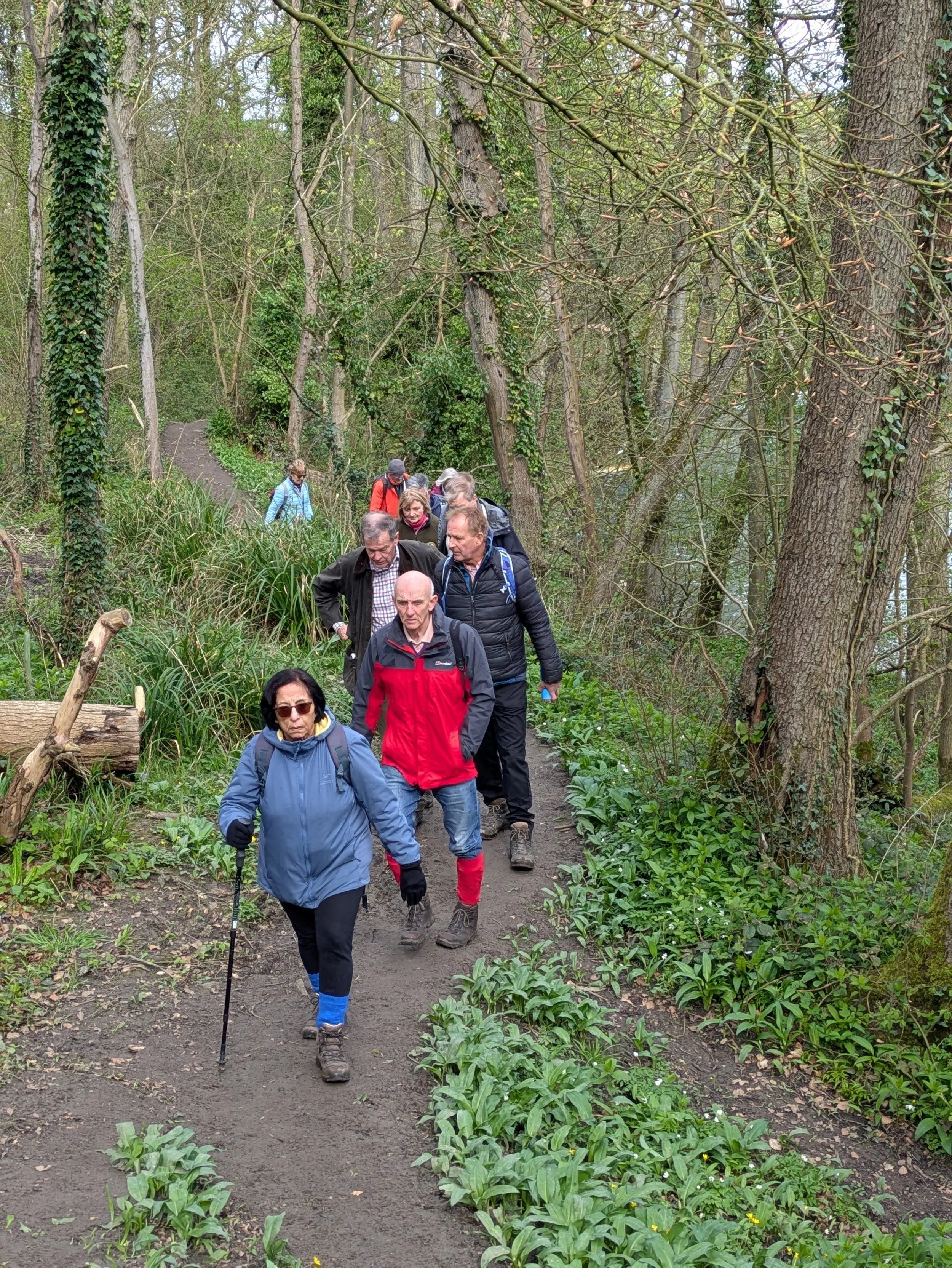
YMS Social Event - Spring Walk and Sunday lunch
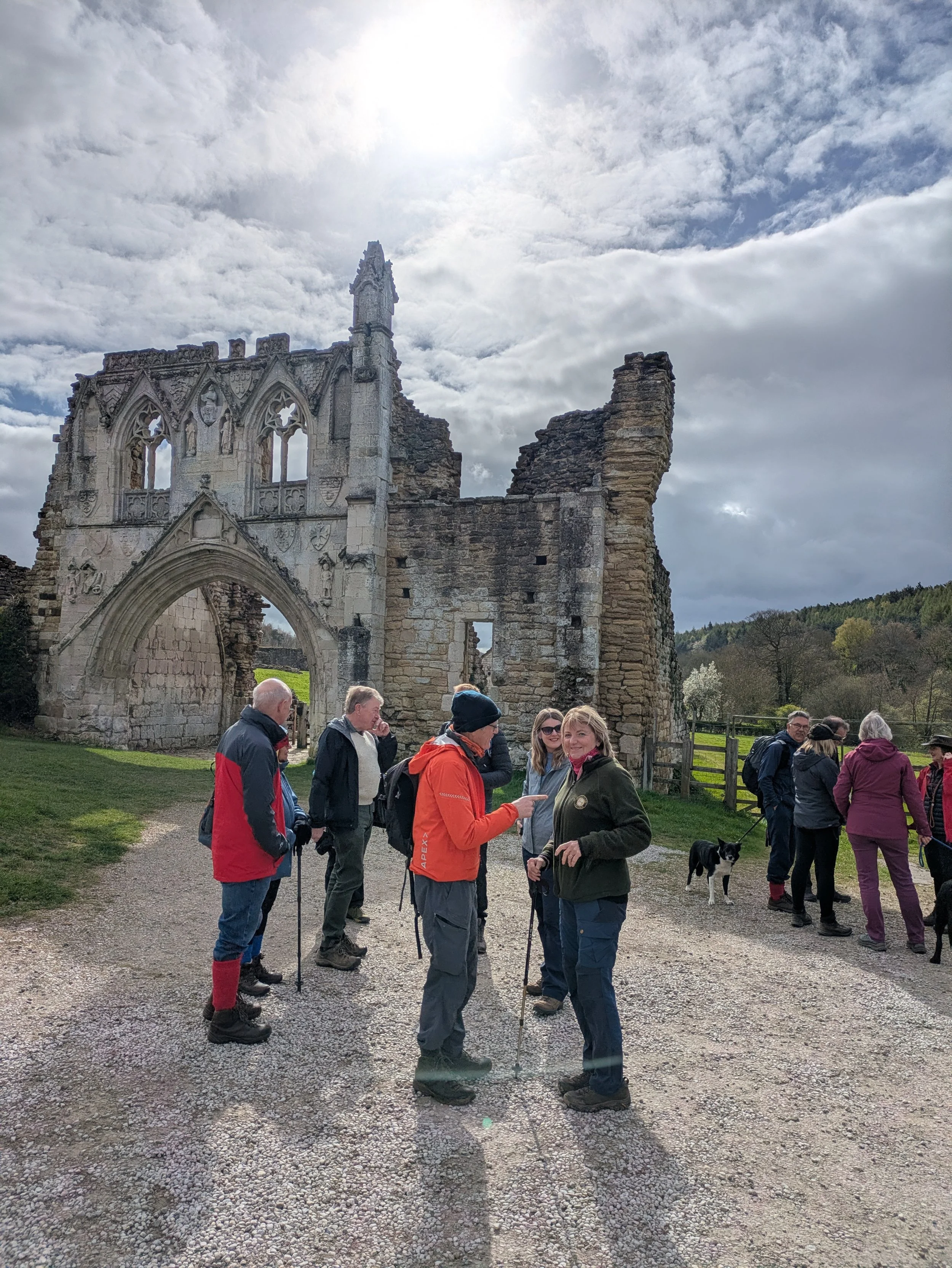
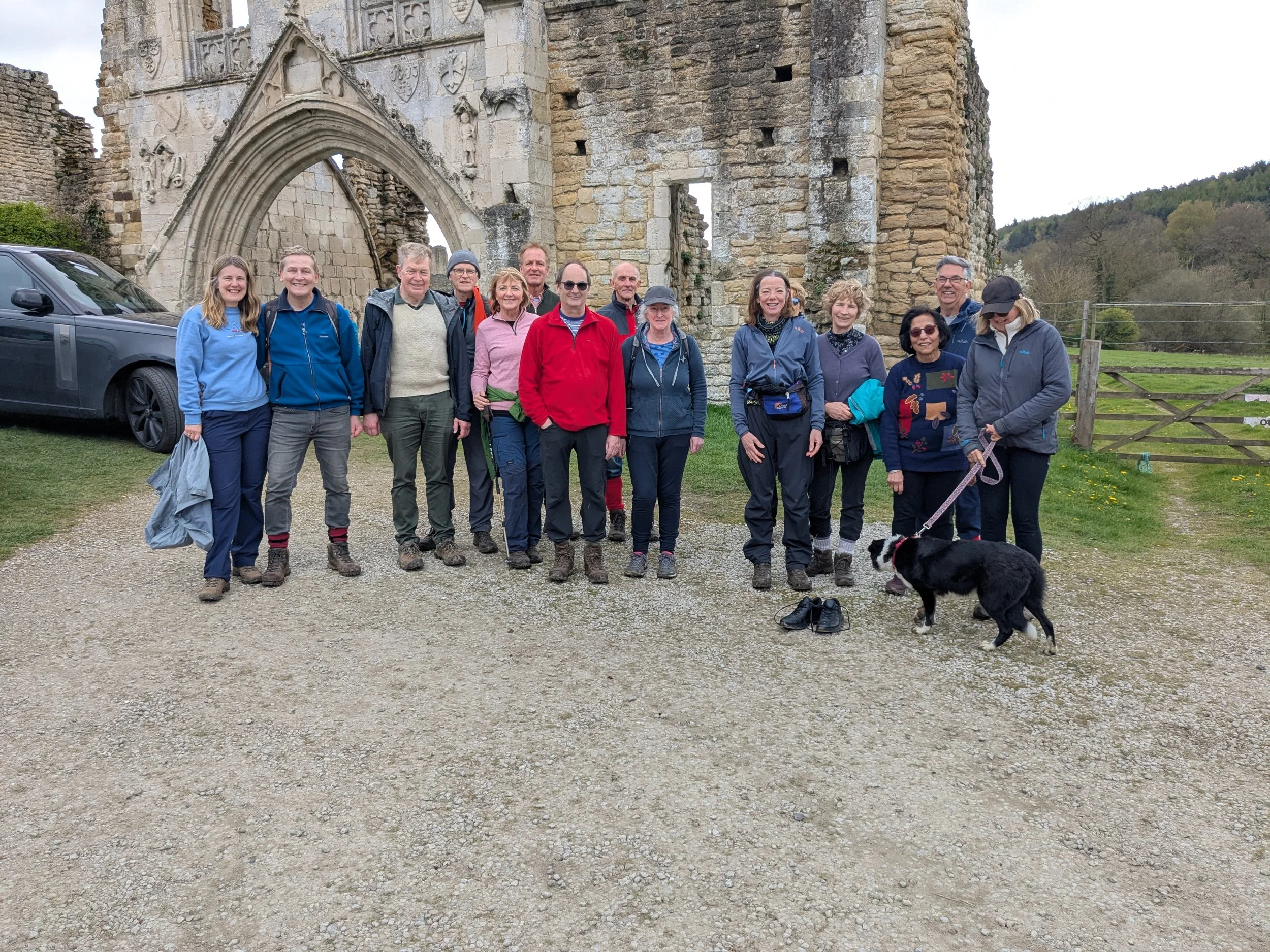
Kirkham Priory and Derwent Valley - Sunday 12 April 2026
We enjoyed a 5 mile walk through the Derwent Valley, starting at Kirkham Priory, YO60 7JS
The weather was mainly sunny and dry and the company great.
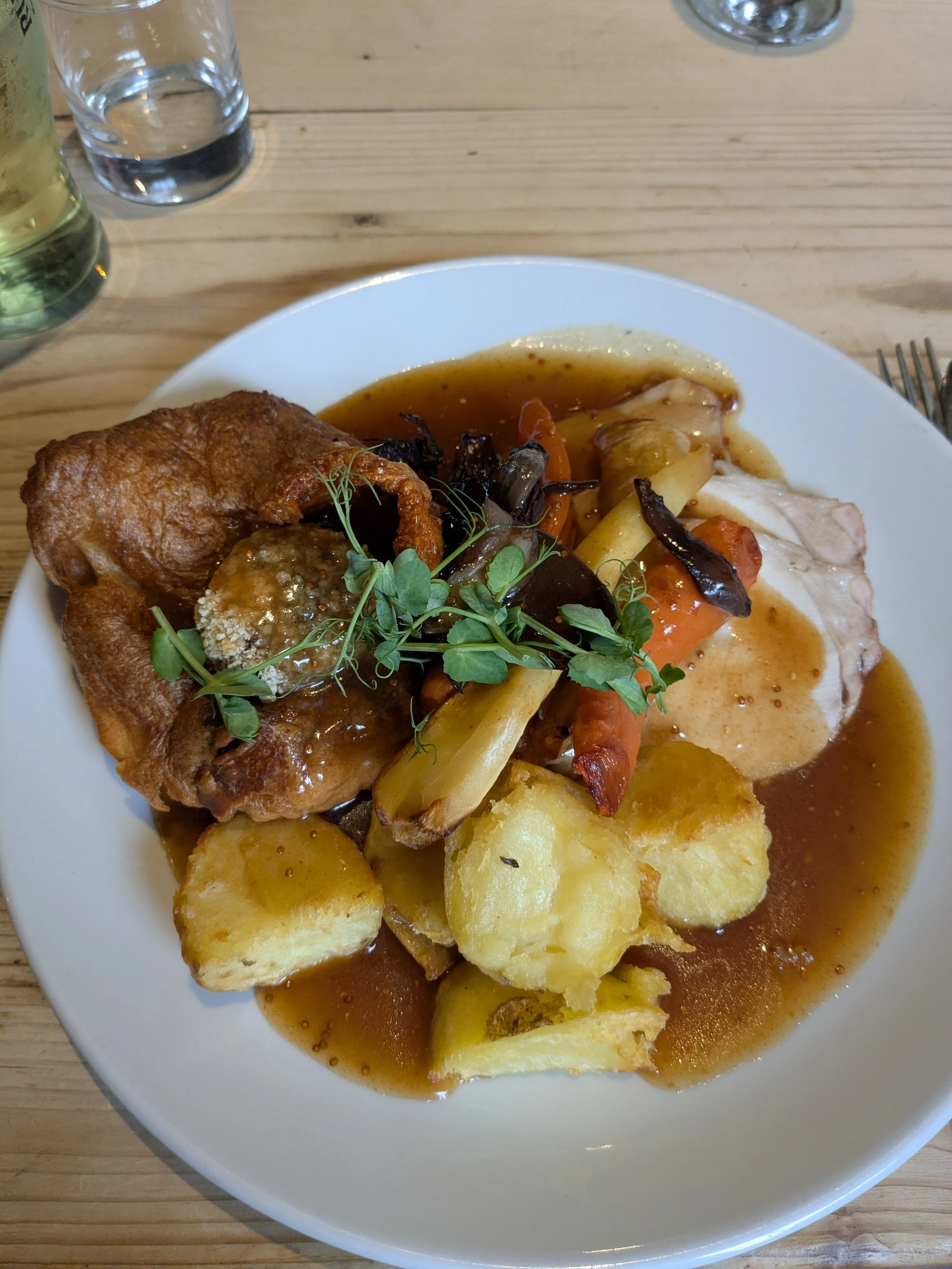
Afterwards we enjoyed a delicious Roast Sunday lunch at The Stone Trough Inn.
Thanks to all who joined us.

The President's Debate
'This House Supports Assisted Dying'
Speakers:
Mr Oscar Dunn - Year 3 Medical Student, Hull York Medical School
Dr Greg Richardson - Consultant Child and Adolescent Psychiatrist, York
Mr James Challinor - Year 3 Medical Student, Hull York Medical School
Dr Jeff Clarke - Consultant Psychiatrist for Older Adults, Harrogate
The Terminally Ill Adults (End of Life) Bill is currently undergoing scrutiny in the House of Lords. If it becomes law, it will allow people in England and Wales with less than six months to live to seek a physician-assisted death.
But is it ever right that doctors should actively participate in ending life? How can this align with our ancient Hippocratic principle to ‘do no harm’?
Or is the relief of suffering and distress more important than treatment to preserve life? Does assisted dying simply offer modern compassionate medicine, and place patients at the centre of decisions about their own life?
We had a stimulating evening debating the ethics and reality of assisted dying - a topic of continuing importance to everyone involved in healthcare.
Notes from the evening are given below.
Please note that the opinions expressed are not necessarily those of the speakers or of York Medical Society and do not endorse any particular position.
Vote of thanks by Dr John Reid
The President introduced the debaters and explained the process.
Oscar Dunn (3rd year Medical Student HYMS) and Dr Greg Richardson (Retired Child Psychiatrist) would speak for the motion.
James Challinor (3rd year Medical Student HYMS) and Dr Jeff Clarke (Consultant Psychiatrist for the Elderly) would speak against the motion.
There was a blind vote of hands before the debate, with 3 choices: those in support of the motion, those who were against the motion, and those who were undecided. The results were not announced at this stage.
Oscar Dunn (for): He undertook a quick straw poll of the audience asking if the audience preferred to know how they would die or when they would die. Most opted to know when they would die, but he stated that studies suggest most people prefer to know how they would die.
He stated that thinking of death has been shown to increased racism, homophobia.
He related about this personal experience of his grandfather who died of MND in June 2022. He did not know if he was scared, and feels he may have wished an option on how he died.
James Challinor (against): He talked about the Voluntary Euthanasia Society in 1936. Assisted dying is actually assisted suicide; it is an active intervention to cause death.
He questioned what the right response to suffering is. He does not want or advocate for suffering.
In 1961 suicide was no longer an offence but assisted suicide remained an offence. Once there is assisted suicide, then coercion is possible, and can affect family friends and the Doctor.
He talked about the ‘Do no harm’ undertaking of Doctors, but medicines to cause death are poisons.
Under the bill, you have to have a prognosis of 6 months. This is very hard to predict.
He stated that assisted suicide does not give someone an easy death necessarily.
The RCPsych does not support assisted suicide. The UK has high quality palliative care, which leads to less requests for assisted suicide. But palliative care is under resourced. Assisted suicide risks undermining the value of human life. It would be better to work harder on symptom control.
Questions for the 1st two speakers:
Nick Bosanquet asked about the fact that assisted suicide happens as part of palliative care, when Drs take decision on End of Life Care.
David Chadwick Chaplain YDH: He commented that he came across quite a lot of people who were suicidal. Suicide is seen as evil, he feels it is an illness. Is suicide an evil?
Tim Hughes: Where did autonomy come in all this? He could relate to 6 patients in his career where Assisted suicide would have helped.
Greg Richardson (for): Death can be planned for and comfortable.
He has been well but has a “terror” of a difficult death.
He feels Autonomy is the top of his list of determinants.
Nobody should be coerced. He advocated Advanced directives and living wills. He commented that wishes need to be discussed with the family. He does not want his family to have their last memory of him is as a gibbering wreck.
But a Doctor should not administer any drugs.
The individual has to consider their family and family is paramount.
Jeff Clarke (against): He talked about ‘controlling’ death. He does not want to become ill. He talked about poisons to end life.
Autonomy This is said to be paramount, but gets altered by rules, and constraints and are ever present. ‘I may not want to wear a seat belt on occasion, but it is required’
Dignity has an intrinsic quality.
Euthanasia is the predominant model of assisted dying.
But where it has been enacted there is remit creep. Where people have to self-administer such as Oregon, there is less creep. Where Drs give injections. The evidence is that rates rise.
Assisted suicide does not reduce the incidence of unregulated suicide.
The evidence shows that Palliative care quality is reduced where there is assisted suicide.
Questions and Comments:
Is there free choice?
Jeff: Who can spot coercion? Why have you not considered assisted suicide?
Greg: I’ve been very lucky and do not want to be a burden.
Stuart Calder: The slippery slope is very real and backed by hard evidence.
Helen: In New Zealand: Patients can choose the method, including intra osseus injection., Families are distraught and there is a fall out from this.
After the questions had been answered, there was a repeat of the anonymous vote. This was reported as showing that the house had changed its views with less undecided and more members of the audience voting against the motion.
The President announced the results.
Before the debate: 14 members voted for, 15 against and 8 were unsure.
After the debate: 9 members voted for, 21 against and 3 still unsure.
Please note that the opinions expressed are not necessarily those of the speakers or of York Medical Society and do not endorse any particular position.
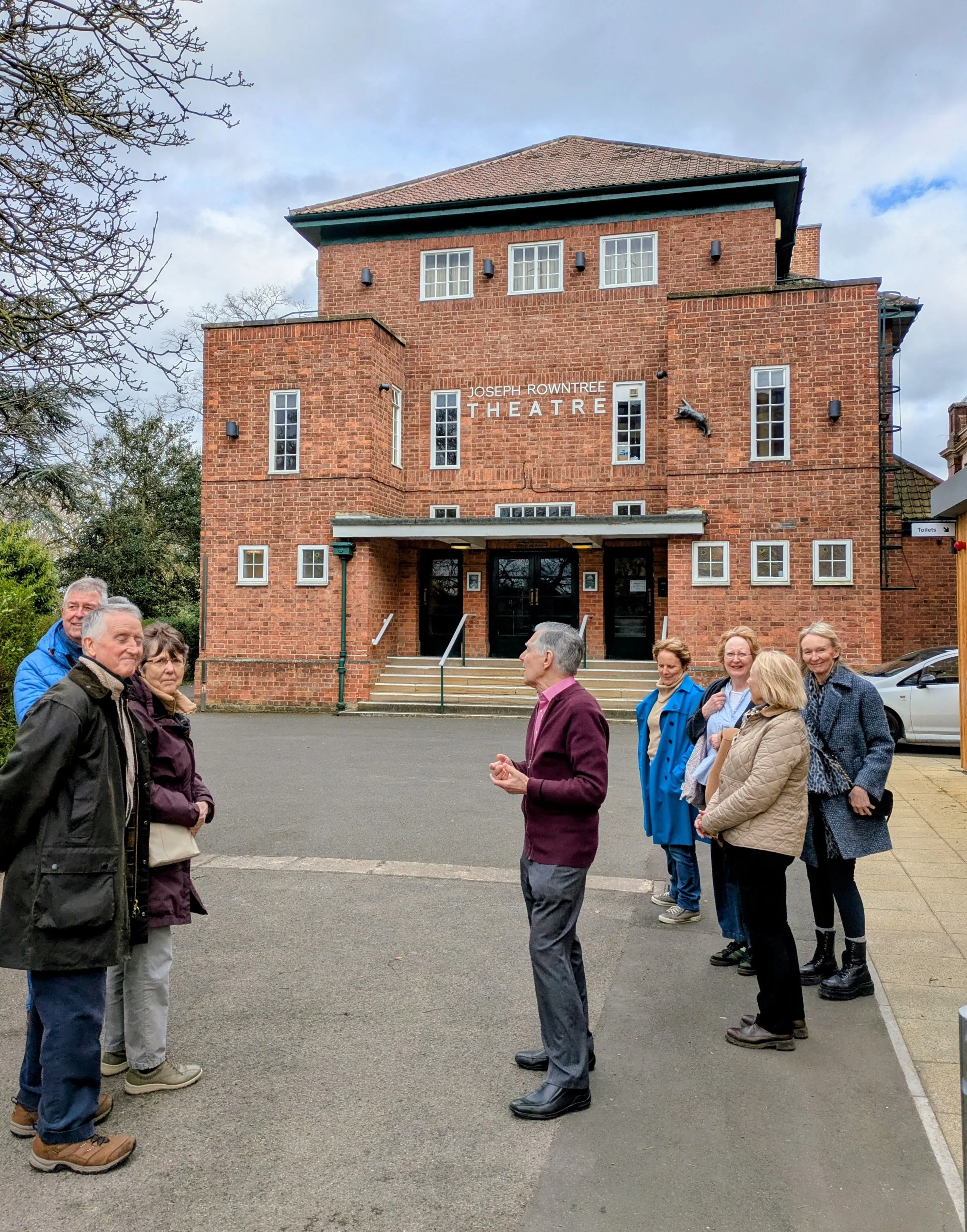
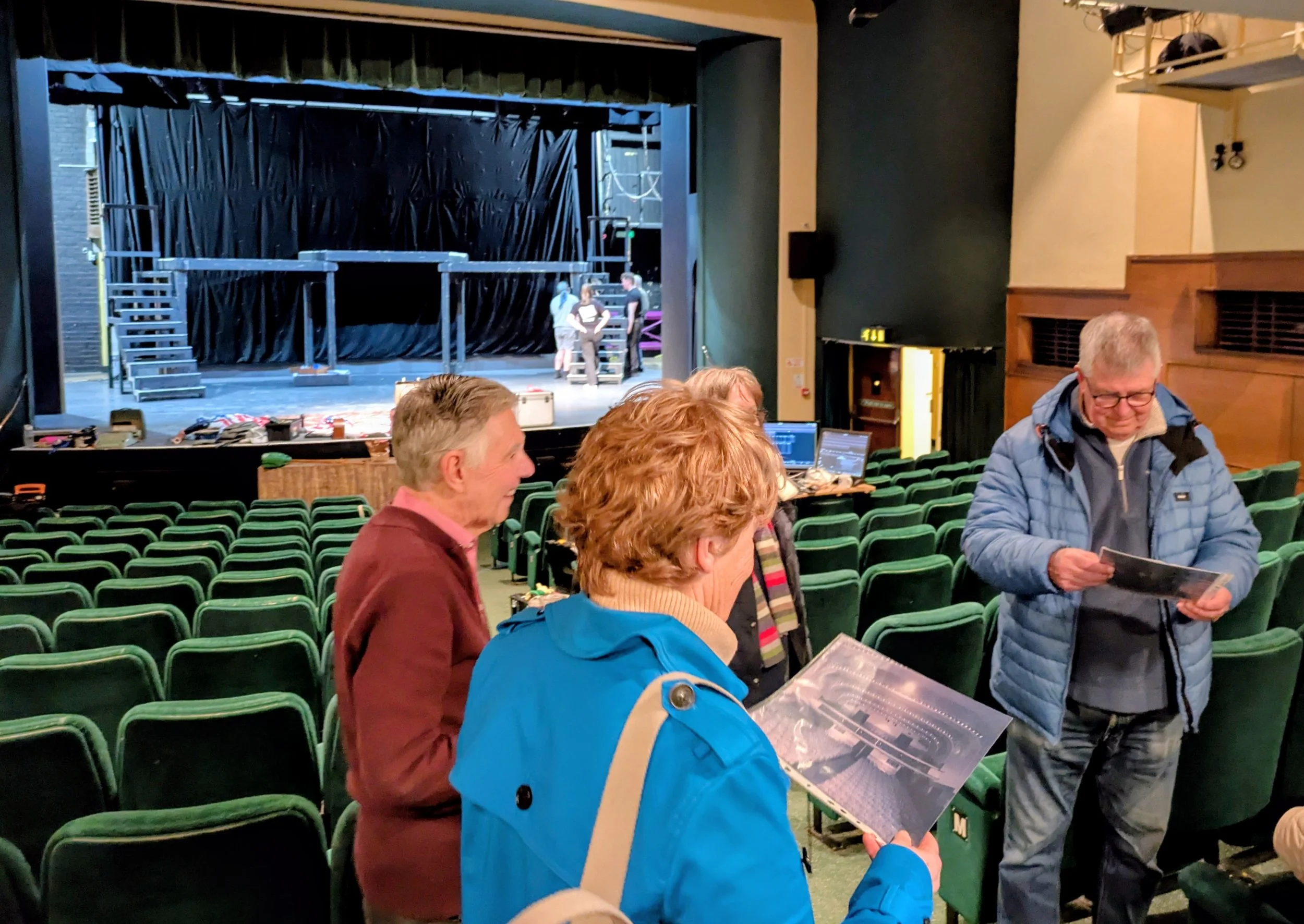
Social Event - Tour of Joseph Rowntree Theatre
Have you ever wanted to see inside the Joseph Rowntree Theatre?
Are you curious about what goes on backstage?
Do you want to see how the sound and lighting works?
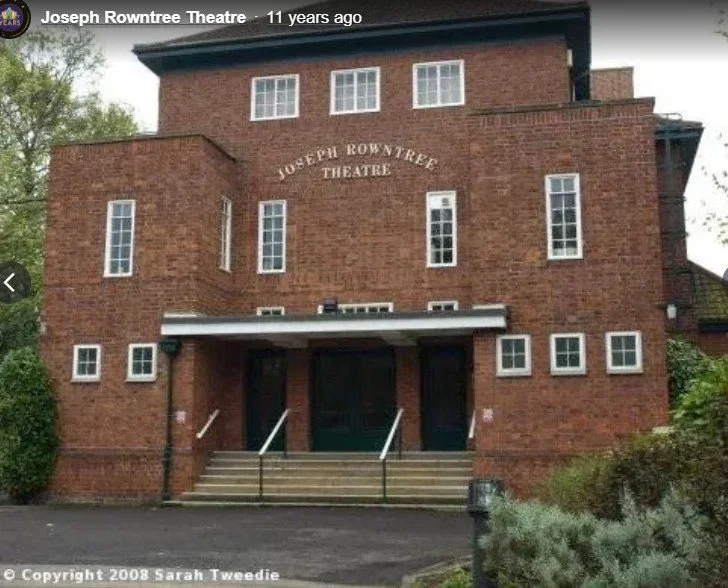
All your questions will be answered when tour guide Gary Bateson takes us on a full tour of this grade II listed art deco building. Found on Haxby Road, York, this wonderful community theatre was originally built for the workers at Rowntree factory. It has been entertaining local audiences since 1935, and now operates as a registered charity.
Come and join us on Tuesday 24 March.
The tour starts at the Theatre at 2.30pm and will finish around 4pm.
Thank you to those who joined us for this tour - we hope you enjoyed it.
As the President's chosen local charity of the year, all proceeds from the ticket sales will go to support the inclusive work of the Theatre and continue to improve its disabled facilities.
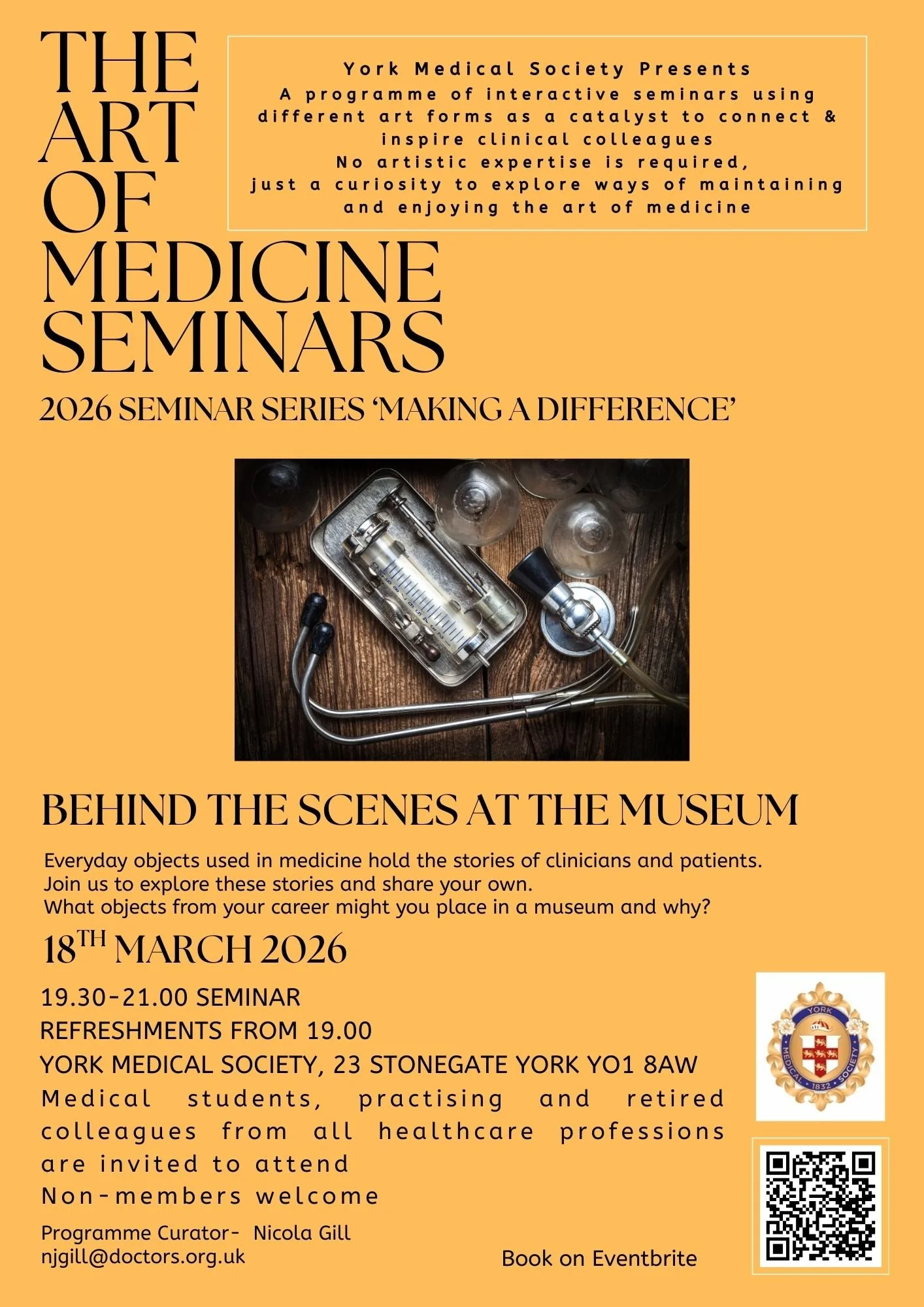
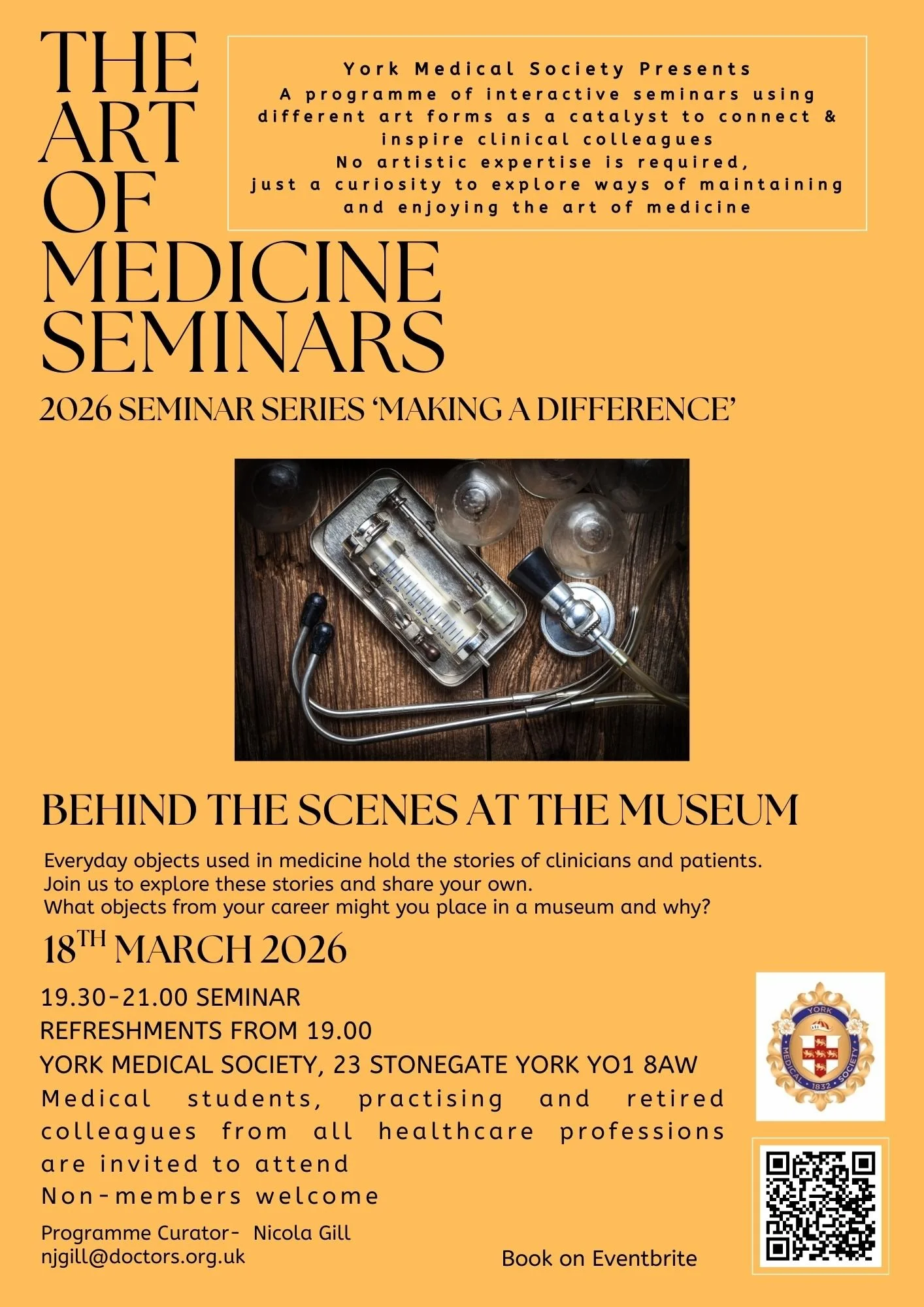
The Art of Medicine Seminars - Making a Difference - Behind the Scenes at the Museum
The Art of Medicine Seminars - Making a Difference - Behind the Scenes at the Museum
Everyday objects used in medicine hold the stories of clinicians and patients. They can represent advances in modern medicine, provoke and sustain personal memories while sometimes perpetuating trauma. Objects act as vessels for our identity and beliefs.
Many medical objects were created with reference to the arts and crafts philosophy to be both functional and aesthetically pleasing. They often have design elements that are not obvious in the context of medical care.
How do we choose which objects to preserve as a record of our time?
How does the process of curation ensure an appropriate balance between an object being the guardian of secrets or a resource to reveal the past?
Museums act as a third space where joy can be celebrated and trauma can be recognised, validated and the process of healing commenced. Their collections enable our present and future selves to connect with the past.
We invite you to hear the stories of objects from the archive at York Medical Society and to bring objects that form part of your medical work or professional identity to share and explore their credentials for a place in our imaginary medical museum.
Click here to book

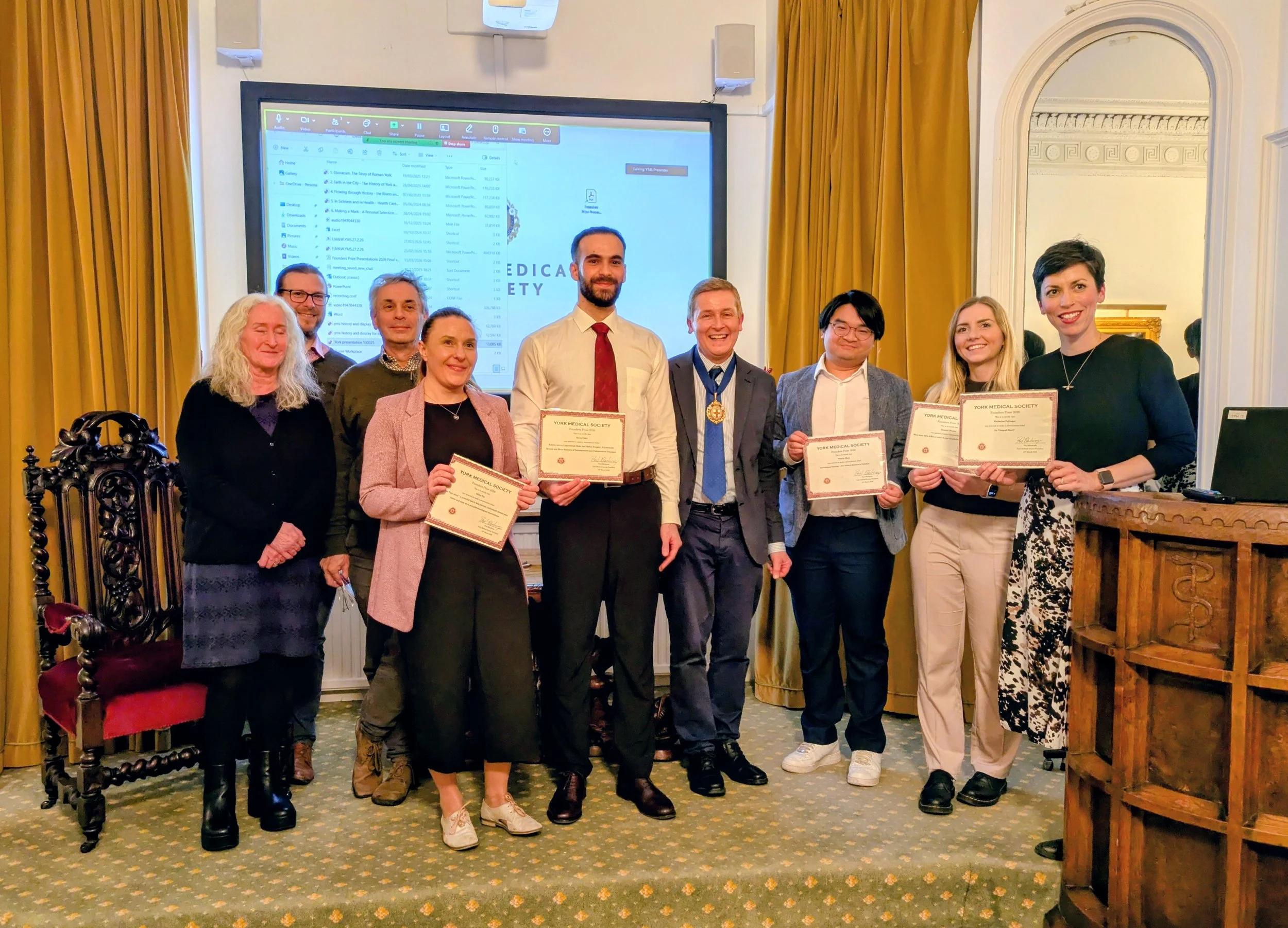
YMS Founders Prize Presentations
Doctors in training compete for our Postgraduate Founder’s Prize, awarded for research or audit conducted within the Yorkshire and Humber Deanery.
Click here to hear the five varied and exciting talks shortlisted for presentation this year:
Dr Alicja Wos: The ‘Pain story’ - a powerful tool to help patients understand chronic pain better and open up to non-pharmacological interventions
Dr Vinson Chan: Interventional Oncology - New research frontiers in Yorkshire
Dr Katherine Pettinger: An Unequal Start? Ethnic and socio-economic inequalities in neonatal outcomes
Dr Hannah Whelan: When tears tell a different story: A rare manifestation of a common infection
Dr Yavuz Cekic: Robotic versus Laparoscopic Redo Anti-Reflux Surgery - Systematic review and meta-analysis of outcomes
Congratulations to Dr Katherine Pettinger who was crowed the winner of this year’s Founder’s Prize.

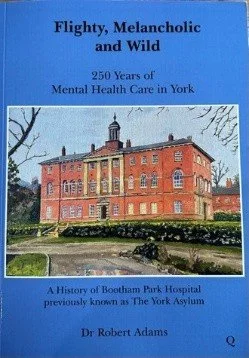
Flighty, Melancholic and Wild: The History of Psychiatry in York
Dr Bob Adams FRCPsych, M Psychother,
Psychiatrist, Mental Health Tribunal Doctor and Author
A fascinating journey through 240 years of mental health care at the York Asylum, latterly known as Bootham Park Hospital. From stark 18th century diagnoses of ‘flighty’, ‘melancholic’ and ‘wild’ to modern psychiatric practice, this illustrated talk explores the hospital’s origins, controversies, reforms, evolution of treatments and eventual closure in 2015. Dr Adams’ virtual tour also captures the wider social and medical contexts that influenced these developments. Reflecting on both progress and persistent challenges, he will consider what lessons this history offers for contemporary mental health care.
Dr Adams was an NHS Consultant Psychiatrist and clinical director at Bootham Park Hospital for 24 years. Elected President of York Medical Society in 2015, he now works as a Tribunal Doctor for psychiatric hospitals across England. Copies of his popular new book on the subject will be available on the evening. You can also visit our accompanying exhibition on mental health care in York in the Tempest Anderson Room.
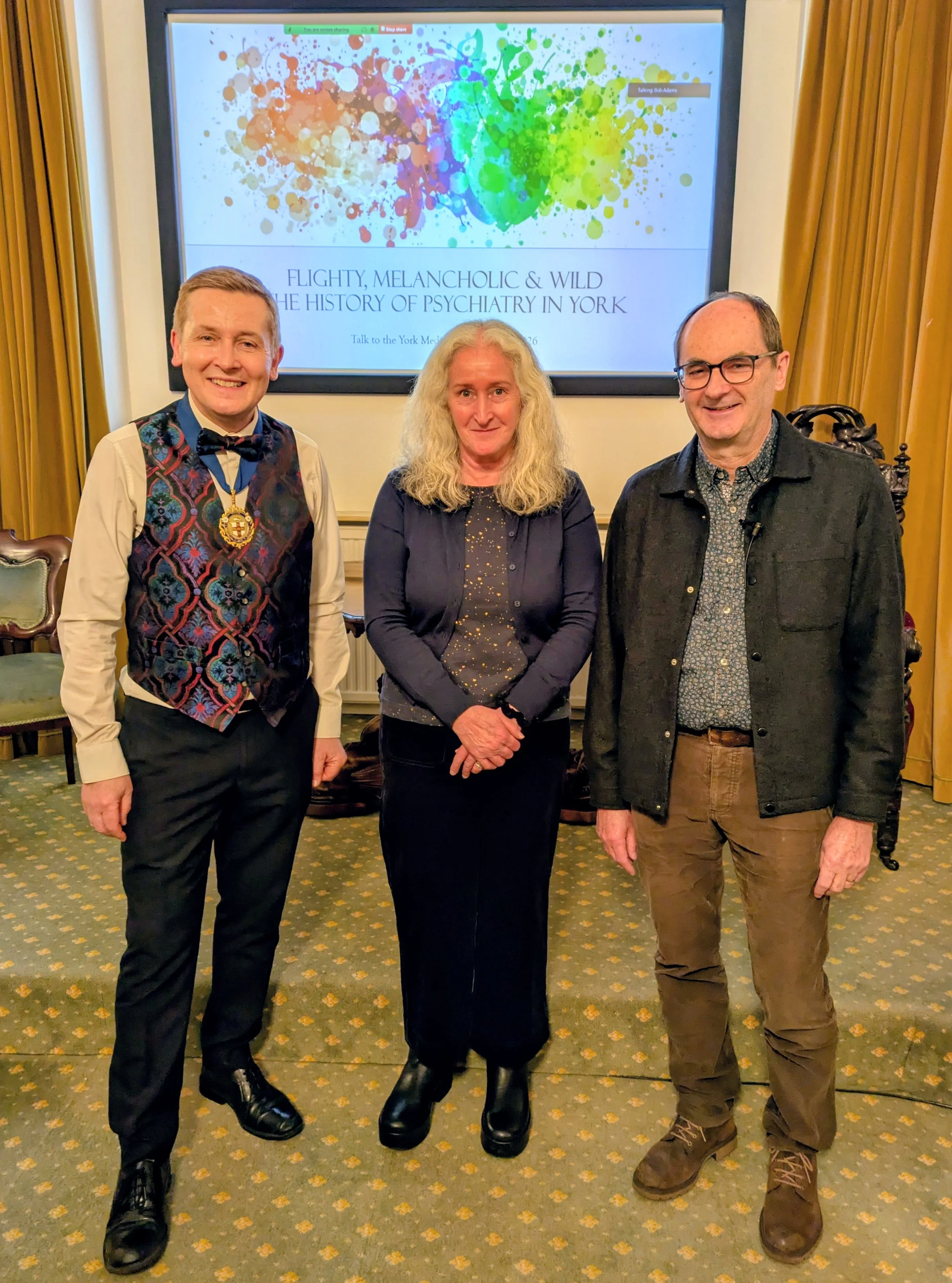
Vote of thanks by Dr Phil Duffey.
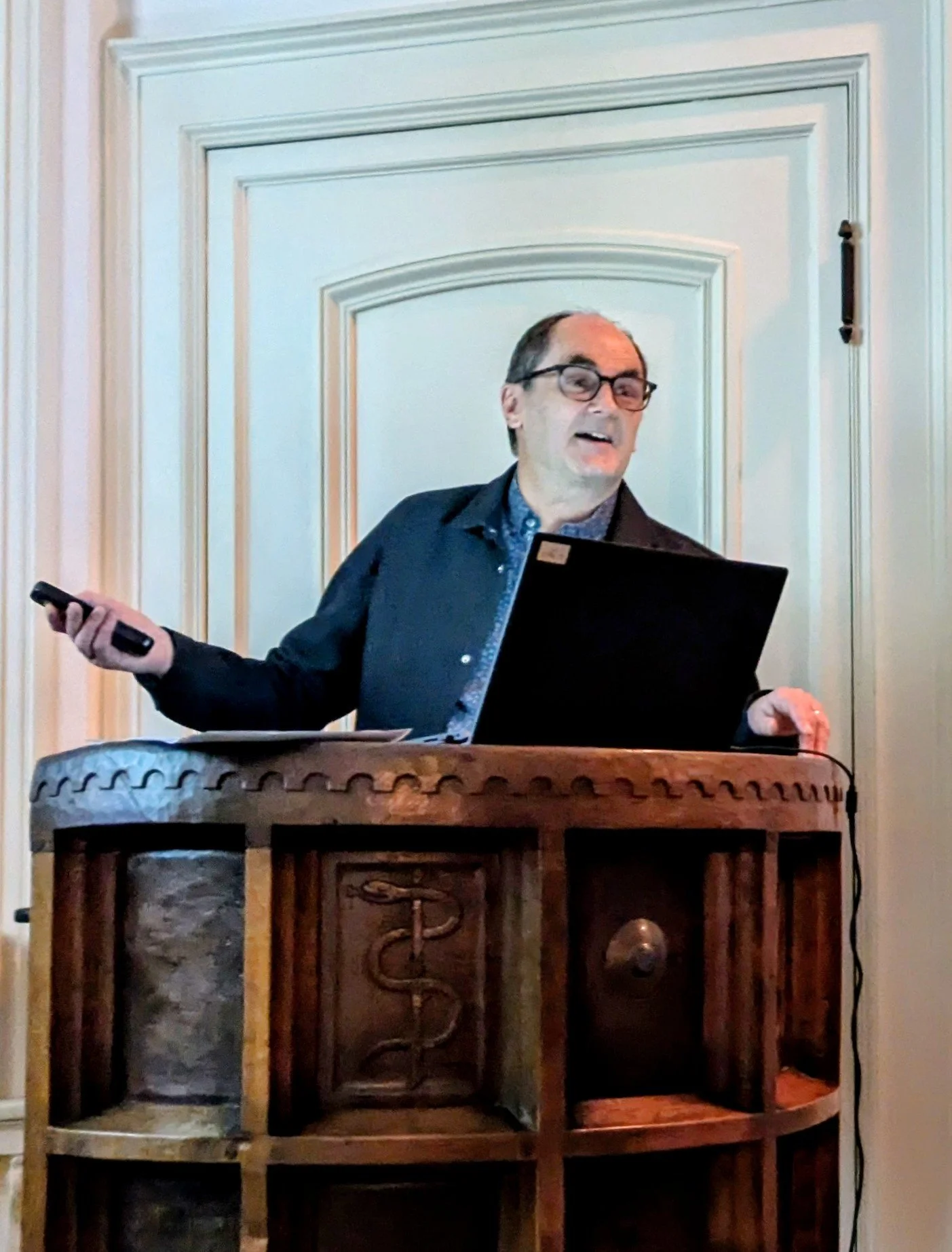
After the surprising revelation that whistling is Paul Blenkiron’s second greatest ability Bob Adams presented to a full house, highlights from his book Flighty, Melancholic and Wild; 250 Years of Mental Health Care in York.
To begin Bob took the audience on a visual tour through Bootham Park Hospital and its grounds. Using many of his own photographs we were reminded of the beauty of the building and the care that was, ultimately, extended to the interior, including the use of fine Italian tiles at the entrance, the oil paintings that enhanced the main corridor and meeting rooms, some of which now rest with York Medical Society, and the birds that were depicted in stained glass about the central stairwell and elsewhere.
Beyond the contemporary Bob also illustrated the situation of Bootham Park Hospital, The York Asylum as it then was, in 19th century York, the evolution of the site including loss of a cupola and chimneys from the main building, and even use of the grounds for the York Gala of 1901; when sight of a tethered hot air balloon was afterwards considered too stimulating a sight for the patients.
Bob then explored the founding and the founders of the hospital in the 1770s, the raising of £5000 and the commissioning of the architect, John Carr. It was a delight to be reminded of the exercise of philanthropy by the wealthy of York and also the obligation felt by communities towards the mentally ill in their midst. We learnt of the character of the asylum’s first physician, Dr Alexander Hunter, including his advice concerning healthy eating and his cookbook. It was also fascinating to learn about the earliest patients in the asylum, including their being committed to York from Bradford and Lincoln and also to speculate on the nature of their disorders.
These positives were followed by Bob’s explanation of how the asylum soon declined. The reasons included poor finances and staffing levels plus the limitations of medicine at the time. The death of a patient Hannah Mills, a Quaker widow, in 1790 led to founding of The Retreat, York’s second asylum where the ‘moral treatment’ of the insane, including the benefits of exercise, fresh air and activity were promoted. Bob showed how these reforms spread to influence psychiatric practice both nationally and internationally.
Finally, and by necessity, more briefly, Bob reviewed trends in psychiatric care in recent years before turning to the opaque machinations of the NHS that led to the closure of Bootham Park Hospital in 2017. Bob’s low opinion of this was shared by many in the audience and we were agreed that this might be a subject to be returned to, if only for catharsis.
Overall, a very well informed, illustrated and delivered presentation that was highly appreciated.
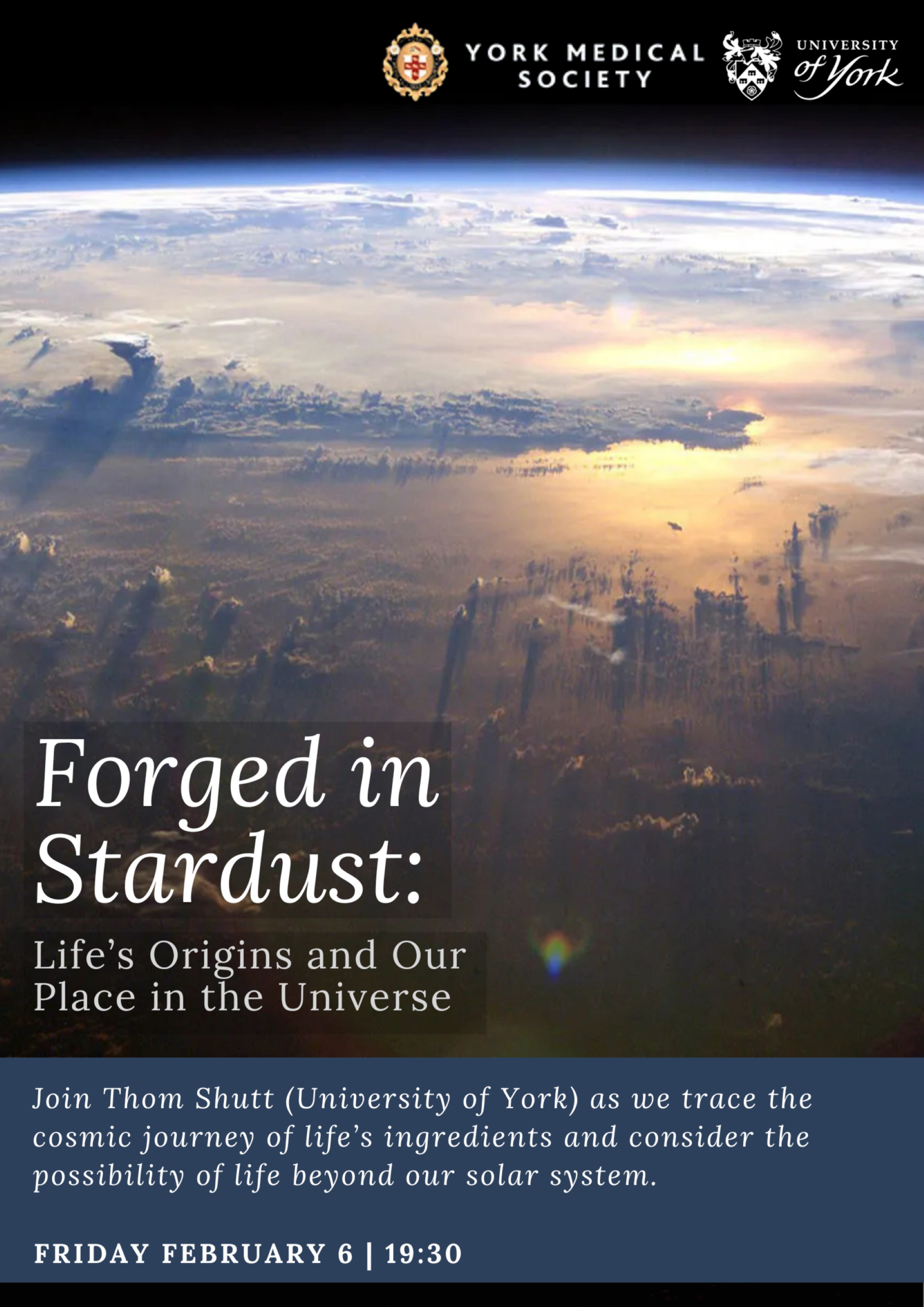
Forged In Stardust: Life’s Origins and Our Place in the Universe
Thomas Shutt - Asteroseismologist and award-winning teacher, University of York
From the hydrogen born in the Big Bang to the elements synthesised in ancient stars, the chemical foundations of life on Earth were forged long before our planet existed. In this talk, we will explore where those cosmic ingredients came from, and how they came together to form our solar system and make Earth the fertile, enduring home for life that it is.
We will examine what makes our planet so remarkable, and the likelihood of similar conditions arising elsewhere. Looking beyond our solar system, we’ll explore distant exoplanets, the environments they inhabit, and the challenges life may face on worlds very different from our own. Even if life exists elsewhere, what do the vast distances and cosmic timescales mean for our chances of ever encountering intelligent civilisations?
In so doing, we will consider one of our most profound questions: are we a rare cosmic accident, or is life a natural outcome of a universe rich in stars and planets?
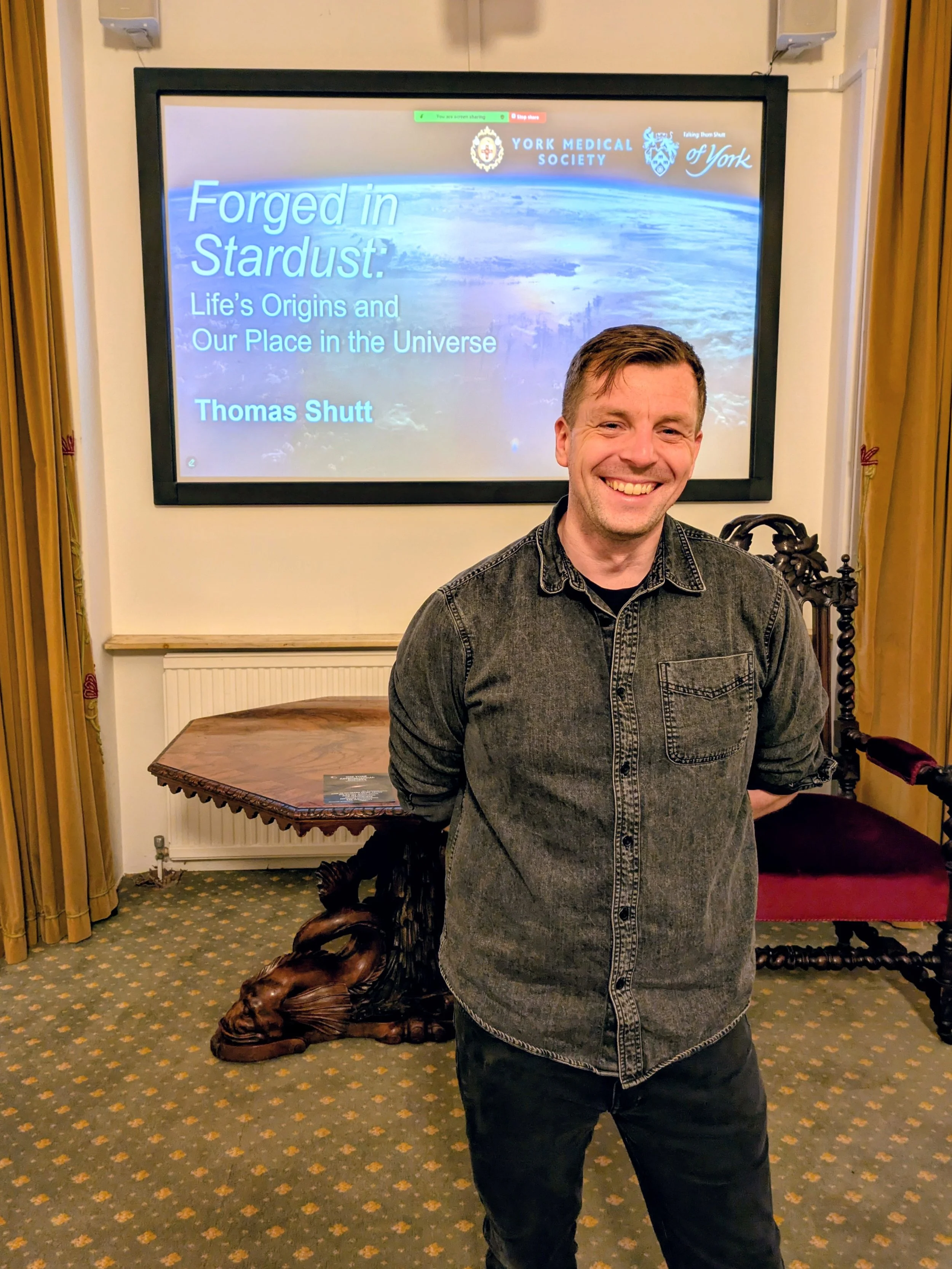

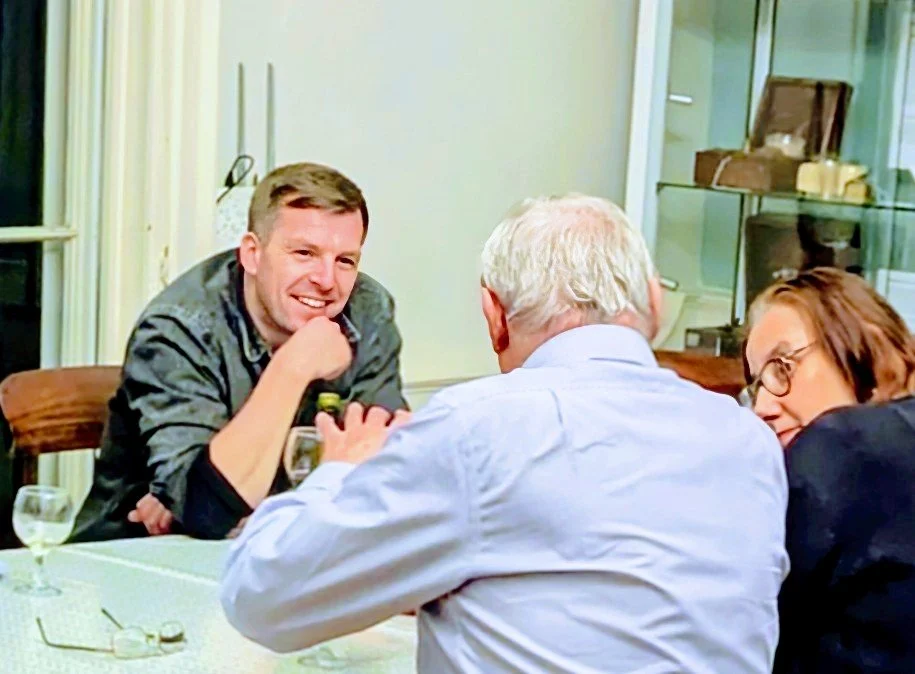
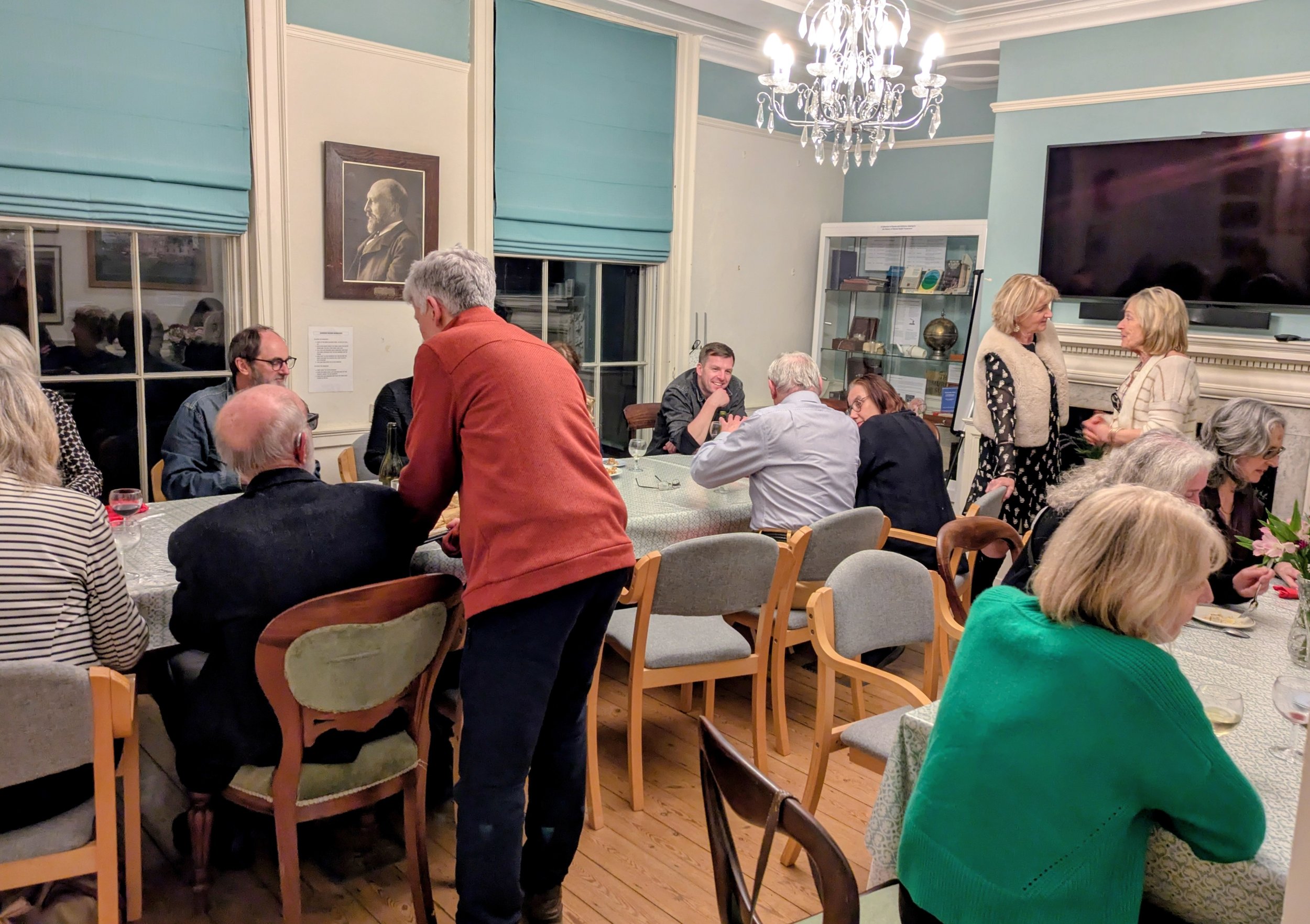
Vote of thanks by Prof Barry Wright
Thomas Shutt is completing his PhD at York University and as an award winning teacher and communicator returned to talk at York Medical Society about the scientific and biological knowledge currently available to explain how life is thought to have emerged in the Universe. Thomas’s own specialty is asteroseismology. This is the study of what is inside a star (below the surface) from the external signals emitted. But he went much further on this cold and wet Friday evening, exploring how helium was created from hydrogen through fusion reactions in stars and then how bigger and more powerful fusion reactions took place in bigger and bigger stars creating larger elements. He then touched on how various other planetary behaviors and interactions led to creation of more complex elements, many of which are found in living things on earth. Whilst physicists and scientists have conducted experiments that successfully created amino acids and other molecules from molecular soups, no experiment has yet created new life from these molecular soups. He then touched on the vast number of galaxies in our universe (200 billion - 2 trillion) explaining that if each galaxy had a habitable planet in its system this creates the conditions (and probability) for possible forms of life elsewhere. One huge problem for us however is communicating with them. The nearest major galaxy to us is Andromeda which is 2.5 million light years away. Earth’s radio signal messages sent in their direction (through electromagnetic radiation) would take 2.5 million years to reach them and if they sent messages back at the speed of light we wouldn’t hear back for 5 million years, at which point we may not be around anymore! All in all, it was a very enjoyable and informative evening and taught us many new things, not least how relatively small we are compared to our huge and complex Universe.
At the end of the talk several audience members asked challenging questions all of which were answered comprehensively by Thomas.
Prof Barry Wright gave a vote of thanks before many present retired to supper in the rooms.
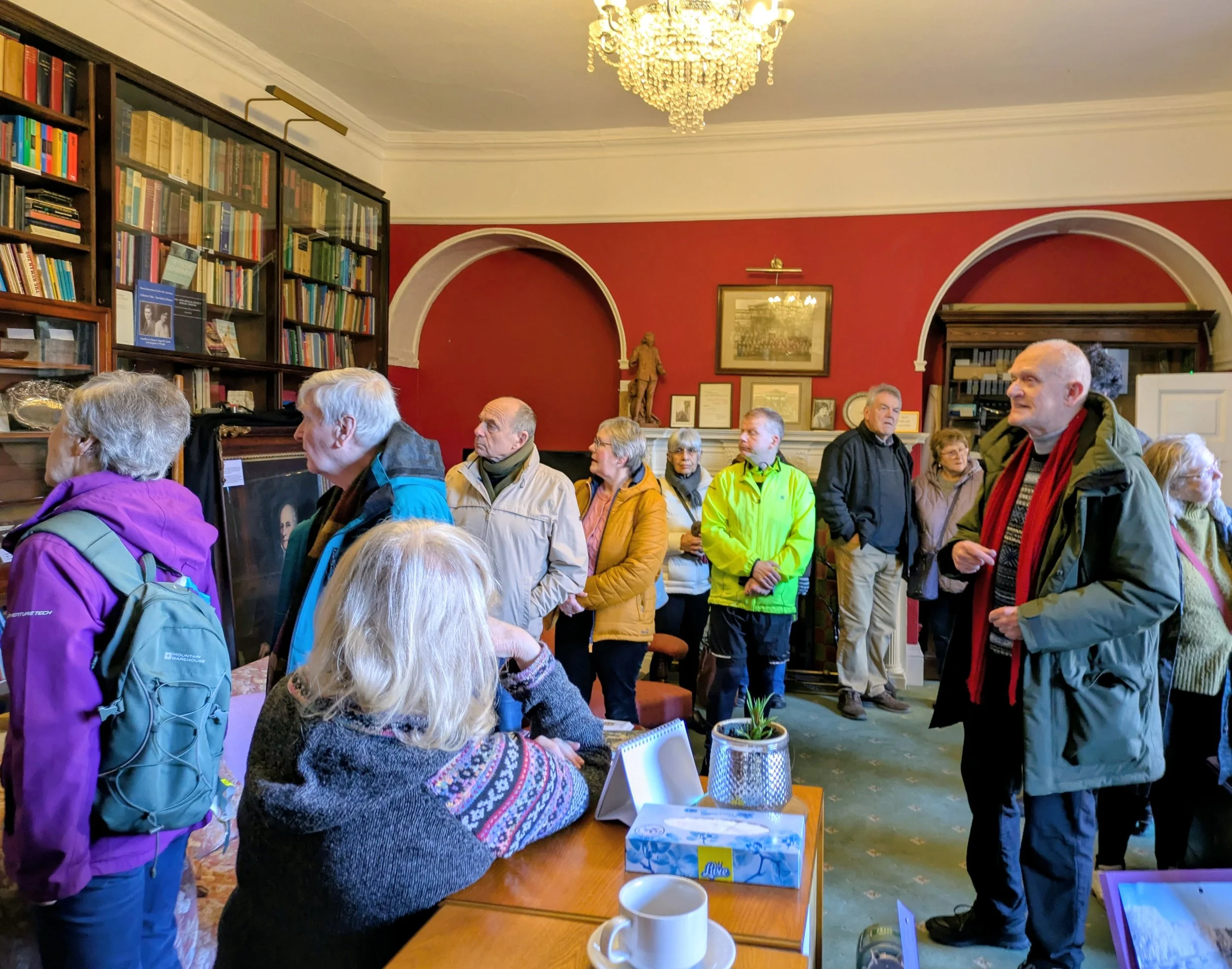
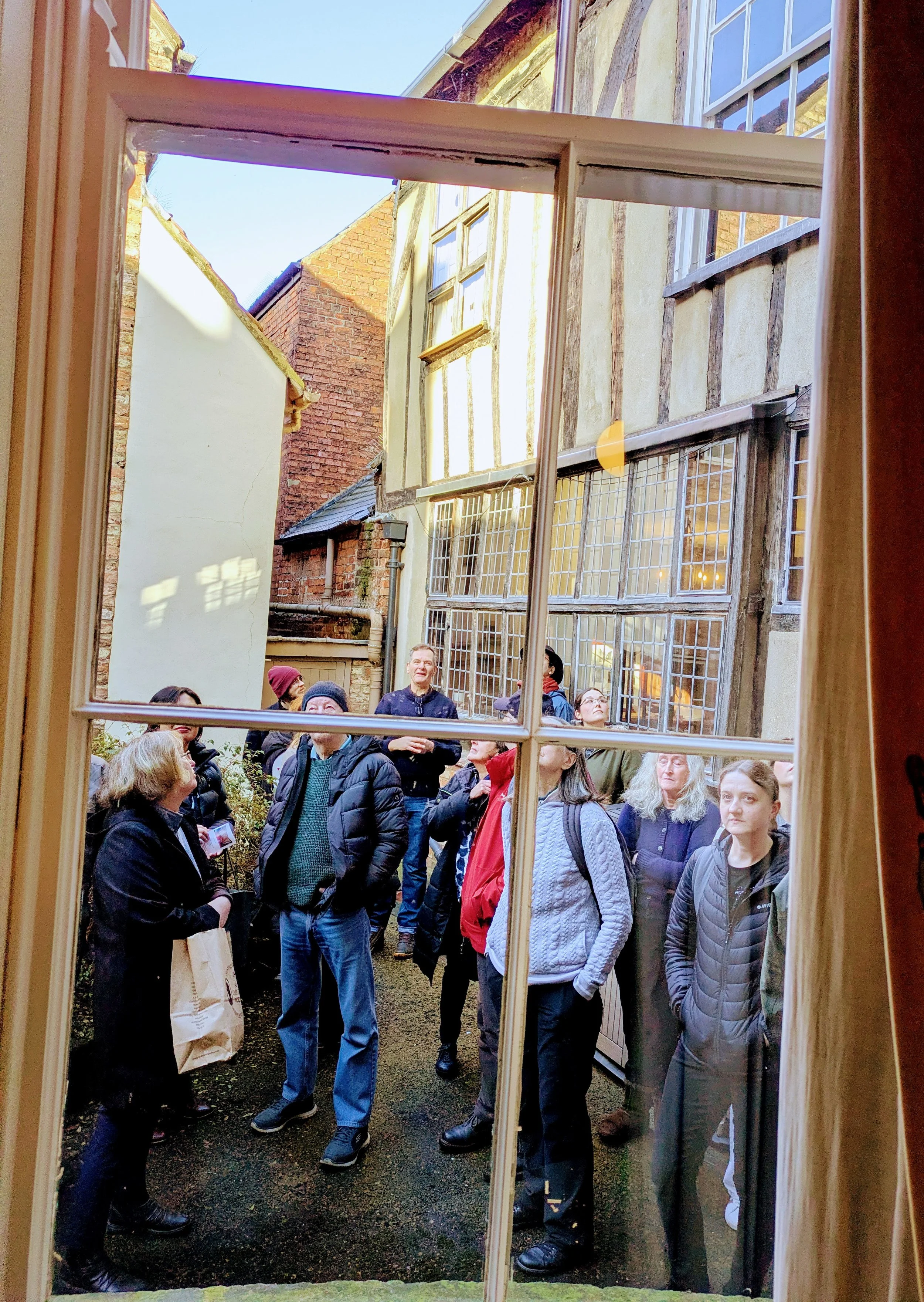
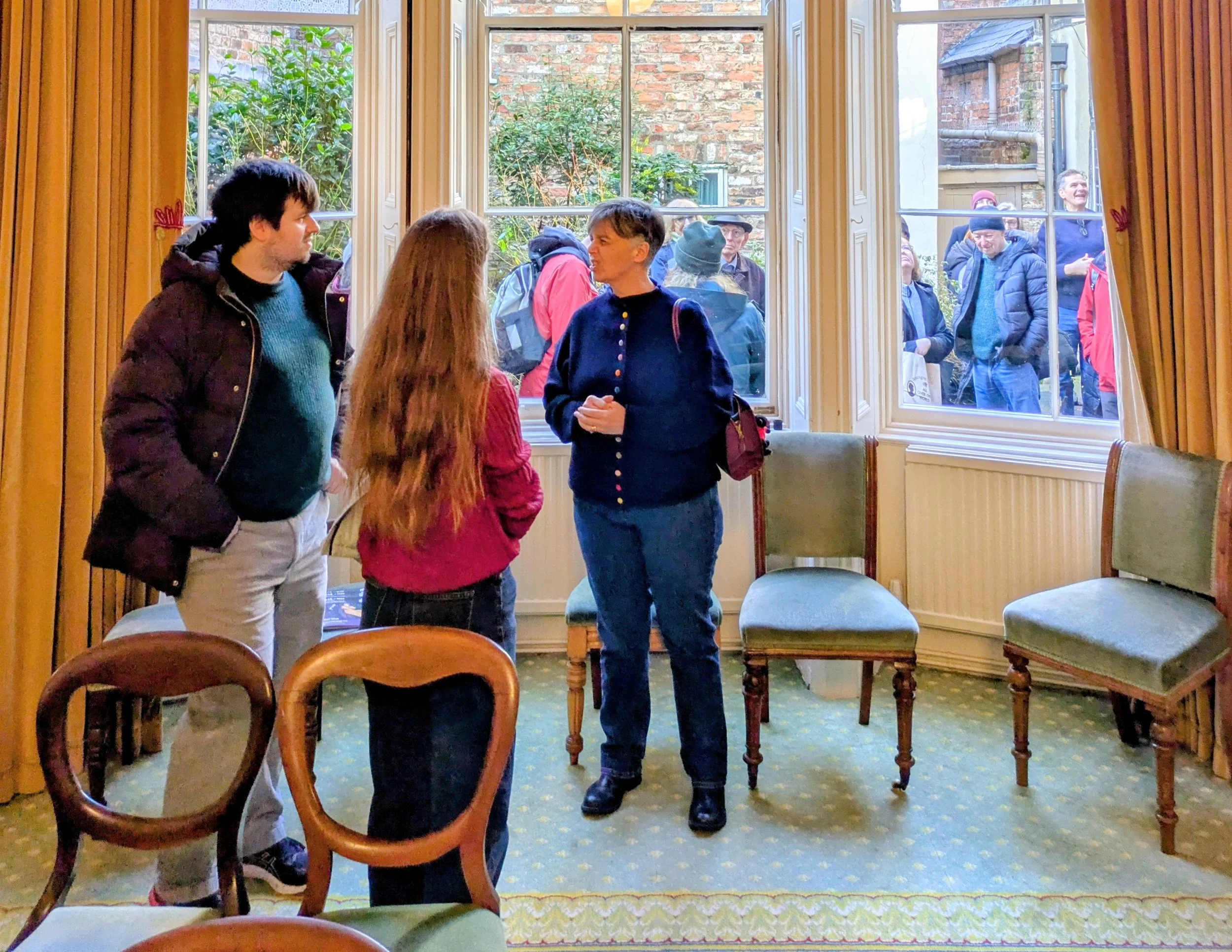
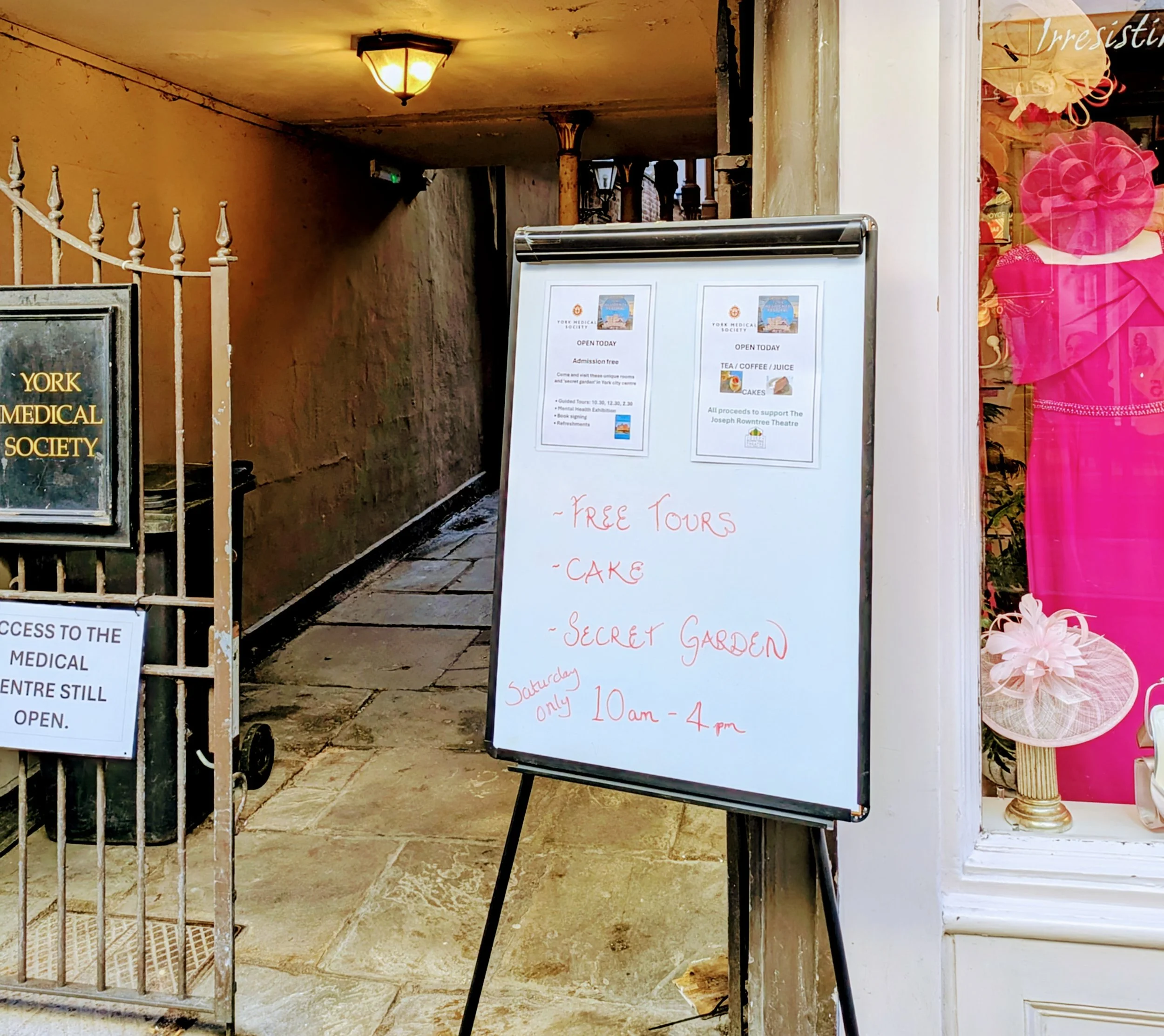
York Residents Festival 2026
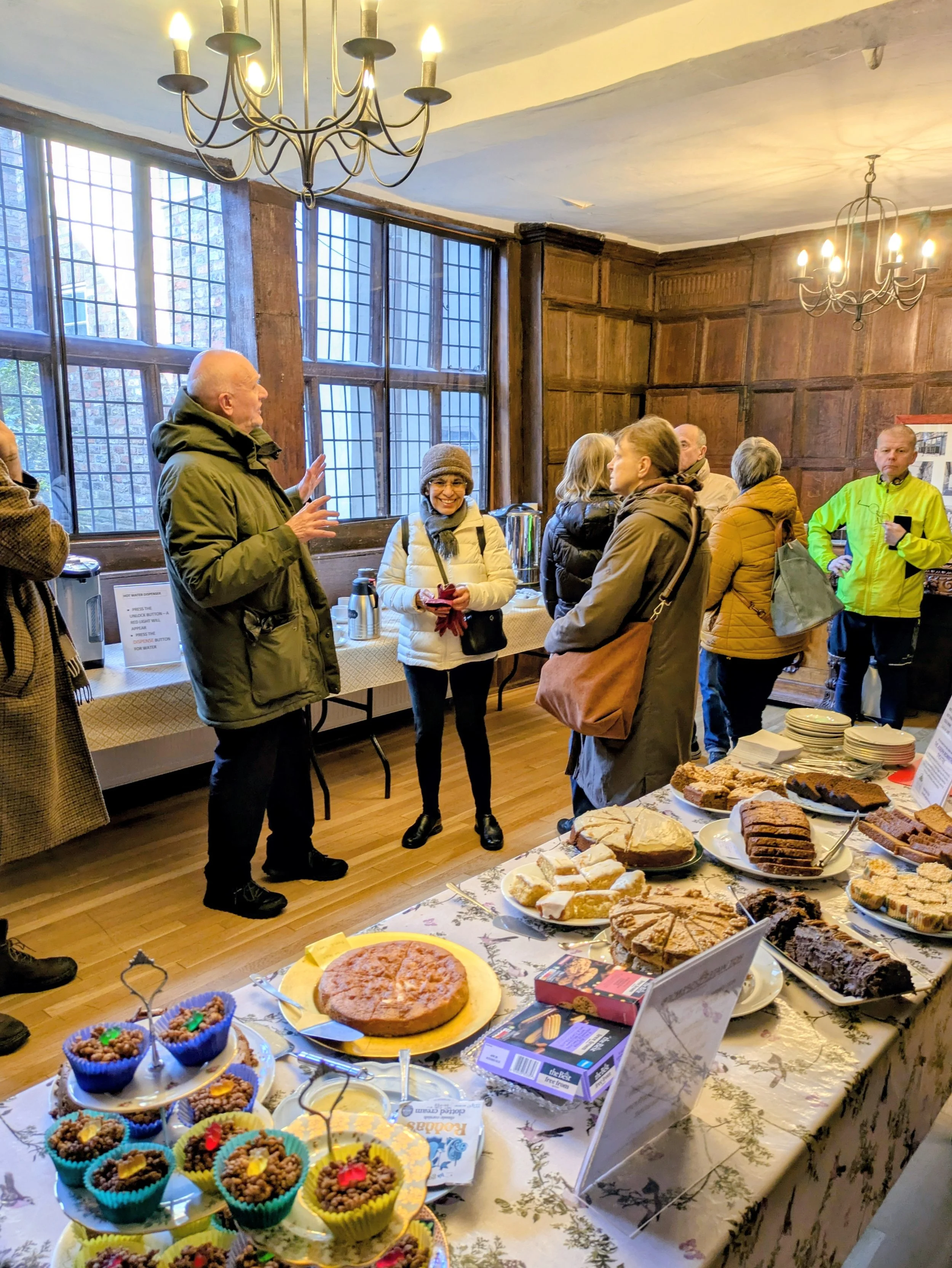
The York Medical Society Rooms were open to the public for the annual York Residents Festival.
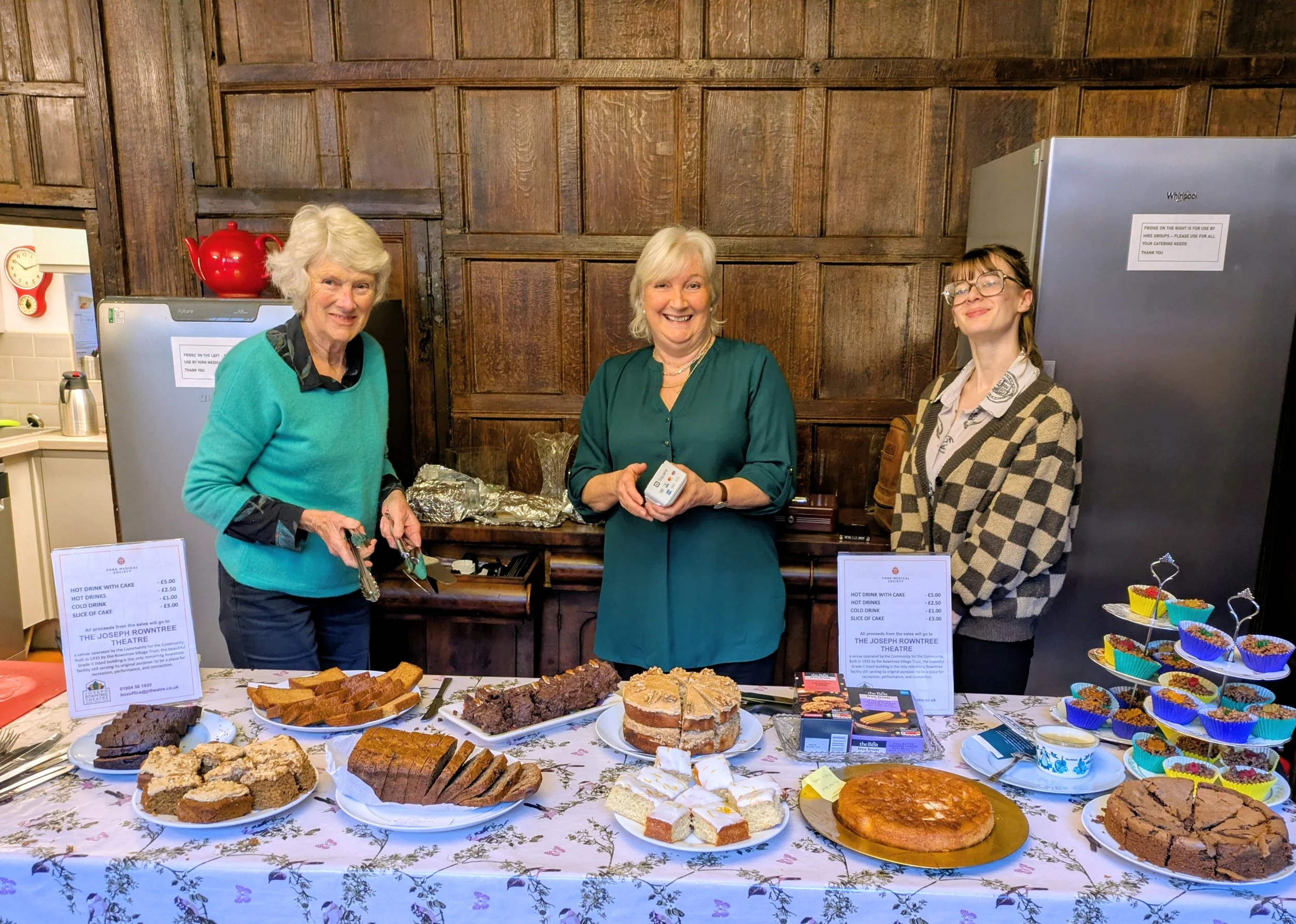
A very successful day with many visitors exploring the Rooms and enjoying the excellent cakes on offer.
Proceeds from this event went to this year’s chosen local charity: The Joseph Rowntree Theatre. We are very pleased to announce that we raised £460.
Many thanks to all those who helped on the day and the York residents for joining us and for your generosity.
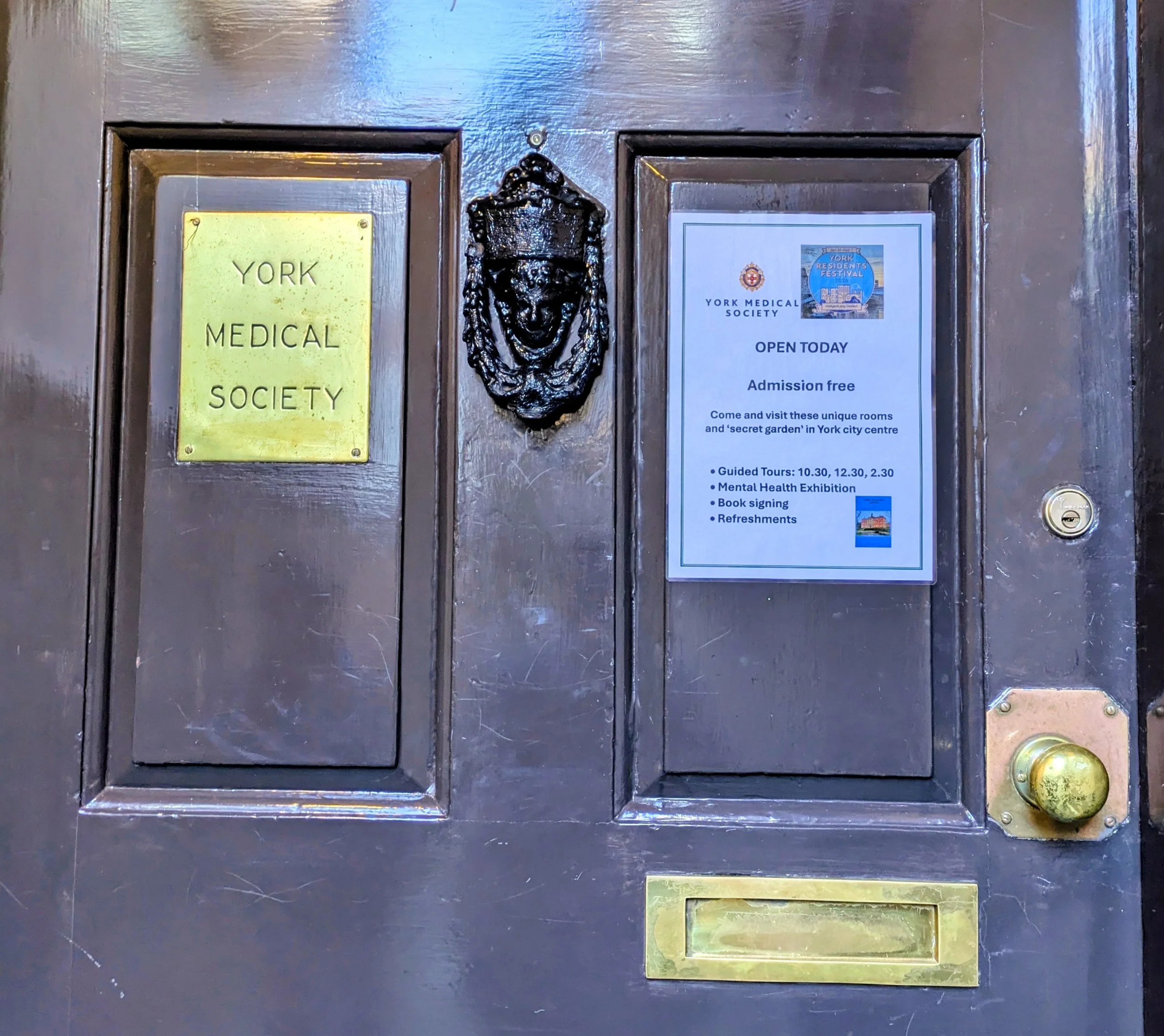
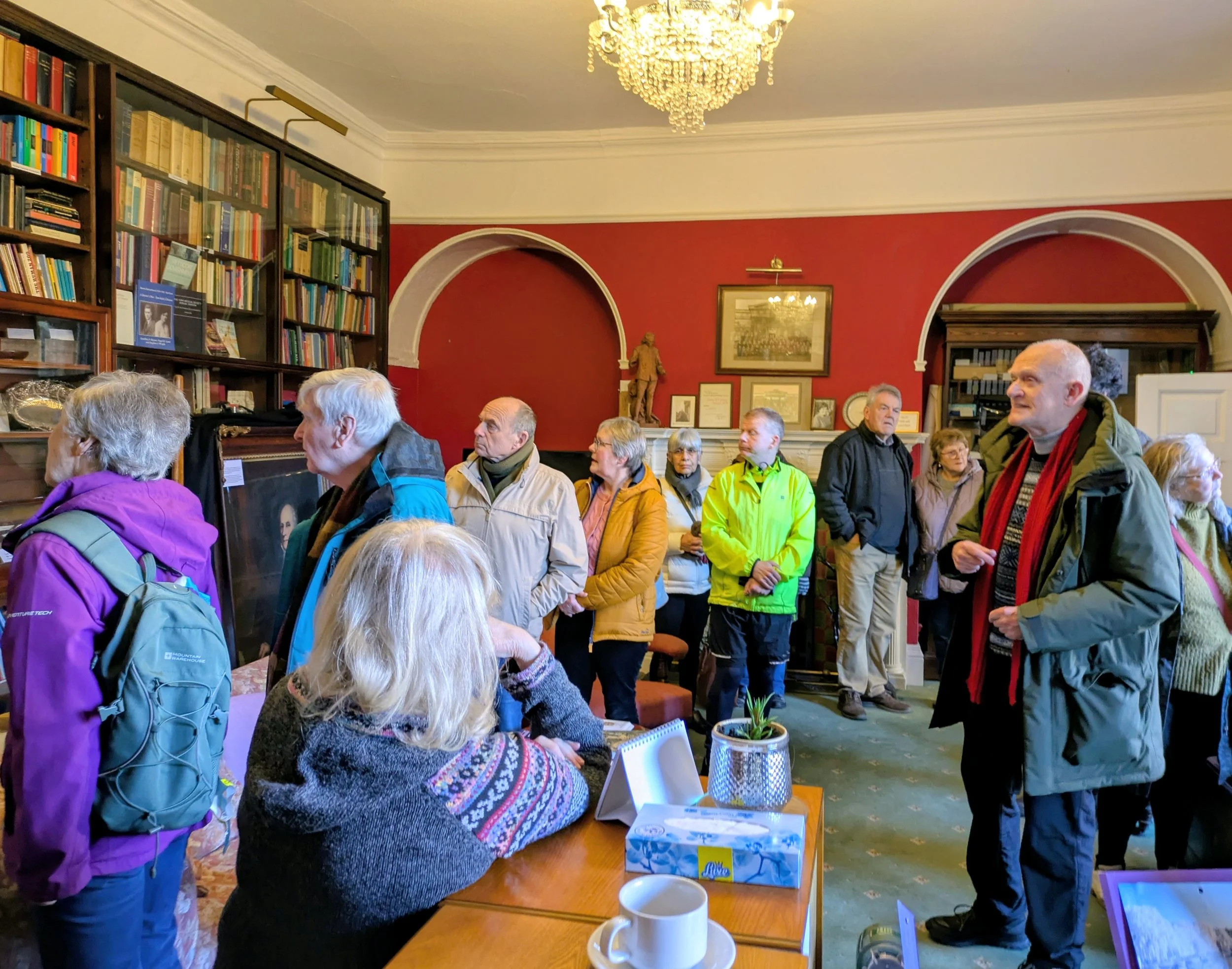
Stargazing - YMS Social Event at York Astronomical Society
Stargazing Star Gazing – Visit to York Astronomical Society
Venue: Beetle Bank Farm, Moor Lane, Murton, York YO19 5XD
Tuesday 27th January 2026
Start time: 7.30pm. Ends 9pm (approx.)
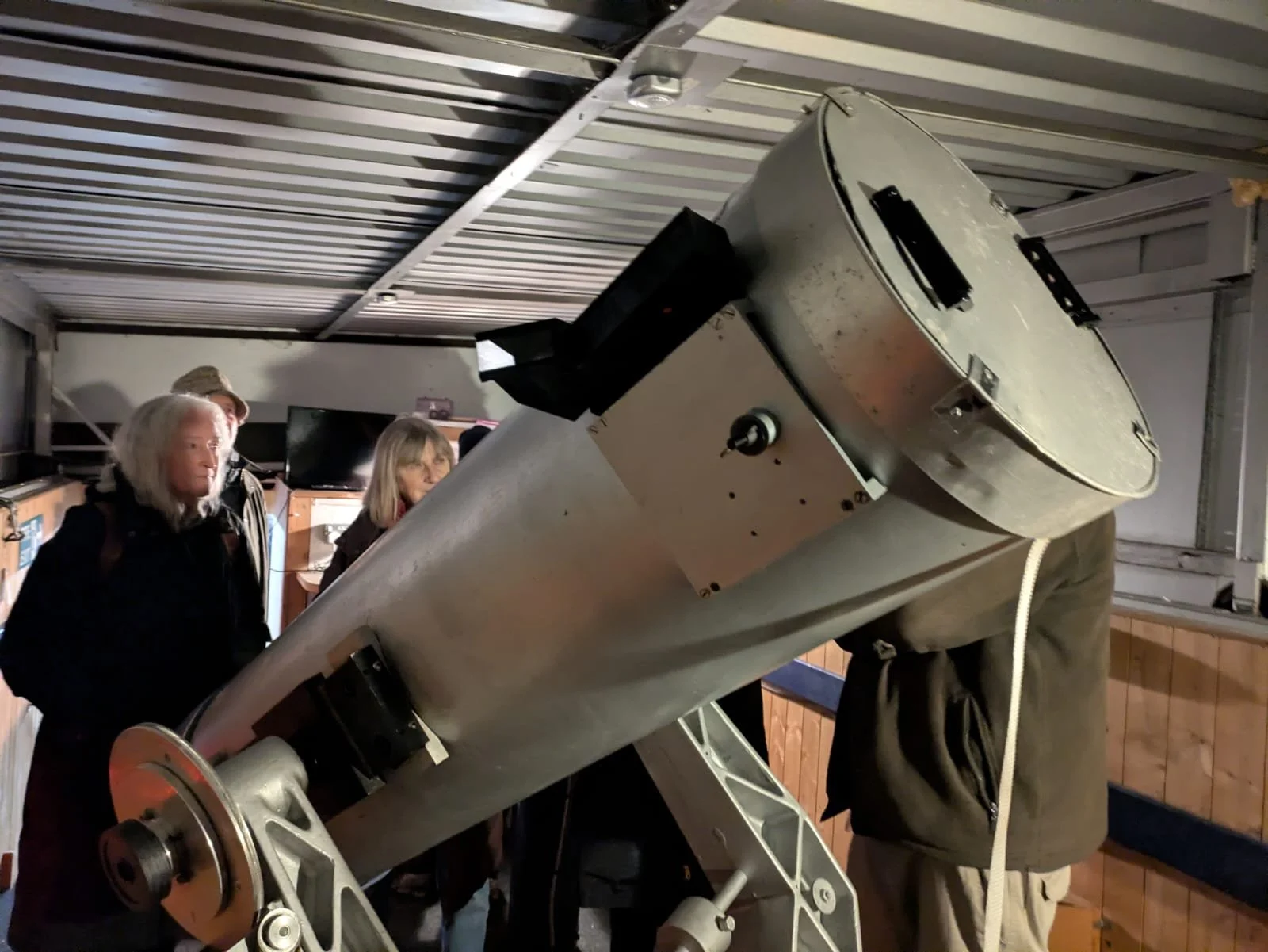
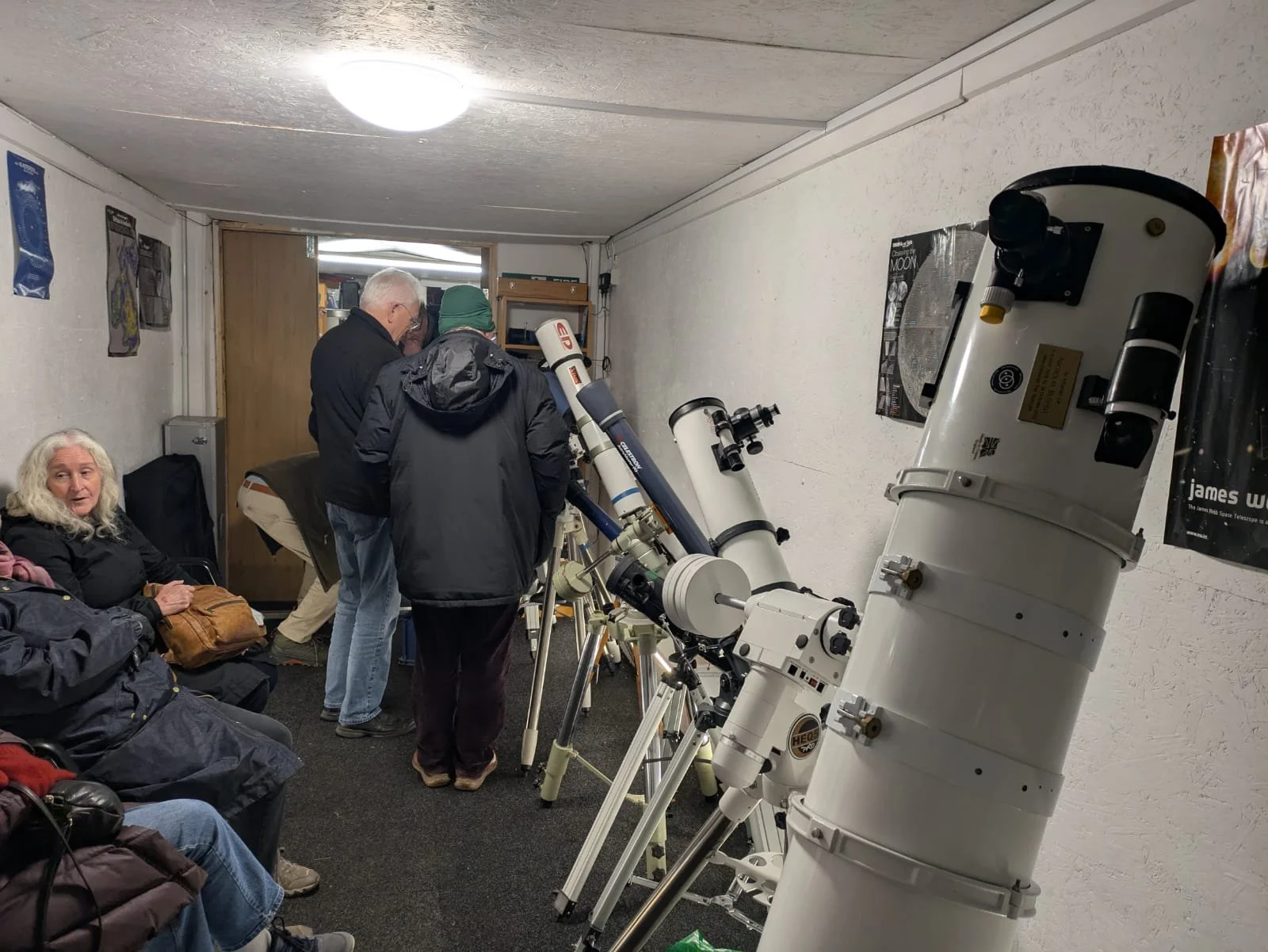
Amateur astronomers Dave Armson and Andrew Stephenson will deliver a 30-minute indoor stargazing presentation and telescopic demonstration before we gaze up to the heavens. A unique sight timed for this evening will be a waxing half-moon passing close to the Seven Sisters (Pleiades) star cluster. Weather permitting, other highlights include a very bright Jupiter and its moons, Venus, the ringed planet Saturn, orange giant Aldebaran and many winter constellations including Orion and its nebula.
This event is kindly hosted by members of York Astronomical Society. Children are most welcome accompanied by an adult YMS member.
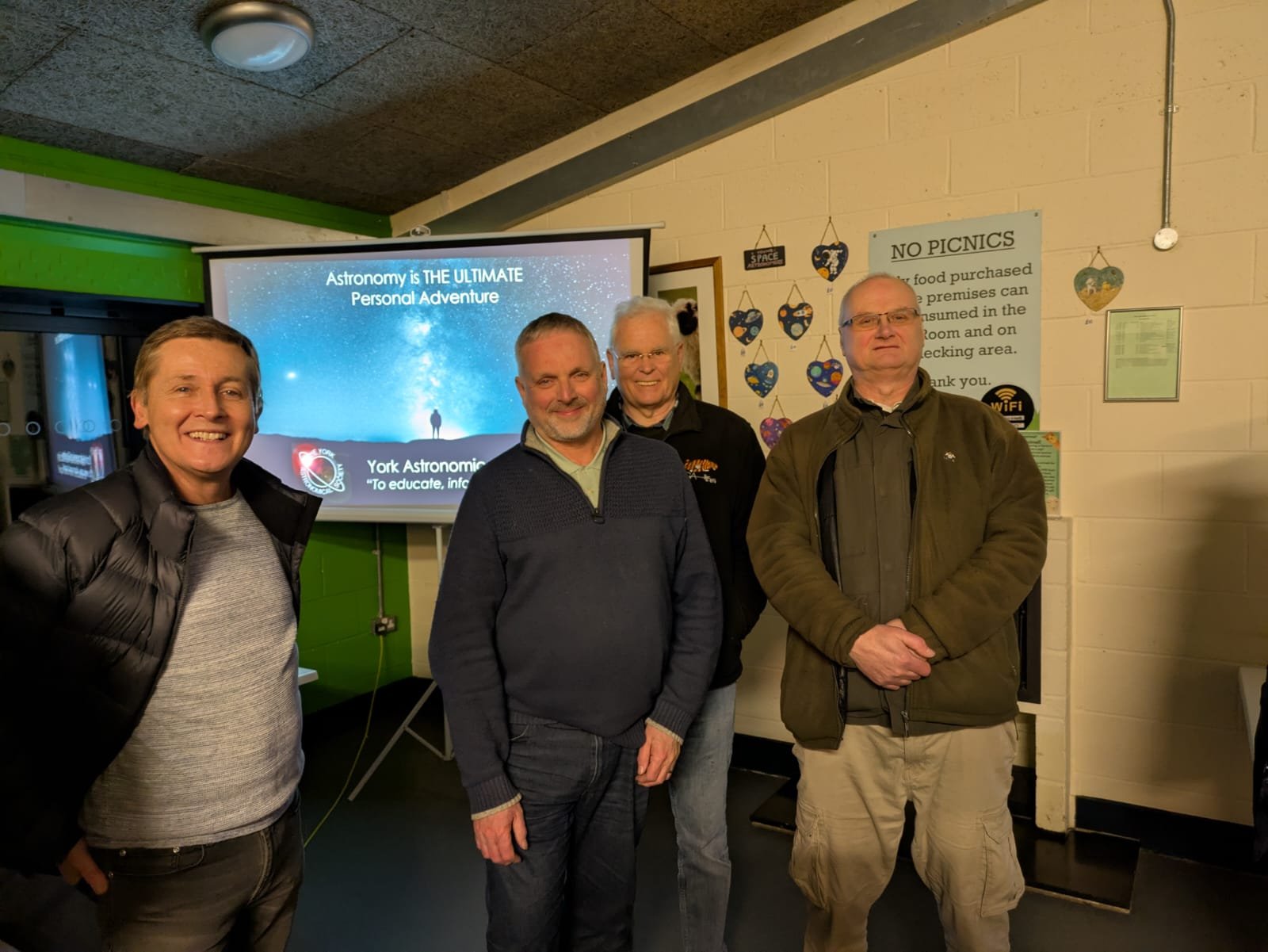
Despite the cloudy skies we had a great talk and did get to view some of the telescopes.
Burns Supper and Ceilidh
Burns Supper and Ceilidh - Saturday 24th January 2026
at Merchant Taylors Hall, Aldwark, York
7pm for 7.30pm
Burns Night gives us a chance to dos-à-dos the night away in the wonder Merchant Taylor’s Hall.
Come and join our celebration of the bard’s birthday with a soupcon of haggis and a skirl of the pipes from a former World Champion, Cameron Edgar.
Johanna Lowther will propose the Immortal Memory and Gus McLaren will Address the Haggis
Enjoy a real fire and dram of whisky to keep you warm!!
Just what we need to brighten up our January, och aye the noo!
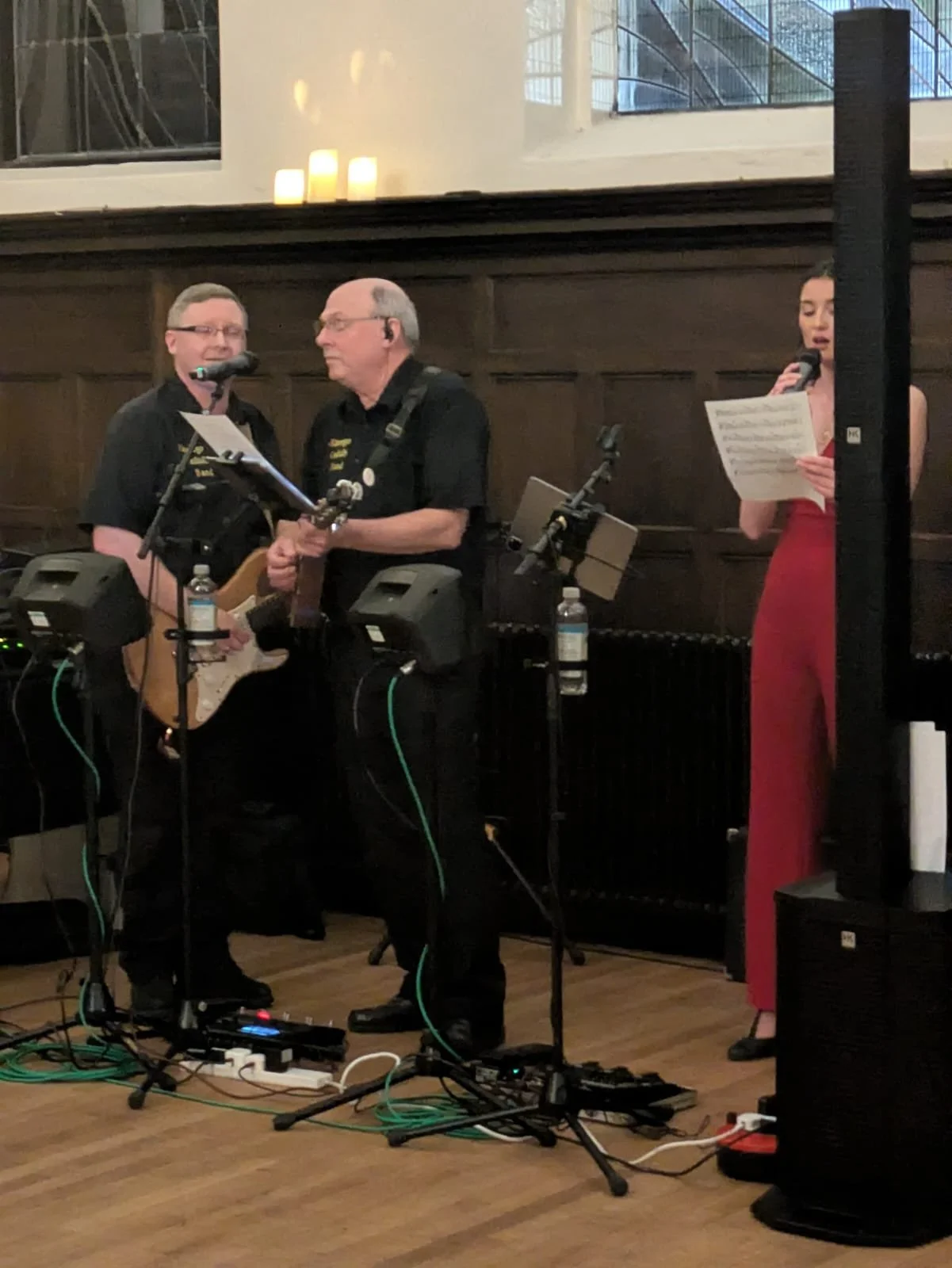
Music and dancing calls by Alterego
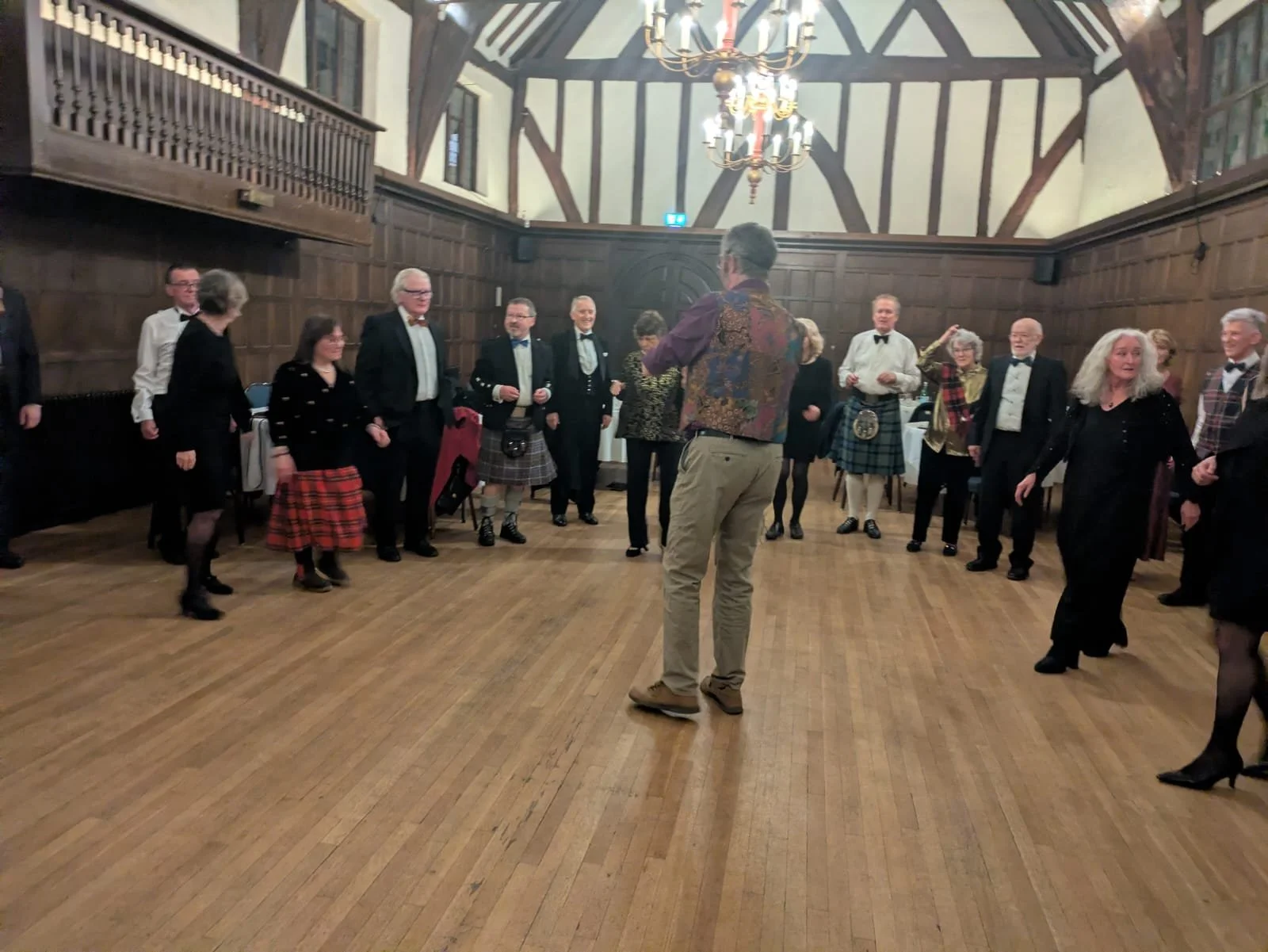
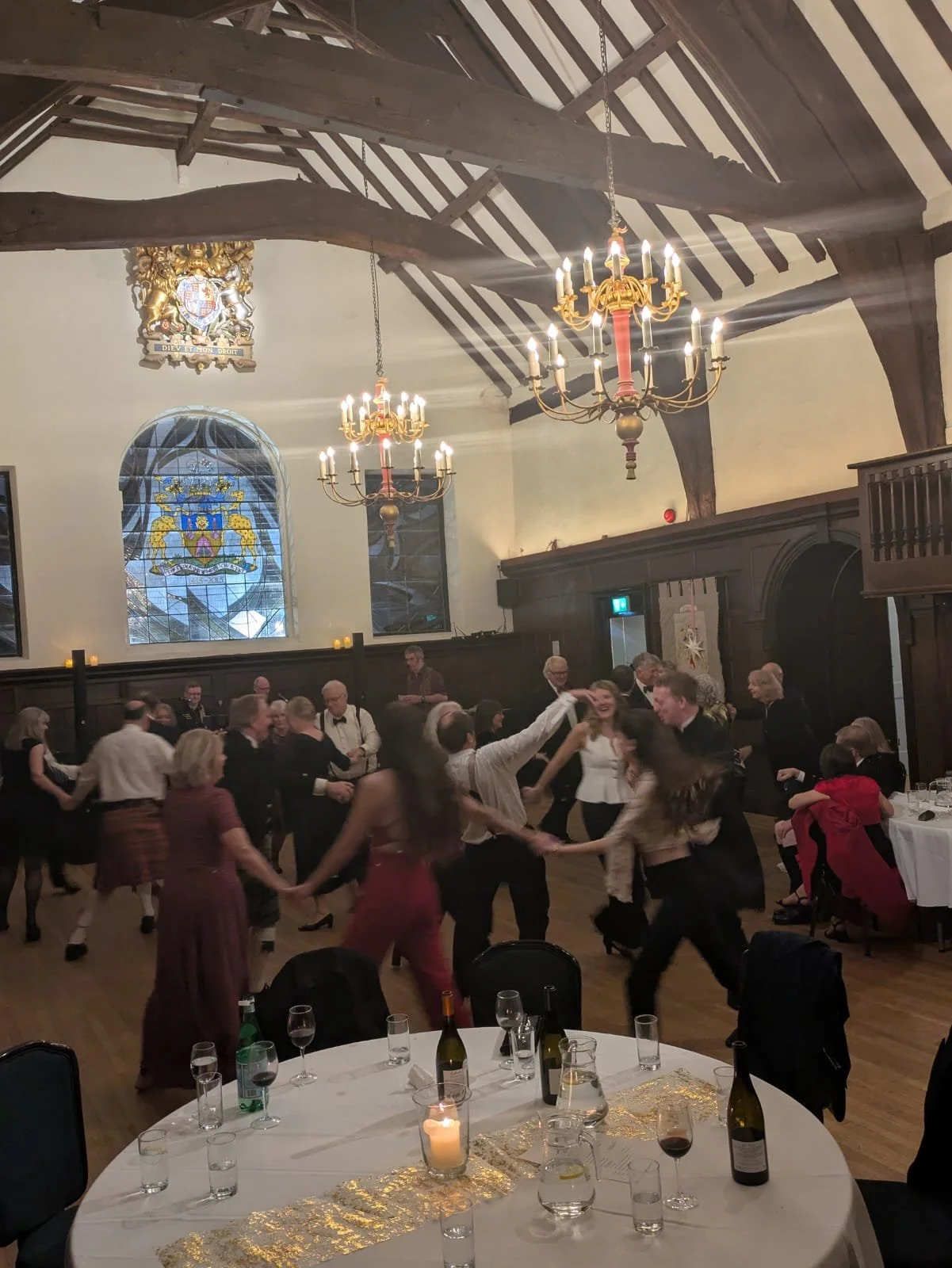
A wonderful time was had by all. Click here to see how much fun we had.
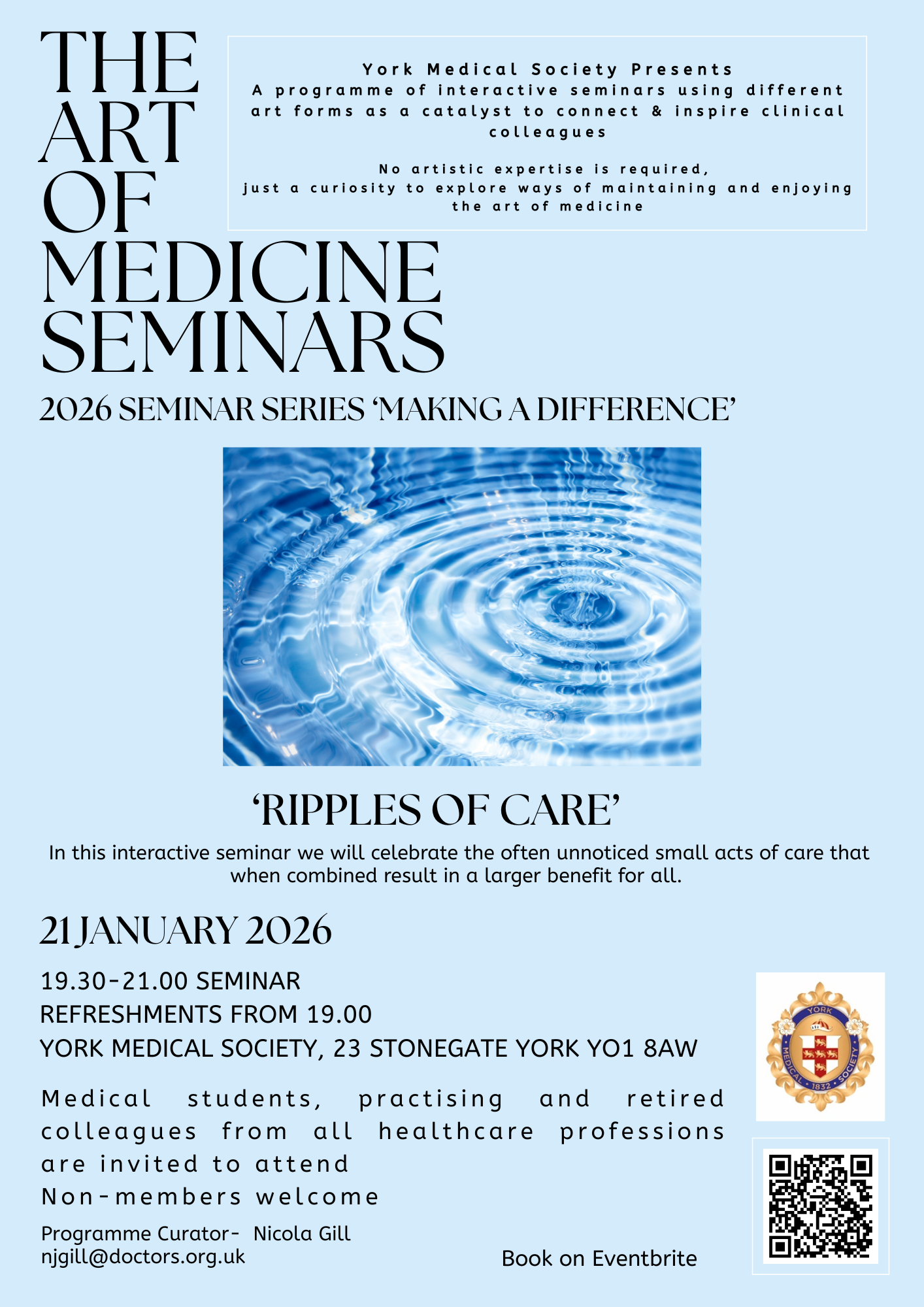
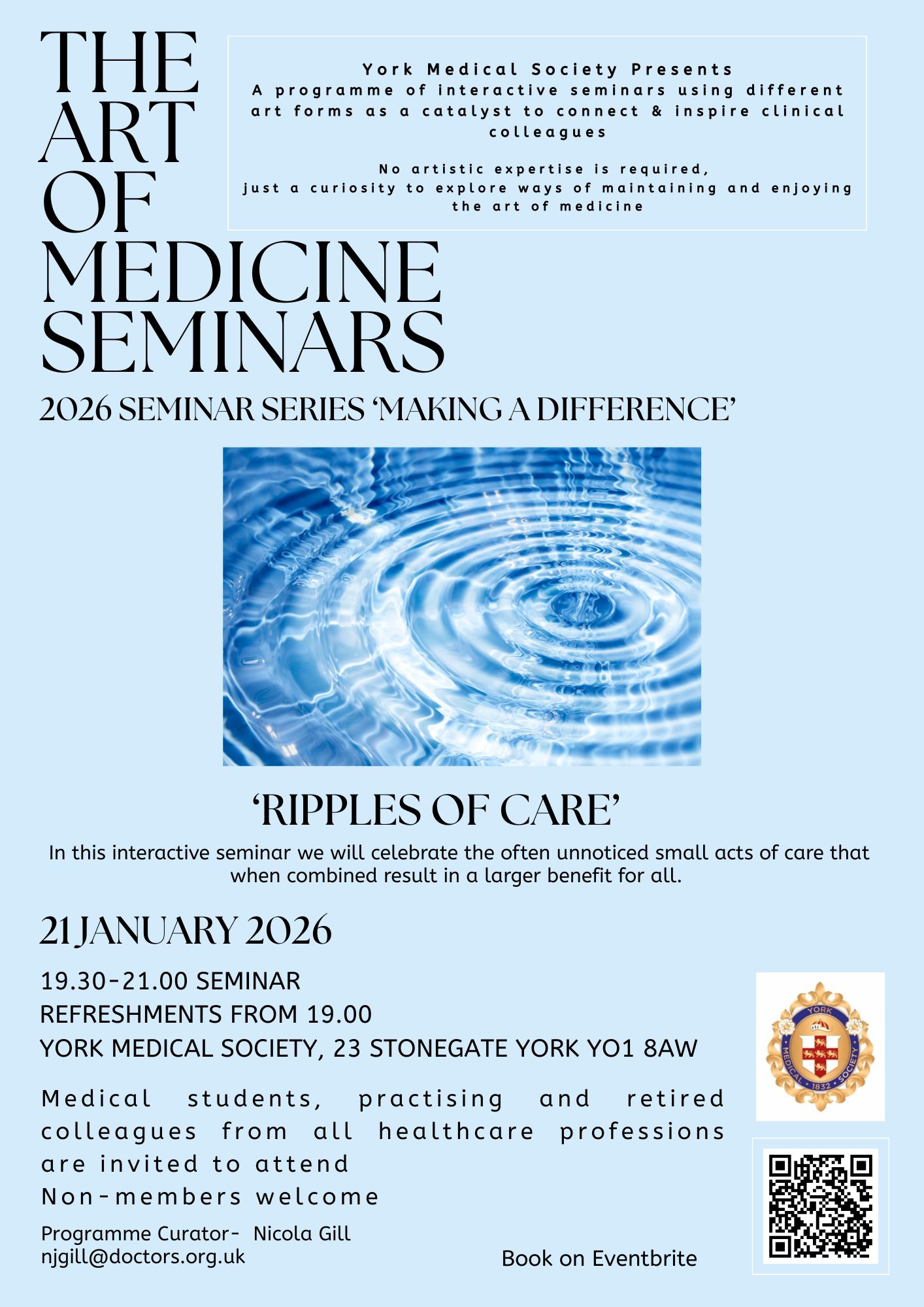
Art of Medicine Seminar: Making a Difference - Ripples of Care
The interactive seminar will use art to help us celebrate the often unnoticed small acts of care that when combined benefit all.

HYMS Electives Awards Presentations
Travels, tales and experiences from our 2025 Bursary winners:
Sarah Fergusson - Sun, Sea and Obs&Gynae! My Caribbean Adventure in Scarborough (Tobago!)
Charlotte Collin – From Manchester to Mombasa: The Diverse Landscape of Cardiology in the UK versus Kenya
Kojo Dankwa – Challenges on the Cape Coast: Tropical Disease, Surgery and O&G in Ghana
Mahsa Mirzayee – Secrets of Panay Island: Ophthalmology and Paediatrics in Iloilo City, Philippines.
Mollie Merrifield - From Hull to a Fishing Village in Ghana: How my split elective transformed by view of the NHS

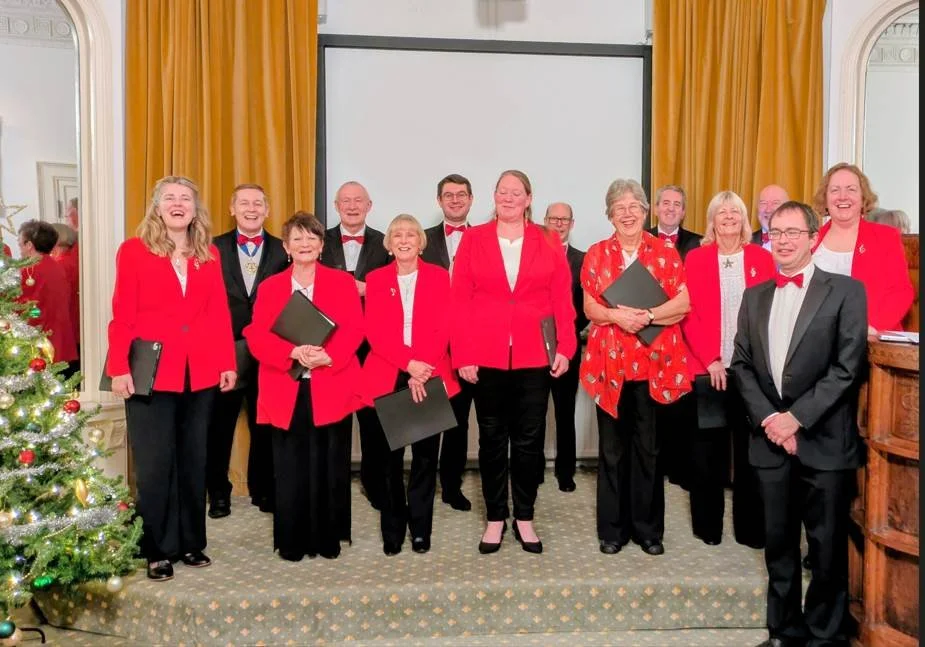
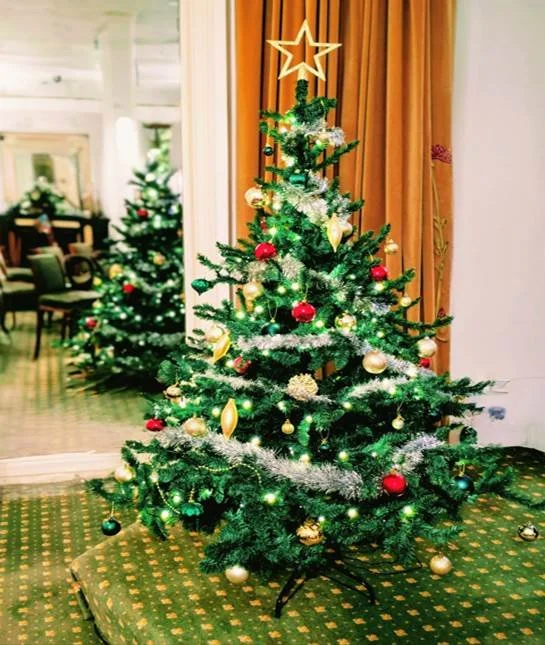
The Magic of Christmas
Charity Social Event - The Magic of Christmas
York Celebration Singers and members of York Medical Society present Music Readings Humour Food Wine
A wonderful evening enjoyed by all.
Click here to watch a video of the event.
Proceeds from the evening will be donated to our World Charity for 2025-26: The International Committee of the Red Cross. c£700 raised so far.
There is still time to donate if you wish - email yorkmedicalsociety@gmail.com for our bank details


A Calorie is a Calorie - The Inescapable Science That Controls Our Body Weight
Professor Keith Frayn, PhD ScD, Emeritus Professor of Human Metabolism, Radcliffe Departmentof Medicine, University of Oxford
Winner of the British Nutrition Society's first-ever Blaxter Award and author of an acclaimed newbook.
We all know someone who seems to eat very little yet cannot avoid weight gain, or someone whoeats everything they like while remaining slim. Why? The last 10 years have seen increasingchallenges to the simple model of ‘calories in = calories out’. Even specialists are nowquestioning the forces that shape body weight. In this cutting edge talk, Professor Frayn takesus on a deep dive into the real science of energy balance. He provides a clear-eyed perspectiveon current trends mired in controversy and confusion: time-restricted eating, intermittent fasting,low-carb versus low-fat meal plans, high-protein breakfasts and other dietary fads. He shows usit is possible to reshape our lives and improve health by going back to what is known aboutcalories and getting smart about what to eat.
Vote of thanks by Dr Phil Duffey
On a dreary, wet night in York Professor Frayn served to the members of YMS a rich intellectual meal. During the first course we were reminded of the primacy of the first law of thermodynamics and the traditional ‘calories in - calories out’ model of weight regulation which asserts that calories unused for the maintenance of life and additional activities are stored in the form of fat. Professor Frayn then acknowledged that this model is under unprecedented challenge and in the main course expanded on some of the reasons for this and common misconceptions concerning weight and metabolism.
Professor Frayn explained that many of the earlier studies in this field had determined calories-in by recollection or diary entries. These had led to the suggestion that weight gain might be the consequence of a ‘slow metabolism’. Ultimately this was shown to be incorrect. It was established that studies of this sort invariably under-report intake and that individuals with overweight tended to under-report by a greater margin. Professor Frayn then showed how metabolic rate can be estimated better by using radiolabelled hydrogen isotopes.
Next there was discussion of the energetics of obesity and the greater expenditure in the overweight plus the body’s response to dieting and calorie restriction, including the seminal work of Ancel Keys. We learnt that weight loss through dieting is difficult in part because energy expenditure is diminished in response to the diminished intake through the action of Leptin on the thyroid gland. These observations led to a wider review of weight regulation including genetic factors, the hypothalamus, an increasing number of hormones, particularly Leptin and Glucagon-like peptide-1 (GLP-1) and Set-point theory which Professor Frayn described as entrenched, vigorously defended and a myth!
As might have been anticipated there was no shortage of questions and comment. Many in the audience were particularly conscious of the social and economic factors influencing the eating behaviour and weight of their patients and themselves. A lively discussion continued over supper where Professor Frayn and his wife proved themselves easy and engaging conversationalists keen even to assist with the washing up.
Overall a great success.
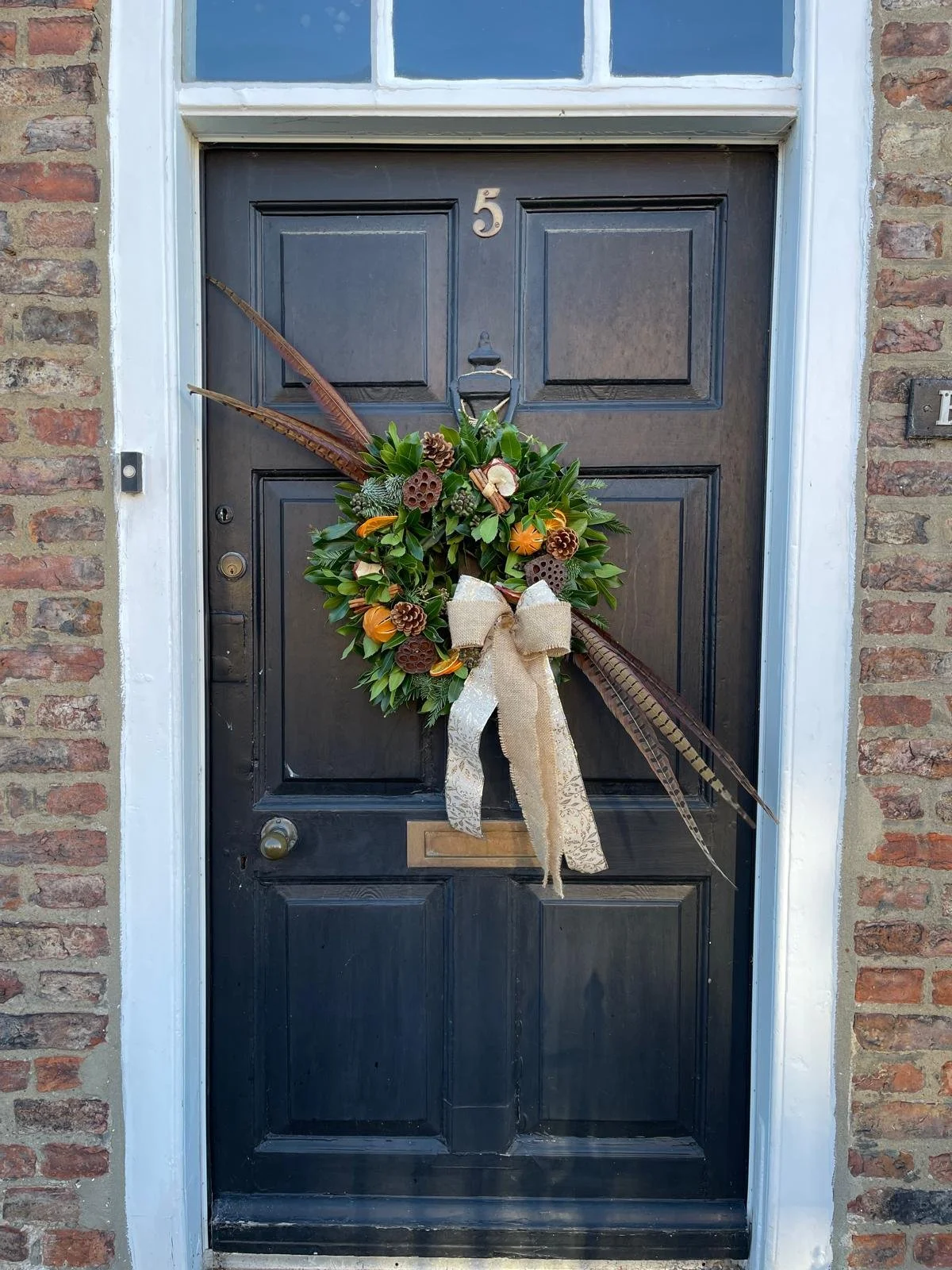
Christmas Wreath Making Workshop
Come and get into the festive spirit at 23 Stonegate and make your own Christmas Wreath.
Hosted by York School of Floristry, a special, creative festive workshop where you’ll learn how to use seasonal foliage and natural materials to make your own original wreath to take home.
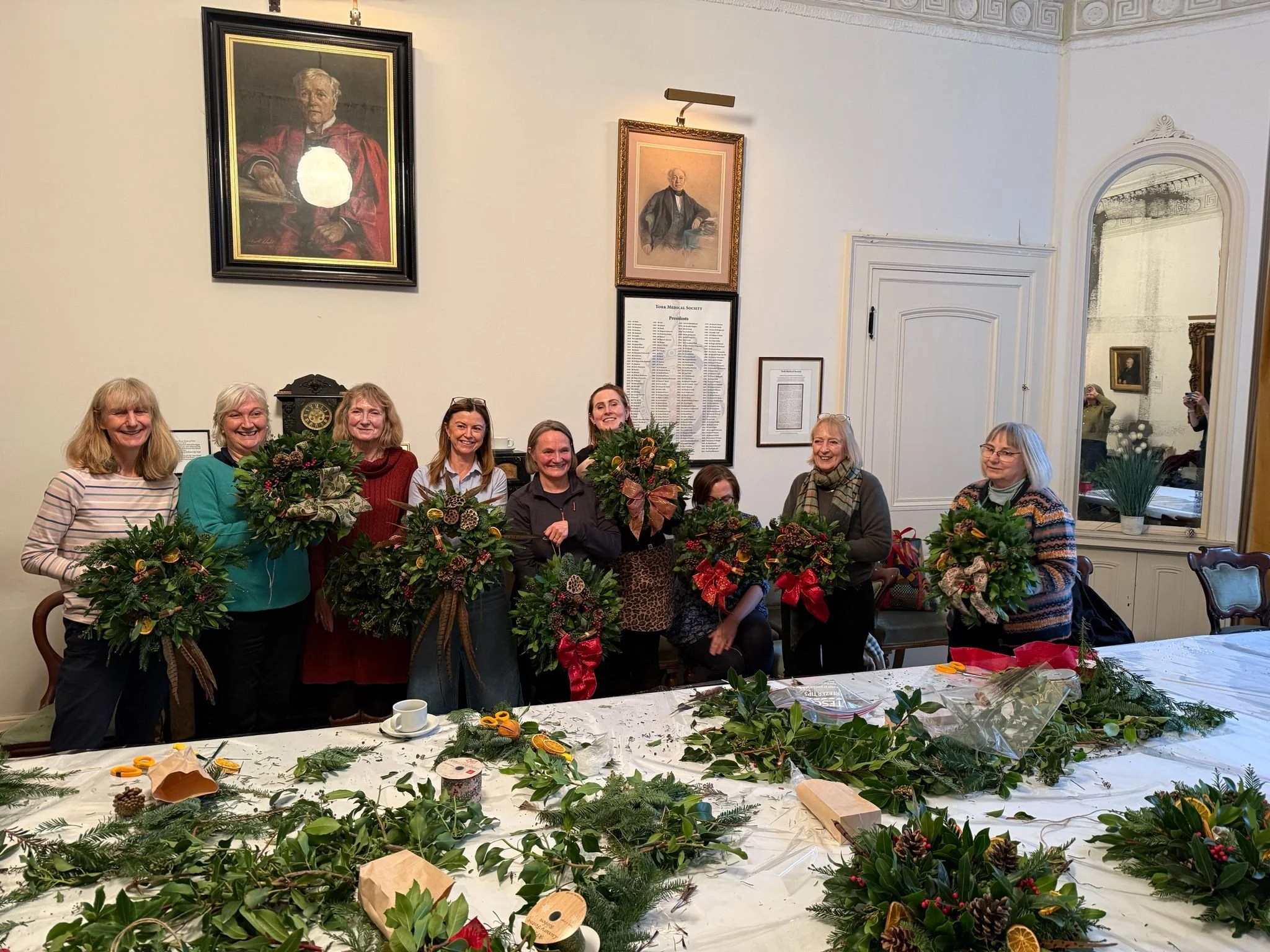
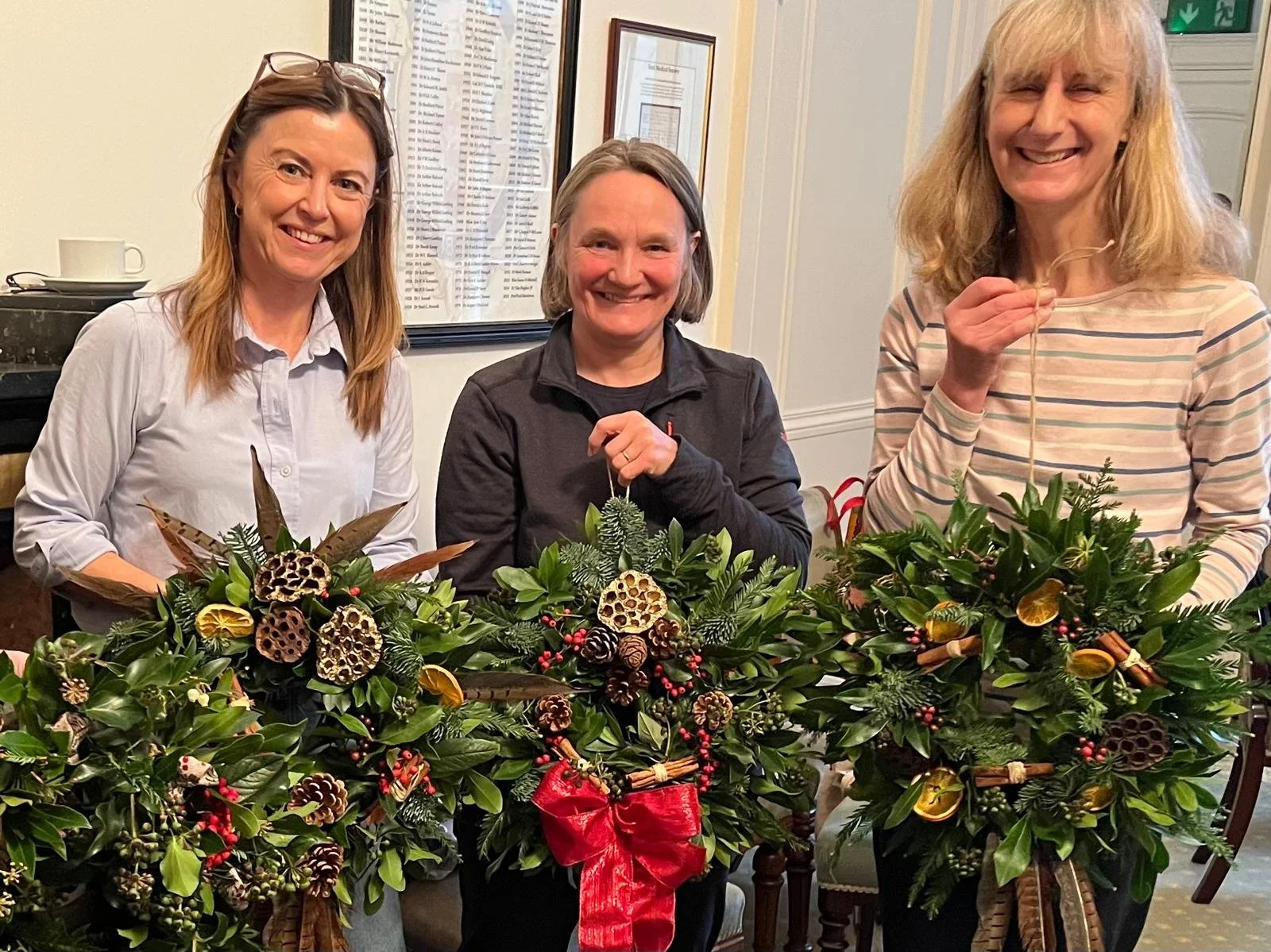
The workshop was a huge success as demonstrated by the beautiful wreaths pictured below.

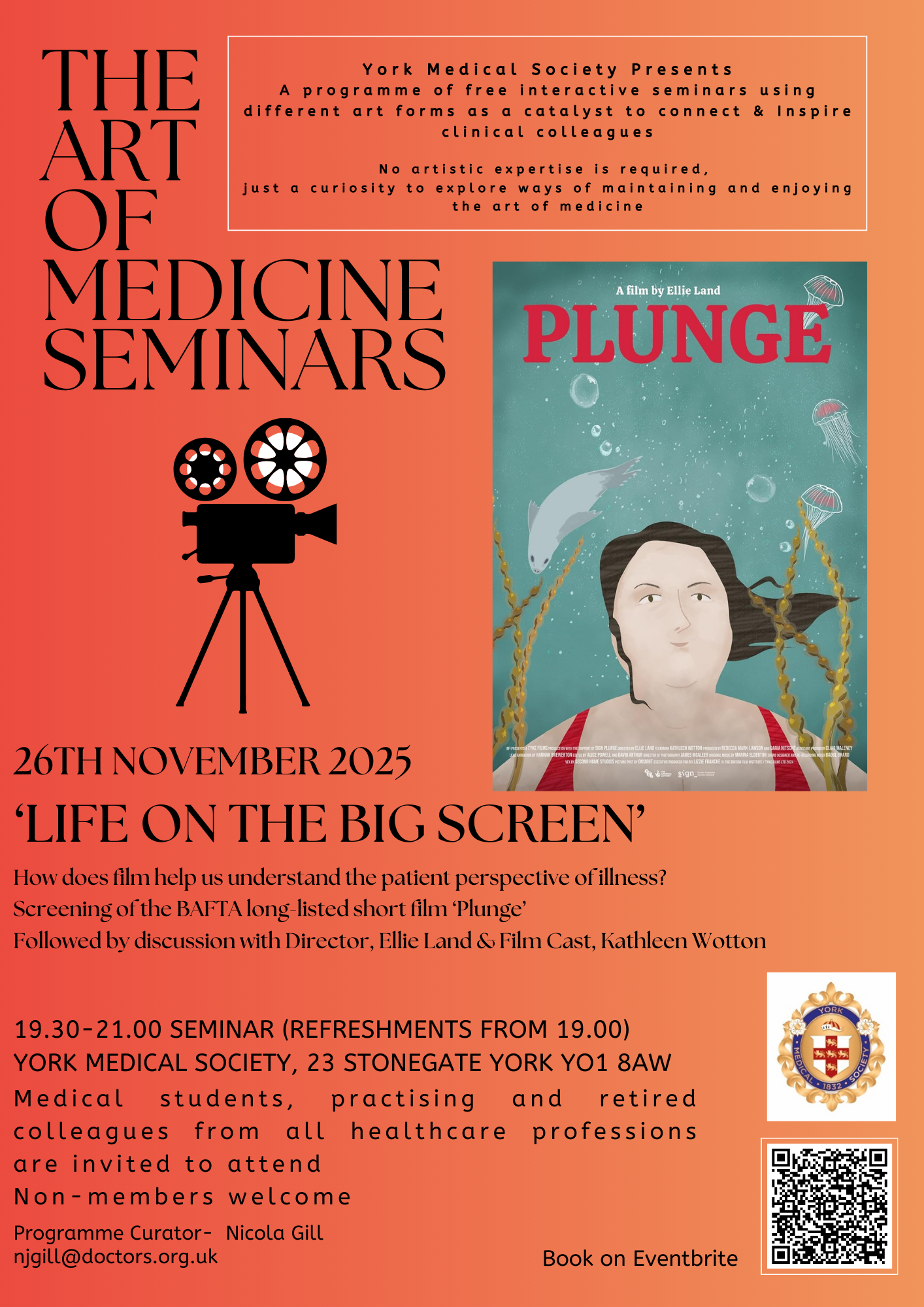
Art of Medicine - Life on the Big Screen
At this seminar, we will explore how film helps us understand the patient perspective of illness.
Book your tickets on Eventbrite

Christmas Wine Tasting
A selection of new wines for Christmas!
** NOTE CHANGE OF DATE FROM THE PROGRAMME **
We are delighted to announce that we have a great selection of wines for our popular walk-around Christmas Tasting.
This is a great opportunity to meet friends and colleagues in the congenial surroundings of our wonderful Medical Society rooms.
Why not invite colleagues to show the advantages of belonging to such an illustrious society?
We have selected forty exciting new wines/new vintages of old favourites to show to coincide with the new Christmas list.
Come and enjoy a range of over forty exciting whites and reds from France, New Zealand, Spain, Italy, South Africa and Chile.
Order your favourite wines for Christmas – at a special price for those attending.
Tickets are only £12 a head, for both members and their guests.
Please don’t hesitate to book, as we will close the list when the numbers dictate we are full.
Friday 21st November 2025 at 7.00 pm to 8.15 pm at 23 Stonegate, York YO1 8AW
RSVP to York Medical Society Wine Club